


3 Critical Factors That Will SHAPE Indian Cinema's Success
Executive Summary
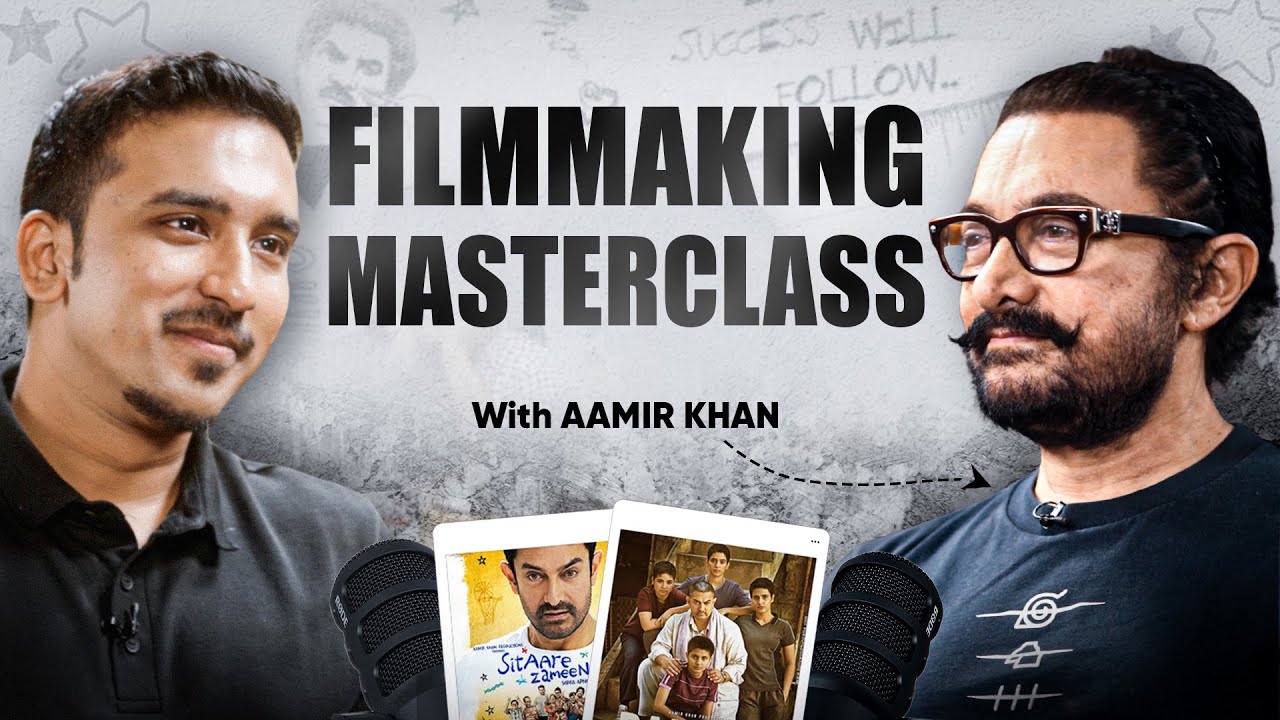
Aamir's argument runs in two halves. The craft half: a story you cannot tell in one line will not be a hit (his father Tahir Husain's test; Dangal is 'are my daughters any less than sons?'); editing is where the film is actually made - moving one close-up in Taare Zameen Par flipped what audiences thought the film was saying about special schools; and test screenings are communication debugging, not validation - sit in the room, force a one-word verdict with a number, ask would-you-recommend and would-you-rewatch, interview detractors first, and never defend the film. The business half: India's biggest hits sell only about 3-3.5 crore tickets out of 140 crore people, multiplex economics priced out the masses, smartphones killed the captive audience and COVID normalized 4-8 week OTT windows, so cinema went from a mass medium to a class medium with a famine-and-feast box office. His answer is Aamir Khan Talkies, 'Janata ka Theatre': theatrical release, then YouTube pay-per-view at Rs 100 - which is why Sitaare Zameen Par never went to an OTT platform, a risk he says he took alone after paying out his partner.
Key Takeaways
One line or no film: the premise test
Aamir's father, producer Tahir Husain, taught him that if you cannot narrate a story in one line, it will not be a hit. Dangal compresses to 'are my daughters any less than sons?'; Lagaan to 'where there is a will there is a way.' Aamir grew up hiding behind curtains from age six, listening to story narrations at his father and uncle Nasir Husain's sessions, made a lost 20-minute short (The Open Window), and became an assistant director at 18. His one book recommendation for any film person: Lajos Egri's The Art of Dramatic Writing.
Editing is where the film is actually made
Aamir calls editing 'absolutely the main thing.' His example: in Taare Zameen Par, dissolving from Nikumbh's tearful close-up at the Tulip School annual day straight to Ishaan's lonely face made test audiences think the film wanted Ishaan in a special school - the opposite of its inclusion message. Resequencing the shots fixed it without changing a word. His simpler example: a boy smiles after a shot of his mother with ice cream and he is sweet; the same smile after a murder and he is a psychopath. Shot order defines character, which is why Hitchcock said films are made on the editing table and why a badly edited film 'was left on the floor.'
Test screenings are communication debugging, not validation
Aamir's protocol since QSQT: groups of 20-25 unconnected viewers; he sits inside the screening to feel the room's energy (a hall full of shifting bodies means the film has lost its grip); then each person rates the film with one of four words - bad, okay, good, very good - plus a 1-5 number; then two questions: would you recommend it, and would you watch it again. Detractors get interviewed first, he writes down everything, and he never defends the film, because the moment he defends, the audience stops talking. 3 Idiots tested so one-sided that they stopped after about ten screenings.
Treat the cause, not the symptom
Audience feedback reports feelings, not fixes. Aamir's Lagaan example: if viewers say the bhajan stretch feels slow, cutting the bhajan treats the symptom - the cause often sits earlier in the film, and fixing that removes the feeling. He compares it to Mastermind: the audience tells you what they feel and you must decode what it means; what people call his instinct, he says, is 35 years of collective experience processed fast. But he will not obey consensus against the film's purpose: when testers asked him to remove the Tulip School children from Taare Zameen Par, he refused - a film about inclusion cannot exclude.
Cast for energy, rehearse to ownership
Casting tests, for Aamir, are not about acting or looks - looks can be rebuilt drastically; the question is whether the actor brings the character's energy (Darsheel's Ishaan test lasted 10-15 seconds; Dangal was the exception where young and older Geetas and Babitas had to look alike). On preparation, he memorizes lines by rote until they are his own - 'coin in, lines out' - because an actor struggling with memory cannot play the scene, and arriving on set without lines means 'you have not done your first job.' Chaplin rehearsed a scene 200 times and still looks spontaneous; Zaira Wasim is a natural, but so is Sachin - who still spent hours in the nets.
Cinema stopped being a mass medium
Aamir's math: even monster hits sell roughly 3-3.5 crore tickets in a country of 140 crore - about 2.5% - and that fact has not changed across decades. Ticket prices moved from Rs 1-2 in 1975 to Rs 10-15 in 1988 to multiplex economics today, so a working family got priced out and cinema turned from a mass medium into a class medium. Then two shocks: the smartphone (2005) ended the captive audience and rewired brains to 30-second entertainment, and COVID normalized 4-8 week OTT windows, giving audiences a rational reason to skip theatres. The result is a famine-and-feast box office with the middle gone - which is why he asks what answer we will give Bimal Roy, V. Shantaram, Satyajit Ray and Raj Kapoor: 'that we let our cinema die?'
The Rs 100 answer: Aamir Khan Talkies, 'Janata ka Theatre'
His counter-model: theatrical first, then YouTube pay-per-view at Rs 100 per view in India (he recalls roughly $5-6 in the US and £5-6 in the UK) - the price at which a whole family, or a whole village around one smart TV, can watch with dignity instead of pirating. Sitaare Zameen Par was never sold to an OTT platform; he refused the offer, paid out his partner, and carries the full risk himself, because subscription watching means viewers stumble onto a film 'by mistake' rather than choosing it. The plan expands to curating films by new producers and directors onto the channel with the bulk of profits going to the filmmaker - and he notes, half-smiling, that pirated copies of 3 Idiots are what built the Chinese audience that later made Dangal a blockbuster.
The Conversation Breakdown
A story-seller's childhood and the one-line rule
⏱ Untimed topicAamir describes growing up in a film family - father Tahir Husain, uncle Nasir Husain - hiding behind curtains from age six to listen to story narrations, the cook Naseem's tales, the Hawa Mahal radio program and Bappi Lahiri's music sessions. He shot a 20-minute short, The Open Window, at a young age (now lost), and became his uncle's assistant director at 18 for four years. His father's rule anchors the episode: a story that cannot be told in one line will not be a hit - Dangal is 'are my daughters any less than sons?' - and his one book prescription is Egri's The Art of Dramatic Writing.
The stages of a film, and why editing is 'the main thing'
⏱ Untimed topicWalking through writing, prep, shoot and post, Aamir stresses that the edit is where the film is really put together - and where it regularly goes wrong. He concedes a marketing misstep on Talaash: hiding the supernatural element to avoid spoilers left some viewers unprepared, and in retrospect he would have marketed it as a supernatural thriller. Then the Taare Zameen Par lesson: the dissolve from his own emotional close-up to Ishaan's face read to audiences as 'Ishaan belongs in a special school'; moving the close-up changed the perception entirely. His ice-cream-versus-murder example shows how shot order alone defines character.
The testing protocol: room energy, four words, never defend
⏱ Untimed topicAamir details his testing method, unchanged since QSQT: fresh groups of 20-25 from varied backgrounds, his own presence in the screening to read body language and energy, a first round restricting verdicts to bad/okay/good/very good plus a number out of five, then the recommend and rewatch questions, then one-on-one conversations starting with the people who disliked it. He makes audiences comfortable enough to say the film is bad, takes notes on everything, and never defends - defending ends the conversation. Repeated feedback across five fresh groups is a communication problem, not an individual one. 3 Idiots tested so well that ten screenings were enough; Taare Zameen Par's first screening failed badly before corrections brought the final screening to 24 out of 25 'outstanding.'
Causes, symptoms, and the limits of listening
⏱ Untimed topicUsing a hypothetical Lagaan bhajan complaint, Aamir explains symptom-versus-cause: the 'slow' feeling viewers report at minute 90 may be created by a mistake at minute 60, so cutting the bhajan fixes nothing. Feedback decoding is Mastermind - the audience reports feelings and experience turns them into diagnosis. But conviction outranks consensus: when viewers repeatedly asked him to remove the Tulip School children, he kept them, because a film about inclusion that excludes its disabled characters 'defeats the purpose of making the film.'
Casting by energy, and the rehearsal ethic
⏱ Untimed topicCasting for Aamir is an energy match to the character, not an acting exam or a beauty contest - exteriors can be rebuilt later, and one actor (Ranveer Singh in Gully Boy versus Padmaavat) can carry completely different energies. On craft he is a maximalist: he learns lines like multiplication tables until the brain no longer thinks, because only then do the lines become his and the scene becomes play. He cites Chaplin's 200 rehearsals, Zaira Wasim's naturalness paired with Sachin-level practice, and calls showing up without lines the mark of an actor who has not done his first job. His advice to newcomers: read good fiction - great writers describe emotion and physical reaction in a way that teaches acting - and learn anthropology, philosophy, sociology, psychology, history and mythology; the technical part of filmmaking takes three months.
How Indian cinema got priced out: multiplexes, smartphones, COVID, OTT
⏱ Untimed topicAamir traces the economics: even the biggest blockbusters reach only about 3-3.5 crore tickets out of 140 crore people; in 1975 a family of six watched a film for Rs 18, and by Qayamat Se Qayamat Tak (1988) for under Rs 100, but multiplex land and rent economics ended that. The smartphone killed the captive audience - viewers now split attention between the screen and the phone in their pocket - and COVID, a force majeure, locked people home and normalized 4-8 week OTT windows, giving price-sensitive audiences a reason to wait. Box office went famine-and-feast, the middle disappeared, and only spectacle draws theatre crowds - a trajectory he refuses to accept for the industry of Bimal Roy, Basu Chatterjee and Raj Kapoor.
Janata ka Theatre: the YouTube pay-per-view bet and Mahabharat
⏱ Untimed topicThe answer he has been brewing since 2011: Aamir Khan Talkies, subtitled 'Janata ka Theatre,' releasing films on YouTube pay-per-view at Rs 100 in India after their theatrical run. Sitaare Zameen Par is the proof of concept - no OTT sale, partner paid out, entire risk on him at age 60, because he wants to leave behind a healthy pipeline for cinema. The channel will also curate and release films by new producers, directors and actors, returning the bulk of profits to the filmmakers (contact email in the episode description). He closes with career advice - theatre and the editing room as entry routes, hunger as the only real qualification - and confirms Mahabharat is his dream project: 'not a film, a yagna,' with work starting the following month.
Core Frameworks & Ideas
The one-line premise test
Compress any story, pitch or product into a single line before building it. If the line does not compel, no execution budget will save it. Dangal: 'are my daughters any less than sons?' Use it as a gate: pass the line test first, then invest.
Communication debugging (the screening loop)
What you transmit is not what they receive, so instrument reception: observe behavior during the experience (restlessness = lost attention), force a compressed verdict (one word plus a number), ask the two propagation questions (recommend? rewatch?), and interview detractors first without defending. Repeated signal across fresh groups marks a real communication problem; isolated complaints are noise.
Cause before symptom
A problem reported at point B is often created at point A. Before cutting or fixing the flagged moment, trace upstream - fix the cause and the feeling disappears. Applies to film edits, product funnels and team conflicts alike.
Pay-per-view alignment over subscription
Aamir's distribution logic: subscription decouples payment from choice, so work gets consumed 'by mistake' and discovery is rented from a platform; pay-per-view reconnects price to a specific choice, which respects both the maker and the audience. When your biggest problem is reach, lowering the price of a deliberate choice (Rs 100 for a family) beats bundling into someone else's catalog.
Actionable Next Steps
- ✓Creators and founders: write your current project as one line, as Aamir's father demanded - if the line does not land, fix the premise before spending another day on execution.
- ✓Next time you collect feedback on anything you made, run Aamir's sequence: watch people's behavior while they experience it, force a one-word verdict plus a number, ask would-you-recommend and would-you-experience-it-again, then question the detractors first and do not defend.
- ✓When feedback flags a specific moment or feature, look for the cause upstream before editing the flagged part - Aamir's bhajan example: the slow feeling at minute 90 is often born at minute 60.
- ✓Aspiring filmmakers and actors: start where Aamir says the real learning is - theatre, an editing room, and good fiction - and read his single book pick, Lajos Egri's The Art of Dramatic Writing.
Notable Quotes
“How will those people watch the film? It is my responsibility to reach them, in an economical way, so that if the whole family sits down together to watch, it costs them Rs 100. (translated from Hindi)”
“If cinema is to stay alive today, it has to become a mass medium again. You have to reach every village. (translated from Hindi)”
“The moment I start defending the film, the audience stops talking. So I never defend it. (translated from Hindi)”
“Mahabharat is not a film; it is a yagna, a sacred undertaking. Start it only if you are ready to perform that yagna. (translated from Hindi)”
The One Thing to Remember
The thread connecting Aamir's craft and his business bet: the audience's received experience is the only truth. In the edit, one moved close-up changed what the audience understood; in testing, what viewers report feeling matters more than what the maker intended; and in distribution, if 98% of the country never sees your film, that failure is the maker's responsibility - so take the film to their phone at Rs 100 instead of waiting for them inside a subscription they bought for something else.