


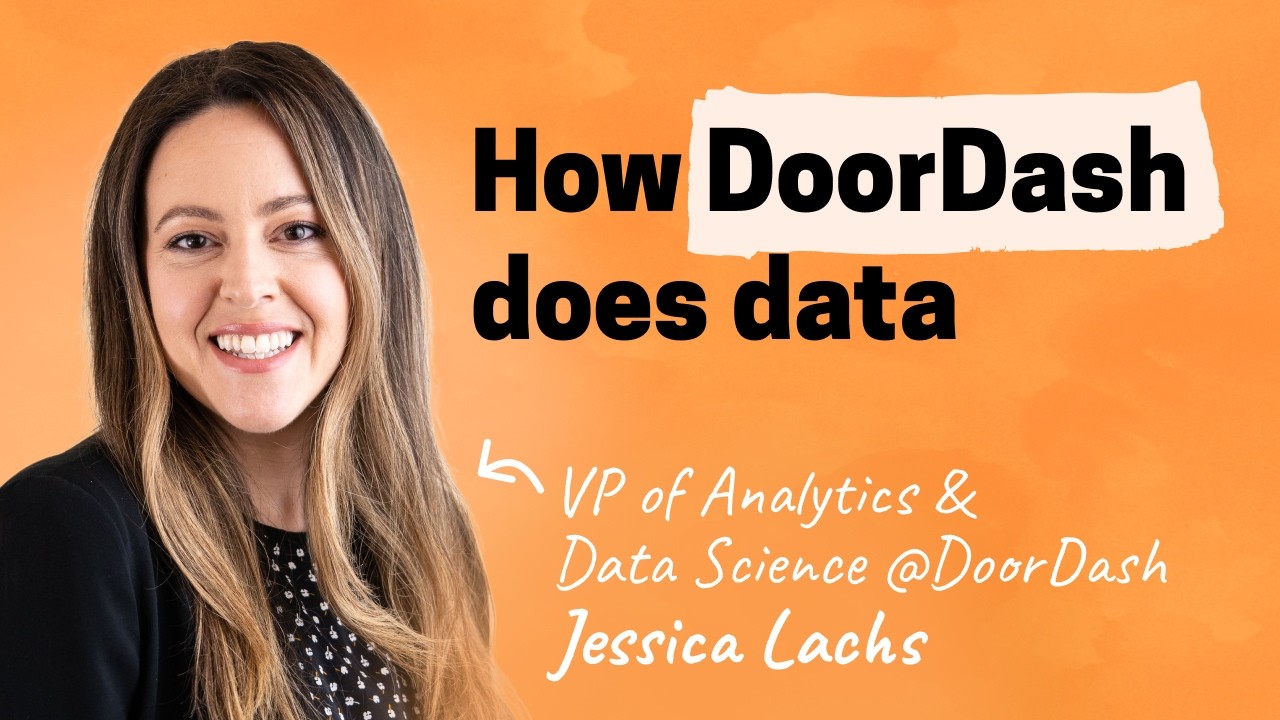
Building a world-class data org | Jessica Lachs (VP of Analytics and Data Science at DoorDash)
Executive Summary
Jessica Lachs discusses central analytics with embedded pods, business partnership, consistent metrics, explicit trade-offs, distributions and complementary hiring. Selected third-party transcript coverage excludes sponsor reads, AI-product passages, personal wellbeing discussion and numerical company claims. DoorDash examples are her accounts, unverified here. Untimed editorial topics are not video chapters.
Key Takeaways
Combine central standards with embedded work
Lachs describes pods aligned with partner teams while reporting through a central analytics organization. Shared goals help analysts work as partners rather than a detached request queue. The arrangement is her account of DoorDash's structure, not proof that it fits every organization.
Make the team a thought partner
She expects analysts to bring opportunities, trade-offs and a deeper understanding of business problems to the table. A seat in the conversation must be earned through that contribution. Completing requested data pulls alone is not the whole role she describes.
Use common methods and definitions
A central organization can support a consistent hiring bar and shared metrics. Lachs points out that separate definitions of the same business measure make collaboration harder. Reusing methods also gives several teams a way to improve one approach instead of rebuilding it separately.
Make trade-offs visible
When a new request arrives, Lachs recommends comparing it with the work already planned. Ask which item should move, rather than quietly trying to do everything. Leadership should define an operating model so junior people do not carry every difficult prioritization conversation alone.
Look beyond the average
Her referral example describes an aggregate that hid groups with very different behavior. A deeper analysis changed the understanding of the channel. The lesson is to inspect distributions and cohorts before deciding an average explains the opportunity.
Test short-term inputs
Lachs wants a measurable input that can be changed quickly and tested against a longer-term outcome. Choosing a plausible input is only the start: experimentation should check whether it actually moves the intended result. She also favors measures people can understand over opaque composite scores.
Hire complementary experience
She values technical skills alongside different functional backgrounds and company stages. People who have worked at startups and people who have seen scale can teach one another. This is a team-design choice, not an argument that technical competence can be skipped.
The Conversation Breakdown
Combine central standards with embedded work
⏱ Untimed topicLachs describes pods aligned with partner teams while reporting through a central analytics organization. Shared goals help analysts work as partners rather than a detached request queue. The arrangement is her account of DoorDash's structure, not proof that it fits every organization.
Make the team a thought partner
⏱ Untimed topicShe expects analysts to bring opportunities, trade-offs and a deeper understanding of business problems to the table. A seat in the conversation must be earned through that contribution. Completing requested data pulls alone is not the whole role she describes.
Use common methods and definitions
⏱ Untimed topicA central organization can support a consistent hiring bar and shared metrics. Lachs points out that separate definitions of the same business measure make collaboration harder. Reusing methods also gives several teams a way to improve one approach instead of rebuilding it separately.
Make trade-offs visible
⏱ Untimed topicWhen a new request arrives, Lachs recommends comparing it with the work already planned. Ask which item should move, rather than quietly trying to do everything. Leadership should define an operating model so junior people do not carry every difficult prioritization conversation alone.
Look beyond the average
⏱ Untimed topicHer referral example describes an aggregate that hid groups with very different behavior. A deeper analysis changed the understanding of the channel. The lesson is to inspect distributions and cohorts before deciding an average explains the opportunity.
Test short-term inputs
⏱ Untimed topicLachs wants a measurable input that can be changed quickly and tested against a longer-term outcome. Choosing a plausible input is only the start: experimentation should check whether it actually moves the intended result. She also favors measures people can understand over opaque composite scores.
Hire complementary experience
⏱ Untimed topicShe values technical skills alongside different functional backgrounds and company stages. People who have worked at startups and people who have seen scale can teach one another. This is a team-design choice, not an argument that technical competence can be skipped.
Core Frameworks & Ideas
Central reporting, shared goals
Align analytics pods with partner teams while keeping common standards and definitions.
Explicit priority trade-offs
Compare a new request with planned work and agree what should move.
Input-outcome experiment
Test whether a short-term measurable input drives the intended longer-term outcome.
Actionable Next Steps
- ✓Write down how analytics and partner teams agree priorities.
- ✓Compare a new request with the current work before accepting it.
- ✓Inspect a distribution or cohort split behind an important average.
- ✓Test a proposed short-term input against its long-term outcome.
Notable Quotes
“So I think that that's been really a happy medium, but still preserves all the benefits of a central org.”
“I think it's really important to establish a culture and for leadership to really establish the rules of working and that operating model so that some of the junior folks aren't forced to always have to say no.”
“So I think it's really important to find the right inputs, and then through experimentation test whether or not those short-term inputs are driving the long-term output that you're looking for.”
The One Thing to Remember
Treat analytics as a business partner with shared goals, clear trade-offs and tested measures.