


Chandra's DIRTY Exit: What Tata's Chairman Isn't Telling You About His Resignation?
Executive Summary
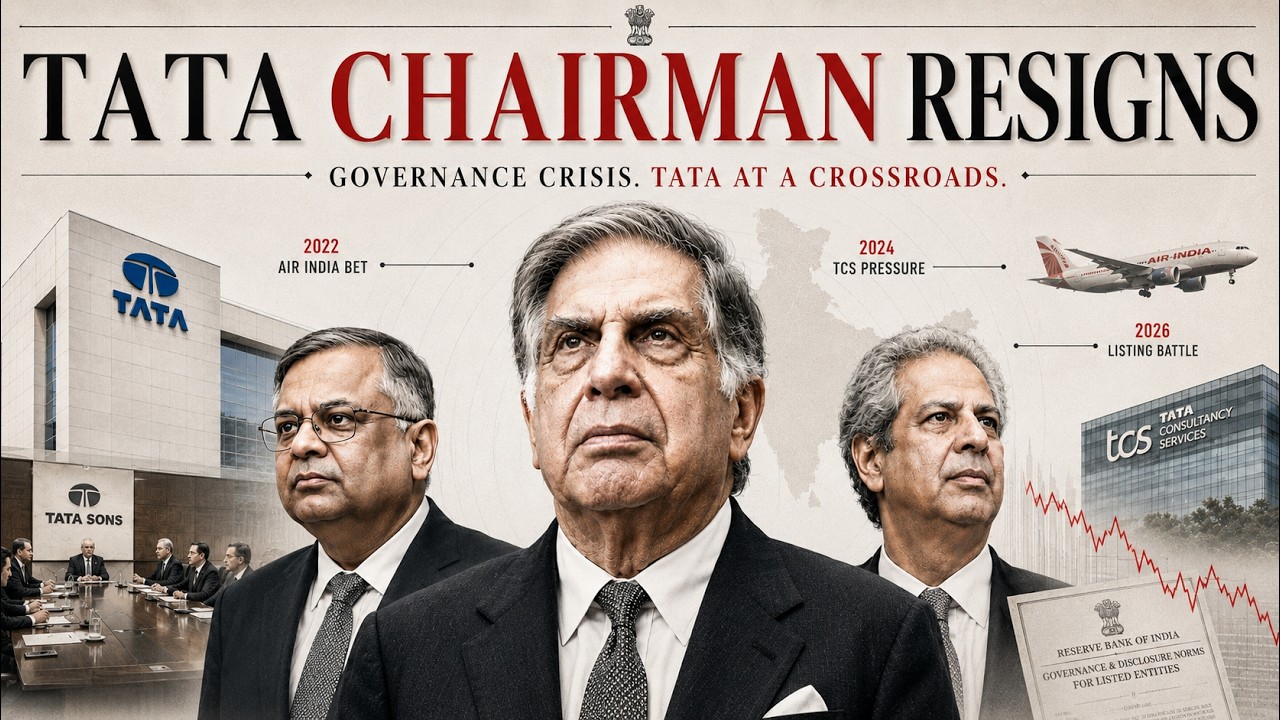
A Think School case study on the narrator's account of why N Chandrasekaran, chairman of Tata Sons, stepped back from a third term in August 2026. The narrator explains the Tata group's ownership by trusts, the tension he says arose between Chandrasekaran and the Tata Trusts chairman Noel Tata over TCS, Air India and private-company losses, and a regulatory push for Tata Sons to list. Sponsor: Emergent, an AI software-building platform, named in a mid-roll read in which the narrator describes using it for lead tracking at Think School. PARTIAL COVERAGE: this note covers the opening, the Emergent read, the Tata ownership structure, the TCS and loss sections, the listing question, and the closing, and does not cover every part of the roughly 15 minute video. All claims about motives, disagreements and financial figures are the narrator's own and are not independently verified. This is a summary, not financial or investment advice, and the sponsor read is an advertisement.
Key Takeaways
A record of growth
The narrator says that under the chairman, the group's value rose from 8.22 lakh crore to 23.35 lakh crore and profit rose five times, and that he bought back Air India.
A resignation letter
He says that on 12 August 2026 the chairman wrote a resignation letter declining a third term, which exposed a deep conflict.
Sponsor: Emergent
A mid-roll read says that the Think School team missed many leads because they only tracked email and WhatsApp, and describes building an AI sales system with Emergent. This is the sponsor's pitch.
How Tata is owned
He says two Tata trusts own 51.5% of Tata Sons and trusts together control about 66%, with the Shapoorji Pallonji group holding 18.4%.
Crack two: TCS under pressure
He says TCS reported its first revenue decline since its 2004 listing and let 12,000 employees go, although it makes more profit than several other group companies combined.
Crack three: private-side losses
He says 16 privately held Tata Sons businesses lost about 31,822 crore in the financial year, with Air India losing 22,238 crore.
The listing question
He says the Reserve Bank of India classed Tata Sons as an upper-layer NBFC and wants it to list, which he says was central to the dispute, and he asks viewers who they think is right.
The Conversation Breakdown
A record of growth
⏱ Untimed topicThe narrator says that under the chairman, the group's value rose from 8.22 lakh crore to 23.35 lakh crore and profit rose five times, and that he bought back Air India.
A resignation letter
⏱ Untimed topicHe says that on 12 August 2026 the chairman wrote a resignation letter declining a third term, which exposed a deep conflict.
Sponsor: Emergent
⏱ Untimed topicA mid-roll read says that the Think School team missed many leads because they only tracked email and WhatsApp, and describes building an AI sales system with Emergent. This is the sponsor's pitch.
How Tata is owned
⏱ Untimed topicHe says two Tata trusts own 51.5% of Tata Sons and trusts together control about 66%, with the Shapoorji Pallonji group holding 18.4%.
Crack two: TCS under pressure
⏱ Untimed topicHe says TCS reported its first revenue decline since its 2004 listing and let 12,000 employees go, although it makes more profit than several other group companies combined.
Crack three: private-side losses
⏱ Untimed topicHe says 16 privately held Tata Sons businesses lost about 31,822 crore in the financial year, with Air India losing 22,238 crore.
The listing question
⏱ Untimed topicHe says the Reserve Bank of India classed Tata Sons as an upper-layer NBFC and wants it to list, which he says was central to the dispute, and he asks viewers who they think is right.
Core Frameworks & Ideas
Trust-controlled holding structure - the narrator's explanation
Charitable trusts own most of the holding company, which shapes decisions.
Cash cow and cash burners - the group's profit mix
One strong business funding losses elsewhere creates internal conflict.
Public scrutiny versus private bets - the listing trade-off
Listing brings scrutiny, staying private allows long-term bets.
Actionable Next Steps
- ✓Map who really controls the companies you depend on, including trusts and holding layers.
- ✓Check which of your business lines fund the others and which lose money.
- ✓Count the leads you receive from every channel and how many you answer.
- ✓Verify the Tata figures from company filings before relying on them.
Notable Quotes
“A lead is a lead no matter where it comes from.”
“No salaried professional in the history of Indian business has ever created this much value for people.”
“you need to understand the unique structure of the Tata Group”
The One Thing to Remember
The narrator argues that cracks over leadership, losses and a possible stock-market listing explain the resignation, and that the outcome affects Tata's long-term bets.