


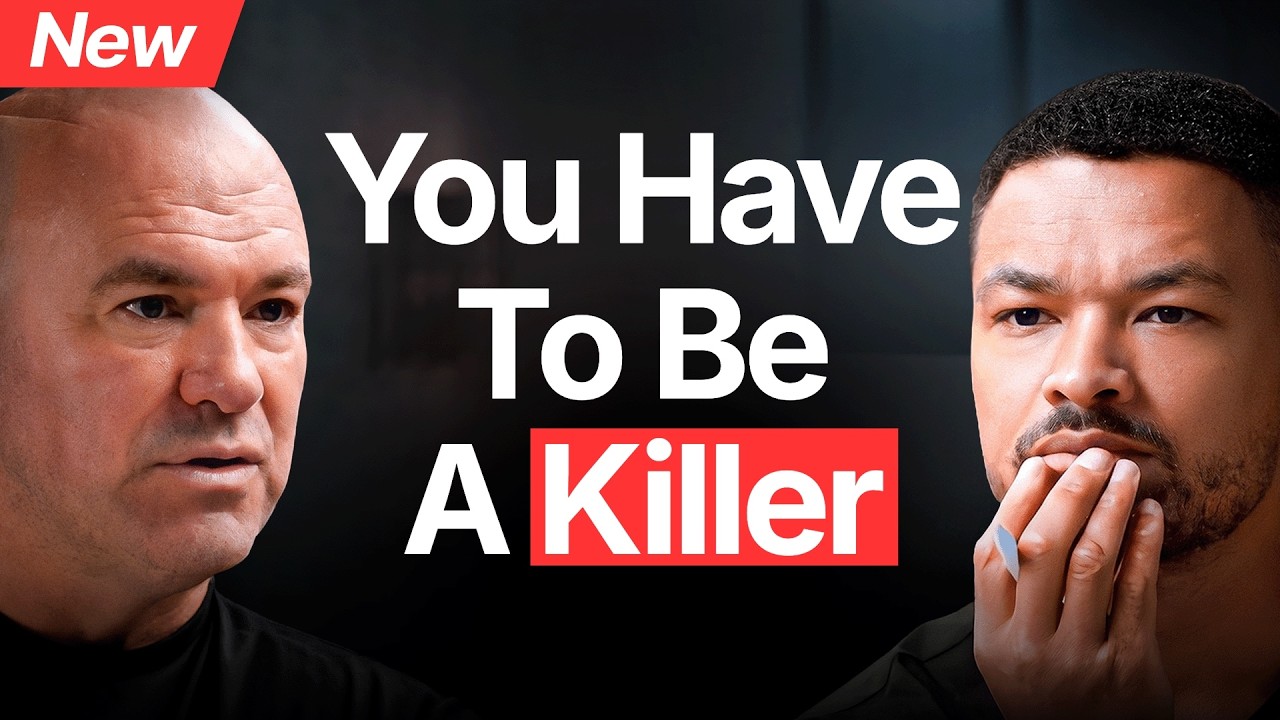
Dana White: This Generation Thinks You Can Build A Business From Home, It's Impossible!
Executive Summary
White describes entrepreneurship as an active, demanding commitment rather than an entitlement to success. He says a connection can create an opportunity but cannot deliver results for you. His UFC story moves from wearing every hat to hiring people who fit and building loyalty. He also explains why specific criticism can be useful and why he guards a small number of priorities against distractions. These are lessons from his experience, not proof that one work style fits every business.
Key Takeaways
An open door still requires delivery
White says nobody owes you success. A family member or contact may make a phone call, but the person who receives that chance still has to perform. The practical lesson is to prepare for an opportunity rather than confusing access with achievement.
Know the work before building the team
White recalls being the everything guy when the company had only a couple of employees. Early leaders often have to understand many parts of the operation. As it grows, the job shifts toward finding people who fit and can do the work, not pretending one person can keep doing everything.
Hiring quality shapes the business
White emphasizes recognizing who fits, who works and who does not. The skill is not just attracting impressive resumes, but identifying people who contribute in the actual setting. Clear expectations and attention to how a hire performs matter as the team becomes larger.
Loyalty is built through relationships
White recalls telling employees they could go home at the beginning of COVID if they felt unsafe or had vulnerable loved ones. He says nobody left. He presents this as evidence of team loyalty; the story is his account, not an argument that workers should ignore health concerns.
Criticism can contain useful information
White likes critics because they spell out what they think is wrong with the business. That does not mean every complaint is accurate. The useful move is to separate specific observations from insults and test whether the feedback exposes a real weakness.
Focus means declining attractive distractions
White says he concentrates on a small number of daily priorities and avoids offers that pull him away from them. A project can look exciting yet fail to serve the current business. His approach makes saying no part of execution rather than treating every new invitation as progress.
The Conversation Breakdown
Responsibility, team-building and focus
⏱ 14:39White connects responsibility with his early experience running the UFC. He describes wearing every hat before learning how to build a team. His account of employees during COVID illustrates the loyalty he values, while the criticism discussion shows why he listens for specific information even from people who dislike him. He then explains the importance of a narrow daily focus. These ideas are presented as his operating philosophy, not a universal requirement to work without rest.
Core Frameworks & Ideas
Wear the hats, then hire for fit
Understand the operation in its early stage, then build a team that can own the work. Growth requires judging contribution and fit rather than relying on one person forever.
Critics as feedback
Extract a testable claim from criticism. Decide whether it reveals a business issue, while leaving personal attacks aside.
A short priority list
A small set of priorities makes it easier to reject distractions. Evaluate opportunities against the work you have chosen to protect.
Actionable Next Steps
- ✓Write the few priorities that matter most for the business today and compare new requests against them.
- ✓For a new hire, define what contribution and team fit mean in observable behavior. Review performance against those expectations.
- ✓Read one piece of criticism and pull out a specific claim you can test, rather than reacting to the tone alone.
- ✓When someone offers an introduction, prepare a clear account of what you can deliver and follow through on it.
Notable Quotes
“Nobody owes you anything. Nobody.”
“When we first bought the company, I was the everything guy.”
“The haters are the best, man.”
The One Thing to Remember
An introduction may open the door; your preparation and work determine what happens after you walk through it.