


Freebies, Water Crisis, Dirty Yamuna & Healthcare Problems Under AAP's Rule! : Delhi 2025 Elections
Executive Summary
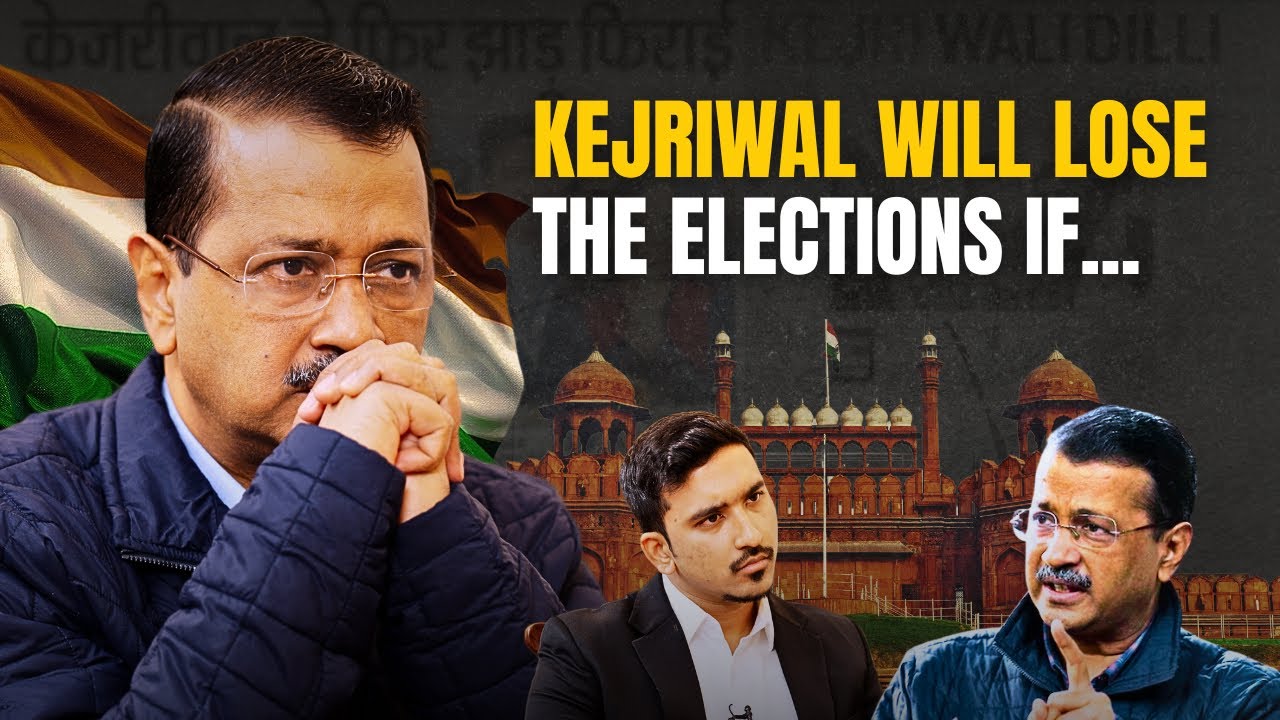
Think School's Ganesh Prasad sits with AAP leaders Arvind Kejriwal, Atishi, Raghav Chadha and Satyendar Jain weeks before the 2025 Delhi election for a midnight accountability interview. On water, their case: piped supply pushed into colonies that ran on tankers, about 4,000 km of new pipelines, production up from roughly 900 to over 1,000 MGD against a demand of 1,250-1,300, a 24/7 pilot in Rajendra Nagar, and a 20,000-litre free-water design that bills in full above the limit so conservation stays rewarded. They blame Haryana's ammonia discharges for shutting two treatment plants and describe recharge plans (STP-treated water, Yamuna floodplains, decentralized plants) to close the gap. On healthcare, they defend the mohalla clinic model against the ghost-patient audit - fix the flaw, don't scrap the system - and explain the three-tier referral chain from clinic to polyclinic specialists to hospitals, arguing public hospitals beat insurance schemes like Ayushman Bharat for the poor. The freebie defense is the episode's core: Chadha contrasts 200 free units of electricity for a common man with the 4,000 free units MPs themselves get, argues half of a poor family's income already goes to taxes, and pitches bottom-up cash (Rs 1,000 a month to women, wedding aid for rickshaw pullers) against trickle-down theory. Atishi closes on education - 'It is a question of intent; there is no other question' - the rebuild of every school building, principals trained at Finland, Singapore, Cambridge and IIM-Ahmedabad, and the landfill cleanup she says is stalled only because the MCD standing committee has not been constituted for two years amid a Supreme Court case.
Key Takeaways
Delhi's water math, in their telling: supply up, demand still ahead
Production rose from about 900 MGD to over 1,000 (some days 1,020-25) via ~4,000 km of new pipelines, but demand is 1,250-1,300 MGD. The stated plan: build capacity to 1,500 MGD, run at 80%, and add 100 MGD from Yamuna floodplain wells plus decentralized recharge plants.
The 20,000-litre rule is a pricing design, not just a handout
Water is free up to 20,000 litres a month; cross it and the full bill applies. The intent is a built-in conservation incentive - Kejriwal frames it as the reason people started saving water rather than wasting a subsidized resource.
The Yamuna failure is pinned on upstream ammonia and missing sewers
Two treatment plants shut when ammonia spikes in water arriving from Haryana, and the Najafgarh and Badshahpur drains carry the city's sewage across it. Their answer: sewer networks in all 1,792 unauthorized colonies (development there was barred before 2015) and treatment capacity to match the network.
Their mohalla clinic defense: fix the flaw, don't scrap the system
Confronted with the anti-corruption finding of 65,000 ghost patients, the response is CCTV in every clinic, registers everywhere, and a railway analogy - an accident does not mean you shut the railways. The model is a referral ladder: mohalla clinic, then polyclinic with gynecology, pediatric and other specialists, then super-specialty hospitals for the big cases.
The freebie argument is an economic theory fight
Chadha's framing: an MP gets 4,000 free units a month and nobody calls it a freebie, but 200 units for a common man is; a poor family loses roughly half its income to income tax and GST; and cash at the bottom - Rs 1,000 a month to women, wedding aid for rickshaw pullers - is real empowerment that cycles into the economy, against trickle-down theory which they mock directly.
School reform as sequencing: basics, buildings, then benchmarks
Atishi's account: year one fixed toilets, cleanliness, boundaries, drinking water and blackboards across every school at once; then every building was torn down and rebuilt (22,700 rooms in ten years versus 24,000 in the previous 65, per her figures); then principals went to Finland, Singapore, Cambridge and IIM-Ahmedabad - where the real shift was seeing a world-class institution's benchmark for the first time.
The landfill excuse is bureaucratic, and partially checkable
Biomining contracts were awarded when AAP took the MCD in December 2022, but they lapsed and cannot be renewed because the MCD standing committee - the only body that can approve large contracts - has not been constituted for two years while a Supreme Court case over it runs. Her estimate once it forms: 1.5-2 years to clear the mountains.
The Conversation Breakdown
No masala, just accountability
⏱ Untimed topicGanesh opens as a 'messenger of the people,' not a journalist hunting headlines, with the election weeks away; a rapid-fire teaser of the hardest questions (ghost patients, tanker mafia, freebies logic, women's empowerment) and an Odoo sponsor read set up a combative but civil midnight session.
The water math: 900 to 1,000 MGD against 1,300
⏱ Untimed topicPipelines into tanker-dependent colonies, production gains, the 20,000-litre free design and its conservation logic, government tankers replacing the mafia, and the Rajendra Nagar 24/7 pilot - with the admission that 1,000-plus MGD is still not sufficient against 1,250-1,300 demand.
Yamuna, ammonia and the Haryana dispute
⏱ Untimed topicTwo plants knocked out by ammonia spikes, the drain geography, why court orders are awaited, and the recharge playbook: STP-treated water into the ground, floodplain wells for 100 MGD, small decentralized plants, and sewer networks for 1,792 unauthorized colonies.
Mohalla clinics under audit
⏱ Untimed topicThe 65,000 ghost-patient finding put directly to them; their rebuttals (CCTV, registers, rectify-don't-close); how the clinic-polyclinic-hospital referral chain is supposed to work; private hospital 'loot'; and why they argue free public hospitals beat Ayushman Bharat-style insurance for the poor.
The freebie economics defense
⏱ Untimed topic24/7 electricity as Delhi's differentiator; Chadha's MP-perks comparison and the roughly-50%-of-income tax incidence argument; trickle-down theory mocked ('Ambani and Adani's pockets'); Rs 1,000 a month to women as real empowerment; wedding aid for rickshaw pullers; and the pujari registration scheme, all framed as money cycling at the bottom of the economy.
Education: intent, buildings and benchmarks
⏱ Untimed topicAtishi's sequence - year-one basics everywhere, then rebuilding every school, then training principals abroad; the IIM-Ahmedabad lesson (punctual classes, the director teaching, preparation) that reset what a government principal believed possible; the child who said the country's future studies in private schools; CCTV in classrooms; and ChatGPT self-learning by students.
Landfills and the stall
⏱ Untimed topicBiomining contracts from December 2022, their lapse, and the two-year absence of an MCD standing committee amid Supreme Court litigation as the stated reason the mountains still stand; her 1.5-2 year cleanup estimate once it forms; closing courtesies past midnight with both sides calling the exchange honest.
Core Frameworks & Ideas
Price the boundary, not the unit
Delhi's water and electricity subsidies are free only below a threshold (20,000 litres, 200 units) and fully priced above it. The design goal: the poor get security while overconsumption stays expensive, so the subsidy carries its own conservation incentive.
Rectify, don't abolish
Their standard answer to audit findings (ghost patients, wrong phone numbers): find the flaw's size, fix the process, keep the system - the railway-accident analogy. A governance heuristic worth applying both ways: it is also the incumbent's easiest deflection.
Change the benchmark before the budget
Atishi's claim that the deepest shift came not from training content but from principals seeing IIM-Ahmedabad and world-class schools for the first time - once the reference standard moved, 'the broken school next door' stopped being acceptable. Exposure as a policy tool.
Actionable Next Steps
- ✓Evaluating any subsidy anywhere: check whether it prices the boundary (free below, full cost above) or just the unit - the first builds conservation in, the second builds waste in.
- ✓Reading an audit of a public program: ask two questions before judging - how large is the verified flaw, and is the proposed response rectification or shutdown? Both this episode's guests and its host show how each answer can be weaponized.
- ✓Running an institution reform: copy the sequencing - fix the daily basics first (toilets, water, cleanliness) to signal intent, then infrastructure, then expose your leaders to the best benchmark you can find.
- ✓Watching election-season interviews: treat every figure (MGD, classroom counts, ghost patients) as the speaker's claim, note the source named, and check it against the audit or report cited before repeating it.
Notable Quotes
“The investment in education by our government was for the next generation, not for the next election.”
“It is a question of intent; there is no other question.”
“No sir, I am not the future of the country - I study in a government school.”
“When I gave a common man 200 units of free electricity, all the BJP folks were up in arms.”
The One Thing to Remember
AAP's central argument, defended across two hours: welfare is not a handout but economic design - price the boundary so conservation survives (free water to 20,000 litres, full bill above), and put money at the bottom because that spending, not trickle-down, is what moves an economy.