


Greenland's Secret SUPERPOWER | Geopolitical Case Study
Executive Summary
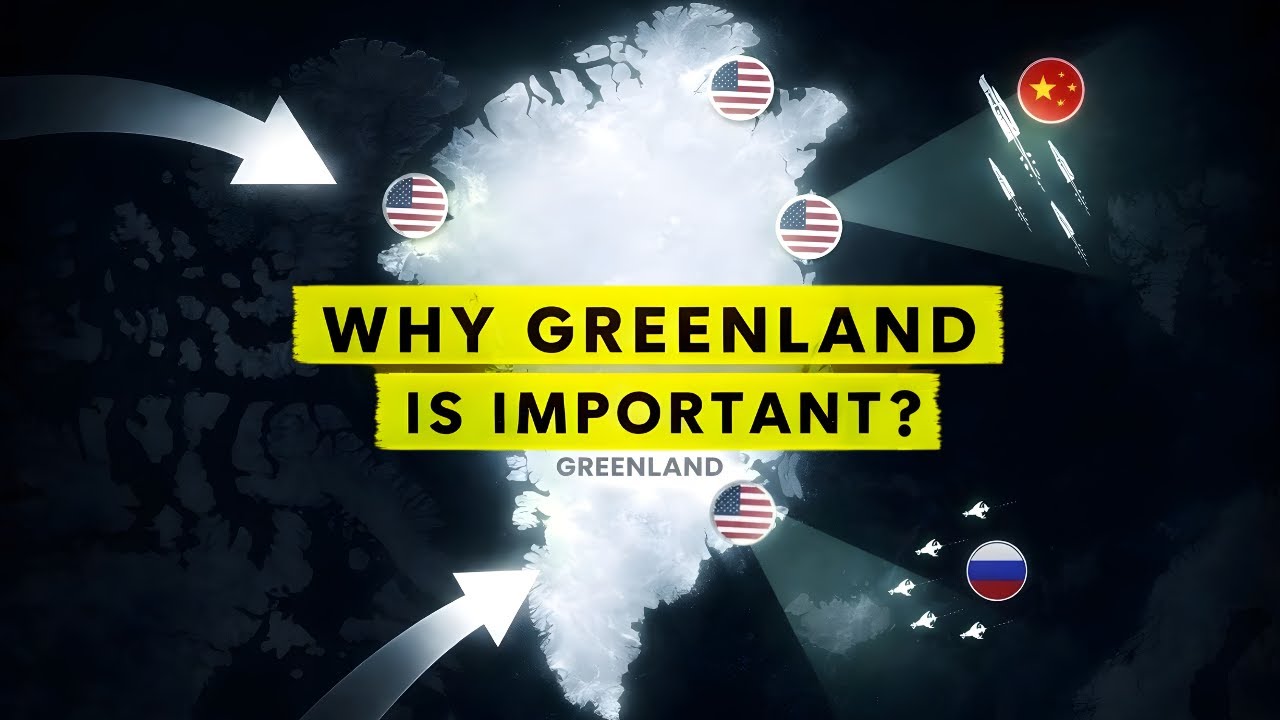
A Think School geopolitical case study asking why the US wants Greenland and what could follow. The presenter argues Greenland matters for trade (the Northwest Passage), early warning against missiles, oil and gas, and rare earths, and describes how the US could gain control through independence rather than invasion. The caption text covers the whole 13 minute video. Figures (31 billion barrels of oil, 4.4 trillion dollars of resources, 600 million dollars of Danish subsidy) and the war risk are the presenter's claims and predictions, not independently checked. This is political commentary, not advice. Captions are automatic with errors. Topics are untimed; metadata follows YouTube. Source: https://youtubetotranscript.com/transcript?v=FdjnOdLDAbg
Key Takeaways
Why it could become a flashpoint
The presenter says Greenland is a Danish territory, Denmark and the US are both NATO members, and NATO's Article 5 treats an attack on one as an attack on all. So a US move could, in his reading, pit allies against each other.
A poor island
He notes Greenland has about 57,000 people and a GDP of about 3.3 billion dollars, with an economy built on fish exports and help from Denmark.
Reason one: a trade shortcut
He says the Northwest Passage could cut London to Tokyo from about 21,000 km via Suez to about 16,000 km, saving about two weeks, and that Greenland sits at its entry point.
Reason two: early warning
He says Greenland is about 4,650 km from Moscow and its radars could give the US 15 to 20 extra minutes of warning of missiles over the North Pole.
Reason three: oil, gas and minerals
He cites estimates of 13 percent of undiscovered oil and 30 percent of natural gas in the Arctic, and says Greenland holds rare earths, zinc, iron ore and uranium, worth about 4.4 trillion dollars in his claim.
Why melting ice changes the game
He says the Arctic is warming four times faster than the rest of the planet, making mines and sea routes accessible, and sees climate change escalating competition between the US and Russia.
How the US could take control without invading
He says Denmark sends about 600 million dollars a year, roughly half of Greenland's budget. The US could offer more money for independence, then sign a treaty for military access. He also lists tariffs or invasion as less likely paths. These are his scenarios and predictions.
The Conversation Breakdown
Why it could become a flashpoint
⏱ Untimed topicThe presenter says Greenland is a Danish territory, Denmark and the US are both NATO members, and NATO's Article 5 treats an attack on one as an attack on all. So a US move could, in his reading, pit allies against each other.
A poor island
⏱ Untimed topicHe notes Greenland has about 57,000 people and a GDP of about 3.3 billion dollars, with an economy built on fish exports and help from Denmark.
Reason one: a trade shortcut
⏱ Untimed topicHe says the Northwest Passage could cut London to Tokyo from about 21,000 km via Suez to about 16,000 km, saving about two weeks, and that Greenland sits at its entry point.
Reason two: early warning
⏱ Untimed topicHe says Greenland is about 4,650 km from Moscow and its radars could give the US 15 to 20 extra minutes of warning of missiles over the North Pole.
Reason three: oil, gas and minerals
⏱ Untimed topicHe cites estimates of 13 percent of undiscovered oil and 30 percent of natural gas in the Arctic, and says Greenland holds rare earths, zinc, iron ore and uranium, worth about 4.4 trillion dollars in his claim.
Why melting ice changes the game
⏱ Untimed topicHe says the Arctic is warming four times faster than the rest of the planet, making mines and sea routes accessible, and sees climate change escalating competition between the US and Russia.
How the US could take control without invading
⏱ Untimed topicHe says Denmark sends about 600 million dollars a year, roughly half of Greenland's budget. The US could offer more money for independence, then sign a treaty for military access. He also lists tariffs or invasion as less likely paths. These are his scenarios and predictions.
Core Frameworks & Ideas
Choke points and alternatives - presenter's lens
Control of shipping routes like Suez and Panama makes any alternative route strategically valuable.
Follow the resource - presenter's pattern
He says US foreign policy tends to follow resources, now oil and rare earths.
Access is the missing ingredient - presenter's point
Greenland's wealth was locked under ice until warming made it reachable.
Actionable Next Steps
- ✓Look up the Northwest Passage on a map and compare its length to the Suez route.
- ✓Check the US Geological Survey Arctic estimates before relying on the numbers cited.
- ✓Read the 2009 Greenland self-government act to see which powers Denmark keeps.
- ✓Notice which resources and routes are mentioned when countries argue over territory.
Notable Quotes
“whoever owns this island controls the front door of the western world”
“Greenland is also a geological treasure chest”
“So the US can practically own Greenland without ever having to buy it”
The One Thing to Remember
The presenter's argument: Greenland is a poor island sitting on the front door of the western world.