


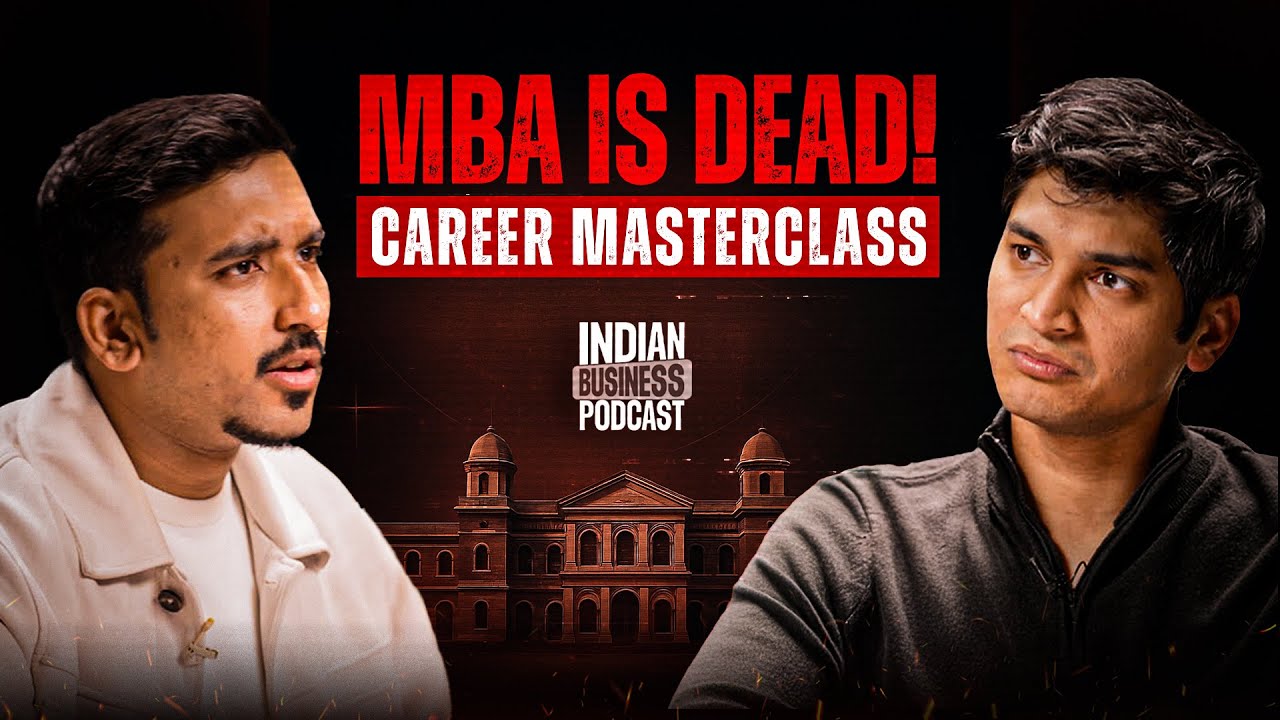
Harsh Truth About Degrees, Placements & Indian Students : Pratham Mittal | IBP EP30
Executive Summary
Masters' Union co-founder Pratham Mittal talks with Ganesh Prasad about his family's sweet-shop business, three generations of entrepreneurship, keeping teams together, and his aim of building a top-ranked Indian business school. Coverage comes from approximately the first 50,000 characters of third-party captions, not the full conversation; the later education and placement discussion in the video title is only partly covered and the unseen ending is not summarized. Claims about education, rankings and placements are the guest's views and not independently checked. Sponsor pitches are omitted. Captions contain errors and no named speakers; attribution follows the exchange. Topics are untimed; metadata follows YouTube. Source: https://youtubetotranscript.com/transcript?v=qnEXkNUaAcI
Key Takeaways
Add value where the margin is
Mittal says his grandfather, who began by serving tea and biscuits to an army unit, found the real margin in sweets he made at home. He gives gross margin figures that rose from single digits to as much as 70 to 80 percent. This is a family account, and the numbers are his estimates.
Use a loss leader to bring people in
He describes his grandfather selling samosas in the morning at a loss to draw customers into the store, where they bought higher-margin sweets. Mittal calls it a loss leader strategy used without an MBA. Check basket-level profit before judging a low-priced item.
Think beyond what is normal for your trade
He says that in the 1960s his grandfather built a closed shop with doors and fans to keep sweets clean, when many shops kept them open to the street. A small quality choice can set a business apart. This is his family story, not evidence about every sweet shop.
Treat frugality as doing more with less
Mittal says frugality is a core family value, such as having a carpenter build a counter on site rather than paying several layers of commission. He frames it as spending where it counts. His claim is a values statement, not a measured saving.
Take the team along
He says employees from the 1960s still work with the family business, and that treating them like family builds loyalty. He argues merit can also be created, and describes giving an underperforming executive training and honest feedback before parting ways. He says leaders should look at their own culture first.
Check the culture before you hop
Mittal suggests a young executive look at how long senior people have stayed, for example by checking average tenure on LinkedIn, and read the founder's intent at a young company. He says compounding takes years to show. This is his heuristic and not a guarantee.
Add value where the margin is
Mittal says his grandfather, who began by serving tea and biscuits to an army unit, found the real margin in sweets he made at home. He gives gross margin figures that rose from single digits to as much as 70 to 80 percent. This is a family account, and the numbers are his estimates.
Use a loss leader to bring people in
He describes his grandfather selling samosas in the morning at a loss to draw customers into the store, where they bought higher-margin sweets. Mittal calls it a loss leader strategy used without an MBA. Check basket-level profit before judging a low-priced item.
Think beyond what is normal for your trade
He says that in the 1960s his grandfather built a closed shop with doors and fans to keep sweets clean, when many shops kept them open to the street. A small quality choice can set a business apart. This is his family story, not evidence about every sweet shop.
Aim to build an Indian institution that competes globally
He says India has no university in the top global ranks and that bright graduates often settle abroad. He believes a top-10 Indian institution is possible and that India needs many more universities. These are his views, shown with his stated motivation, and the ranking claims are not checked.
The Conversation Breakdown
Add value where the margin is
⏱ Untimed topicMittal says his grandfather, who began by serving tea and biscuits to an army unit, found the real margin in sweets he made at home. He gives gross margin figures that rose from single digits to as much as 70 to 80 percent. This is a family account, and the numbers are his estimates.
Use a loss leader to bring people in
⏱ Untimed topicHe describes his grandfather selling samosas in the morning at a loss to draw customers into the store, where they bought higher-margin sweets. Mittal calls it a loss leader strategy used without an MBA. Check basket-level profit before judging a low-priced item.
Think beyond what is normal for your trade
⏱ Untimed topicHe says that in the 1960s his grandfather built a closed shop with doors and fans to keep sweets clean, when many shops kept them open to the street. A small quality choice can set a business apart. This is his family story, not evidence about every sweet shop.
Treat frugality as doing more with less
⏱ Untimed topicMittal says frugality is a core family value, such as having a carpenter build a counter on site rather than paying several layers of commission. He frames it as spending where it counts. His claim is a values statement, not a measured saving.
Take the team along
⏱ Untimed topicHe says employees from the 1960s still work with the family business, and that treating them like family builds loyalty. He argues merit can also be created, and describes giving an underperforming executive training and honest feedback before parting ways. He says leaders should look at their own culture first.
Check the culture before you hop
⏱ Untimed topicMittal suggests a young executive look at how long senior people have stayed, for example by checking average tenure on LinkedIn, and read the founder's intent at a young company. He says compounding takes years to show. This is his heuristic and not a guarantee.
Add value where the margin is
⏱ Untimed topicMittal says his grandfather, who began by serving tea and biscuits to an army unit, found the real margin in sweets he made at home. He gives gross margin figures that rose from single digits to as much as 70 to 80 percent. This is a family account, and the numbers are his estimates.
Use a loss leader to bring people in
⏱ Untimed topicHe describes his grandfather selling samosas in the morning at a loss to draw customers into the store, where they bought higher-margin sweets. Mittal calls it a loss leader strategy used without an MBA. Check basket-level profit before judging a low-priced item.
Think beyond what is normal for your trade
⏱ Untimed topicHe says that in the 1960s his grandfather built a closed shop with doors and fans to keep sweets clean, when many shops kept them open to the street. A small quality choice can set a business apart. This is his family story, not evidence about every sweet shop.
Aim to build an Indian institution that competes globally
⏱ Untimed topicHe says India has no university in the top global ranks and that bright graduates often settle abroad. He believes a top-10 Indian institution is possible and that India needs many more universities. These are his views, shown with his stated motivation, and the ranking claims are not checked.
Core Frameworks & Ideas
Loss leader - family example
Sell one item at a loss to bring customers in, then earn profit from the higher-margin items they add to the basket.
Compounding through retention - guest's view
Staying power in a team compounds over years, so leaders should invest in coaching before replacing people.
Sports team, family and meritocracy together - guest's idea
Combine high standards with care for people rather than choosing one or the other.
Actionable Next Steps
- ✓Check the basket-level margin of any low-priced item you use to attract customers.
- ✓List one honest feedback conversation you owe a team member.
- ✓Look up average tenure at a company you are considering joining.
- ✓Write one cost where being frugal would hurt quality.
- ✓Check the basket-level margin of any low-priced item you use to attract customers.
- ✓List one honest feedback conversation you owe a team member.
- ✓Look up average tenure at a company you are considering joining.
- ✓Write one cost where being frugal would hurt quality.
Notable Quotes
“always do more with less”
“people is what matters”
“merit can also be created”
“always do more with less”
“people is what matters”
“merit can also be created”
The One Thing to Remember
Build a business on value added, a team you invest in and a long-term view.