


How a summer job turned into a 2,000-person ice cream empire (Ben Van Leeuwen) | Masters of Scale
Executive Summary
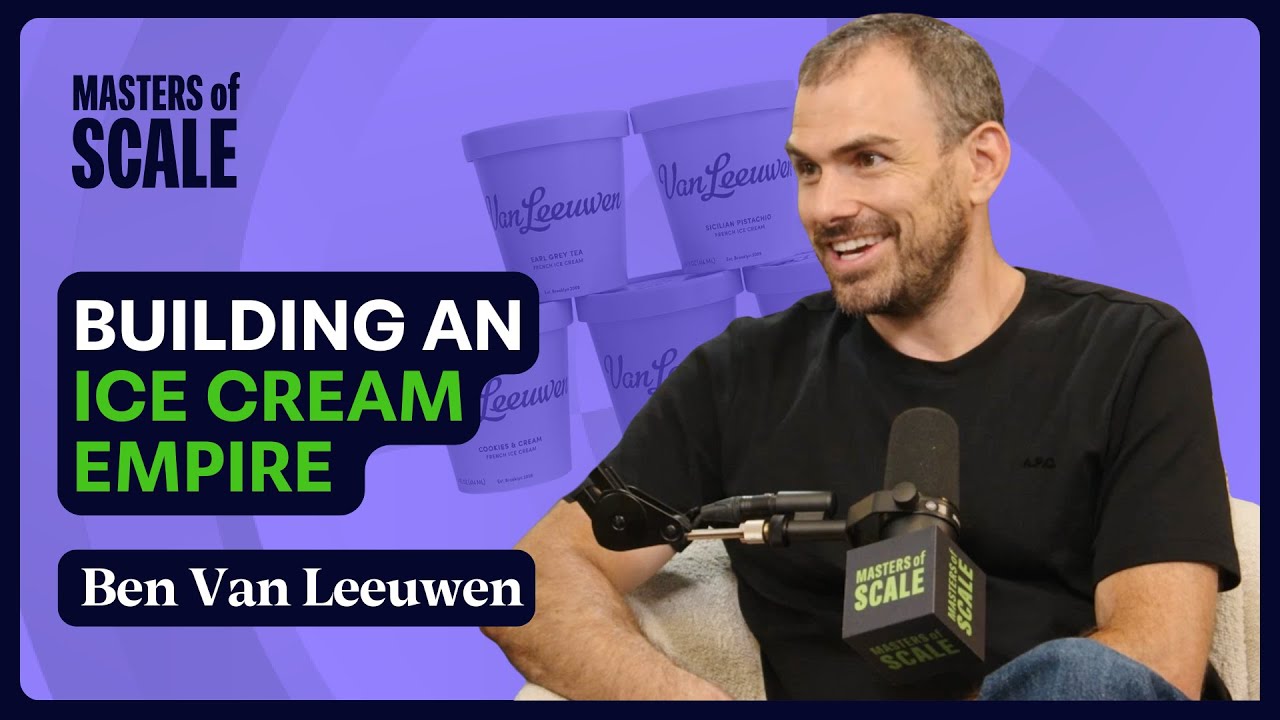
Ben Van Leeuwen traces the ice cream company from two used postal trucks and $60,000 to scoop shops and grocery distribution. He explains low-cost product testing, the economics that made stores more attractive than trucks, co-founder alignment and why viral collaborations do not replace excellent core products. TL;DR Build a product people love before you accelerate expansion, and judge each sales channel by its real economics. Details come from machine-generated captions and the guest's own claims; business figures are not independently checked. Topics are untimed; metadata follows YouTube. Source: https://youtubetotranscript.com/transcript?v=38TjGeYy_Q8
Key Takeaways
Start with available capital
The founders tried to raise $250,000 but assembled $60,000. Used postal trucks costing $2,500 and $5,000 replaced the planned new vehicle; the smaller budget forced hands-on work across product, design and operations.
Test cheaply but seriously
They tested more than 50 chocolate recipes and invited 50 people to sample flavors and fill out surveys. Customer testing did not require an expensive agency study.
Let operating evidence change the model
The first small store reportedly made in three hours what the best truck location made in a day. Stores were easier to operate and generated more revenue, prompting a shift away from new trucks.
Earn the right to scale
The founders initially avoided outside equity partly because they knew the stores were not yet as good as they wanted. Slow improvement preceded later faster expansion.
Wholesale is not automatically attractive
Ben says store cash flow subsidized grocery distribution for years. Frozen fulfillment, trade spending and efficient large competitors made wholesale margins thin.
Alignment matters more than personal history
He and former spouse Laura remained business partners. He attributes that to matching work ethic and growth goals rather than pretending close partnerships never have friction.
Keep novelty separate from the core
The Kraft collaboration generated immediate demand and attention, but he says such ideas are not core. The planned flavor lab puts innovation next to customers for quick feedback.
The Conversation Breakdown
Start with available capital
⏱ Untimed topicThe founders tried to raise $250,000 but assembled $60,000. Used postal trucks costing $2,500 and $5,000 replaced the planned new vehicle; the smaller budget forced hands-on work across product, design and operations.
Test cheaply but seriously
⏱ Untimed topicThey tested more than 50 chocolate recipes and invited 50 people to sample flavors and fill out surveys. Customer testing did not require an expensive agency study.
Let operating evidence change the model
⏱ Untimed topicThe first small store reportedly made in three hours what the best truck location made in a day. Stores were easier to operate and generated more revenue, prompting a shift away from new trucks.
Earn the right to scale
⏱ Untimed topicThe founders initially avoided outside equity partly because they knew the stores were not yet as good as they wanted. Slow improvement preceded later faster expansion.
Wholesale is not automatically attractive
⏱ Untimed topicBen says store cash flow subsidized grocery distribution for years. Frozen fulfillment, trade spending and efficient large competitors made wholesale margins thin.
Alignment matters more than personal history
⏱ Untimed topicHe and former spouse Laura remained business partners. He attributes that to matching work ethic and growth goals rather than pretending close partnerships never have friction.
Keep novelty separate from the core
⏱ Untimed topicThe Kraft collaboration generated immediate demand and attention, but he says such ideas are not core. The planned flavor lab puts innovation next to customers for quick feedback.
Core Frameworks & Ideas
Start with available capital - Ben Van Leeuwen's approach
The founders tried to raise $250,000 but assembled $60,000.
Let operating evidence change the model - Ben Van Leeuwen's approach
The first small store reportedly made in three hours what the best truck location made in a day.
Wholesale is not automatically attractive - Ben Van Leeuwen's approach
Ben says store cash flow subsidized grocery distribution for years.
Actionable Next Steps
- ✓Compare channel margins after fulfillment and promotional spending, not just revenue.
- ✓Run a small blind tasting or product trial before spending on launch marketing.
- ✓Pick one idea from "Test cheaply but seriously" and test it in your own work this week.
- ✓Write down which part of "Alignment matters more than personal history" you disagree with and why.
Notable Quotes
“I was never discouraged”
“we knew we weren't good enough yet to really scale”
“If we didn't have the brick and mortar, I don't know where we'd be”
“But it's not core to us.”
The One Thing to Remember
Build a product people love before you accelerate expansion, and judge each sales channel by its real economics.