


How FRANCE killed its Economy with a Foolish mistake? | Economic Case Study
Executive Summary
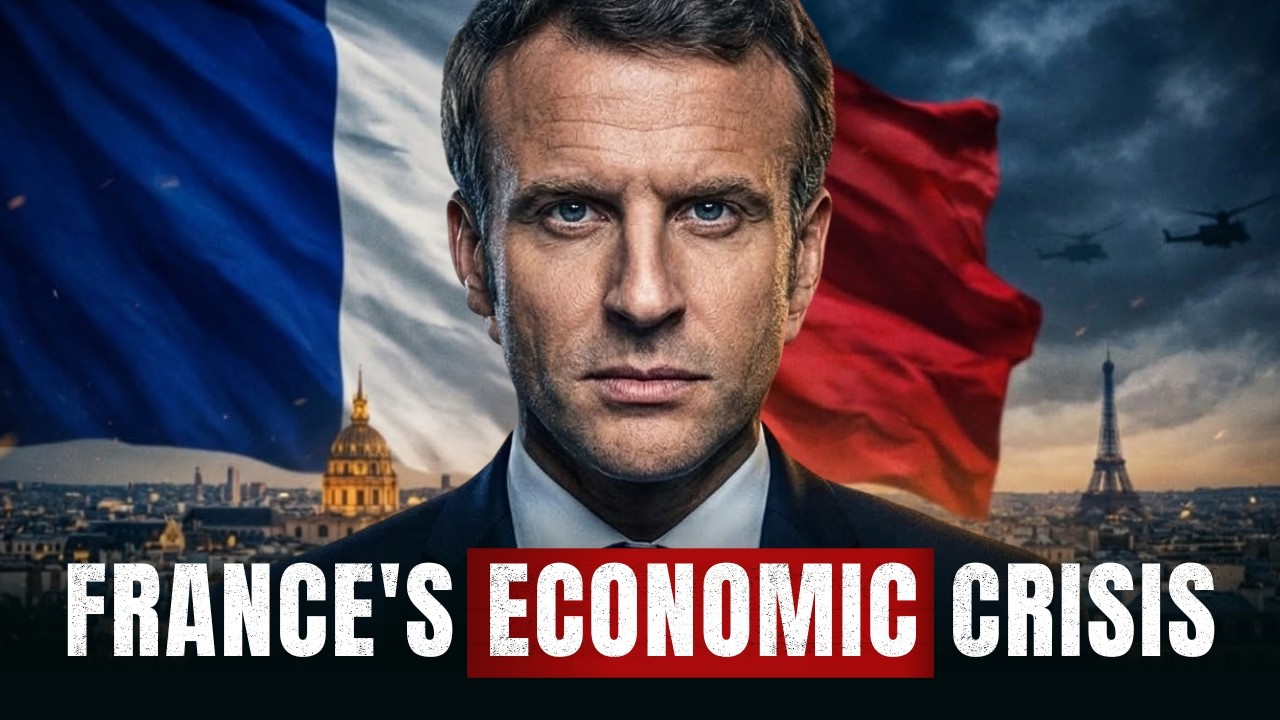
A Think School economic case study in which the presenter argues France damaged its economy through a series of policy choices, contrasted with Germany's. He tells the story from the 1970s oil shock, through the China shock of the 1980s and 2000s, to the shorter working week, earlier retirement and pension burden, and ends with three lessons about short-term pain versus long-term debt. Sponsor: Emergent AI, whose app builder is promoted in the video, with the description linking Emergent and a prompt; Think School's Communication course is also plugged. The captions cover most of the video; the section on the late 2000s may be only partly covered. All data and interpretations are the presenter's own and are not independently checked. This is an explainer, not financial or political advice.
Key Takeaways
The French dream
He says French per capita income rose 12 times from 1960 to 1980, and the country co-built Airbus and Concorde.
Today's trouble
He says debt is above 100 percent of GDP, youth unemployment is 18 to 19 percent and per capita GDP has been stagnant since 2008.
The 1973 oil shock
He says oil rose from 3 to 12 dollars a barrel and both France and Germany had to cut energy use but then chose different strategies.
Germany's choice
He says Germany accepted pay rises below inflation and kept business taxes low so factories could modernise.
Trade balances
He says France's trade deficit grew while Germany became an export power, with France losing 36 percent of its industrial workforce from 1980 to 2007.
The China shock
He says Germany reformed with mini jobs, tighter unemployment benefits and wage restraint, while France cut the week to 35 hours at the same pay in 2000.
Pension pressure
He says workers per retiree fell from 2.1 in the 2000s to 1.7 by 2020 and is heading toward 1.2.
The Conversation Breakdown
The French dream
⏱ Untimed topicHe says French per capita income rose 12 times from 1960 to 1980, and the country co-built Airbus and Concorde.
Today's trouble
⏱ Untimed topicHe says debt is above 100 percent of GDP, youth unemployment is 18 to 19 percent and per capita GDP has been stagnant since 2008.
The 1973 oil shock
⏱ Untimed topicHe says oil rose from 3 to 12 dollars a barrel and both France and Germany had to cut energy use but then chose different strategies.
Germany's choice
⏱ Untimed topicHe says Germany accepted pay rises below inflation and kept business taxes low so factories could modernise.
Trade balances
⏱ Untimed topicHe says France's trade deficit grew while Germany became an export power, with France losing 36 percent of its industrial workforce from 1980 to 2007.
The China shock
⏱ Untimed topicHe says Germany reformed with mini jobs, tighter unemployment benefits and wage restraint, while France cut the week to 35 hours at the same pay in 2000.
Pension pressure
⏱ Untimed topicHe says workers per retiree fell from 2.1 in the 2000s to 1.7 by 2020 and is heading toward 1.2.
Core Frameworks & Ideas
Three economic sins - the presenter's frame
Look at wage policy, labour rules and retirement age as separate decisions that compound.
Bitter medicine - Germany's reforms
Accept short-term pain to keep factories competitive.
Freebie test - his conclusion
Ask whether a popular benefit is funded by growth or by debt.
Actionable Next Steps
- ✓Compare a country's wage growth with its productivity growth before judging its policy.
- ✓Check what share of public spending goes to pensions and how that has changed.
- ✓Read both sides before accepting a single-cause story of a national economy.
- ✓Treat the figures and claims as the presenter's own and verify them before repeating them.
Notable Quotes
“short-term pain is always better than long-term debt.”
“the freebie strategy is the best way to win votes, but it is the worst way to build a nation.”
“France officially shortened the work week from 39 hours to 35 hours.”
The One Thing to Remember
The presenter argues France traded long-term competitiveness for short-term comfort, while Germany accepted painful reforms, and that freebies win votes but erode an economy.