


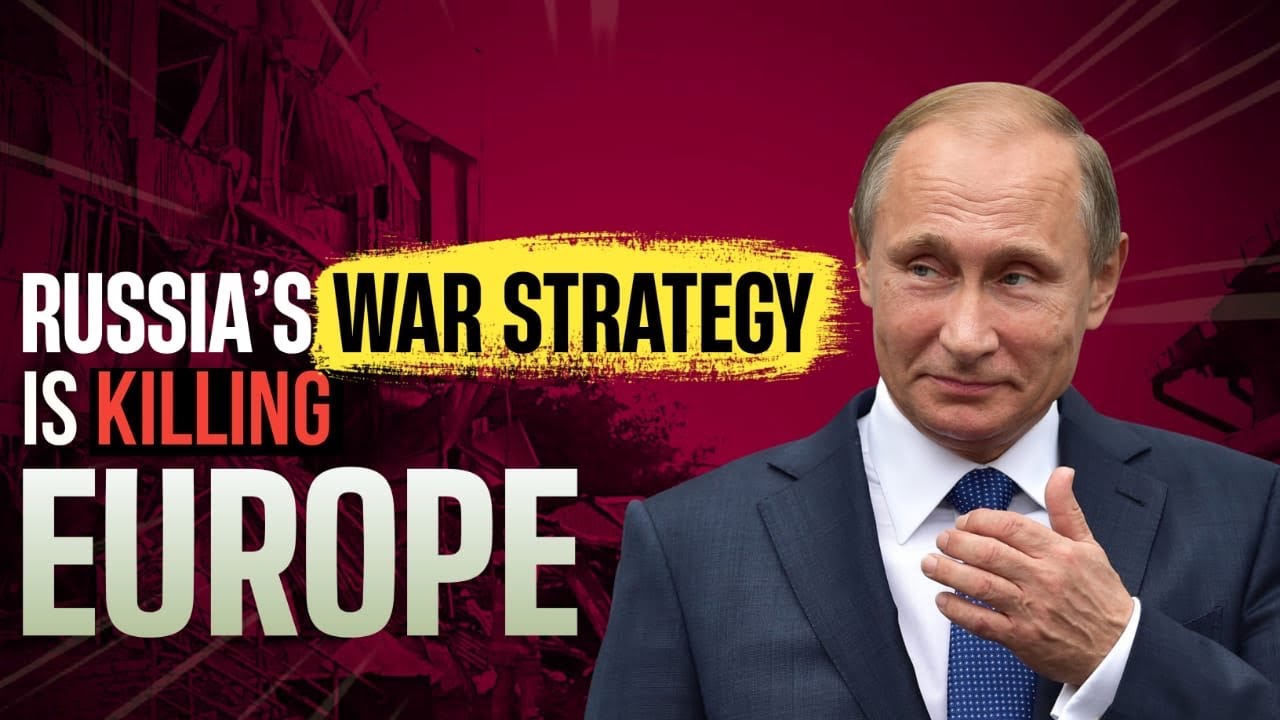
How Putin's WAR STRATEGY is KILLING Europe and US? : War Strategy Case study ( Russia vs Europe)
Executive Summary
A Think School geopolitical case study from July 2022 on how Russia used energy and food leverage against Europe during the war in Ukraine. The presenter says the war is fought with finance, food and energy, explains Europe's dependence on Russian gas through Nord Stream 1, why gas prices rose even for other suppliers, why Russia earned more despite sanctions, why Europe could not replace the gas quickly before winter, and what it means for India. The sponsor is named as Deserve. The caption text covers the whole video. All numbers (inflation rates, revenue, gas shares, price rises) and the claims about strategy are the presenter's statements and opinions as of mid-2022, not independently checked and since overtaken by events. This is commentary, not financial advice. Captions are automatic with errors. Topics are untimed; metadata follows YouTube. Source: https://youtubetotranscript.com/transcript?v=IBbz8sjVz6I
Key Takeaways
Three instruments of war
He says the war is fought with finance, food and energy, and that the West froze about 300 billion dollars of Russian reserves, cut banks from Swift and saw firms like McDonald's and Starbucks exit.
Food leverage
He says Russia and Ukraine supply about 30 percent of global wheat exports, 20 percent of corn and over 80 percent of sunflower oil, which pushed food prices up in Europe.
Energy leverage
He says Russia supplied about 42 percent of Europe's gas in 2020, Nord Stream 1 carries 55 billion cubic metres, and Germany got 49 percent of its gas from Russia, while Russia cut supply by about 60 percent and demanded payment in roubles.
Why prices rose everywhere
Using a simple supply and demand example, he explains other suppliers can charge more for the same volume, citing gas price rises of 37 percent in the US, 142 percent in the UK and 144 percent in the EU since January 2022.
Russia earning more
He says oil and gas revenue from Europe from March to July almost doubled to over 90 billion dollars from about 50 billion, and that Asian refiners, including India, replaced the lost European oil sales.
Why Europe cannot switch fast
He says Europe has LNG terminals but not enough pipelines to distribute the gas, supplies from the US, Qatar and Norway would meet only about two thirds, and Saudi Arabia refused to raise output.
Implications for India
He says India faces higher oil and edible oil costs and falling reserves, risks secondary sanctions from buying Russian oil and internationalising the rupee, but gains wheat, mustard, barley, cotton and soybean exports.
The Conversation Breakdown
Three instruments of war
⏱ Untimed topicHe says the war is fought with finance, food and energy, and that the West froze about 300 billion dollars of Russian reserves, cut banks from Swift and saw firms like McDonald's and Starbucks exit.
Food leverage
⏱ Untimed topicHe says Russia and Ukraine supply about 30 percent of global wheat exports, 20 percent of corn and over 80 percent of sunflower oil, which pushed food prices up in Europe.
Energy leverage
⏱ Untimed topicHe says Russia supplied about 42 percent of Europe's gas in 2020, Nord Stream 1 carries 55 billion cubic metres, and Germany got 49 percent of its gas from Russia, while Russia cut supply by about 60 percent and demanded payment in roubles.
Why prices rose everywhere
⏱ Untimed topicUsing a simple supply and demand example, he explains other suppliers can charge more for the same volume, citing gas price rises of 37 percent in the US, 142 percent in the UK and 144 percent in the EU since January 2022.
Russia earning more
⏱ Untimed topicHe says oil and gas revenue from Europe from March to July almost doubled to over 90 billion dollars from about 50 billion, and that Asian refiners, including India, replaced the lost European oil sales.
Why Europe cannot switch fast
⏱ Untimed topicHe says Europe has LNG terminals but not enough pipelines to distribute the gas, supplies from the US, Qatar and Norway would meet only about two thirds, and Saudi Arabia refused to raise output.
Implications for India
⏱ Untimed topicHe says India faces higher oil and edible oil costs and falling reserves, risks secondary sanctions from buying Russian oil and internationalising the rupee, but gains wheat, mustard, barley, cotton and soybean exports.
Core Frameworks & Ideas
Finance, food, energy - presenter's model
Modern economic war runs on three levers.
Supply and demand price effect - presenter's example
A cut by one supplier lets others raise prices on the same volume.
Infrastructure lock-in - presenter's point
A pipeline built over six years cannot be replaced before one winter.
Actionable Next Steps
- ✓Check the inflation, revenue and gas share figures against Eurostat or IEA data.
- ✓See what happened to European gas storage and prices after this video.
- ✓List your own business's dependence on a single supplier or route.
- ✓Read the study materials linked by the presenter for India's benefits.
Notable Quotes
“this war is being fought with three instruments food finance and energy”
“russia actually made more money selling gas after the war than it did before the war”
“europe is still at the mercy of russia for the winter”
The One Thing to Remember
The presenter says Europe won the financial front but lost leverage on food and energy, where Russia held the cards.