


How The RICH Legally Pay almost 0 Taxes | Why Employees Pay More Tax Than Billionaires?| IBP
Executive Summary
An Indian Business Podcast episode from Think School in which the host interviews Diwakar Vijay Sarathi (spelled Vijujay Sarati in the captions), author of a book on taxes and a self-described global tax strategist, about how the wealthy lower their tax bills legally. The guest argues tax is a language that rewards behaviour a government wants, using three Ps (priority, paranoia, prohibition), and describes countries as source, destination, conduit and tax haven types. The host also asks about Dubai versus India, and the guest describes a five-step decision process and a paid tax-free living community. Sponsor: no third-party sponsor is named in the description; it promotes Think School's Communication course and the guest's community. PARTIAL COVERAGE: this note is based on the opening, the three Ps section, the country-types section, the closing and the description, and does not cover every part of the roughly 53 minute conversation. All claims are the guest's own and are not independently checked. This is not tax, legal or financial advice; consult a qualified professional.
Key Takeaways
The opening claims
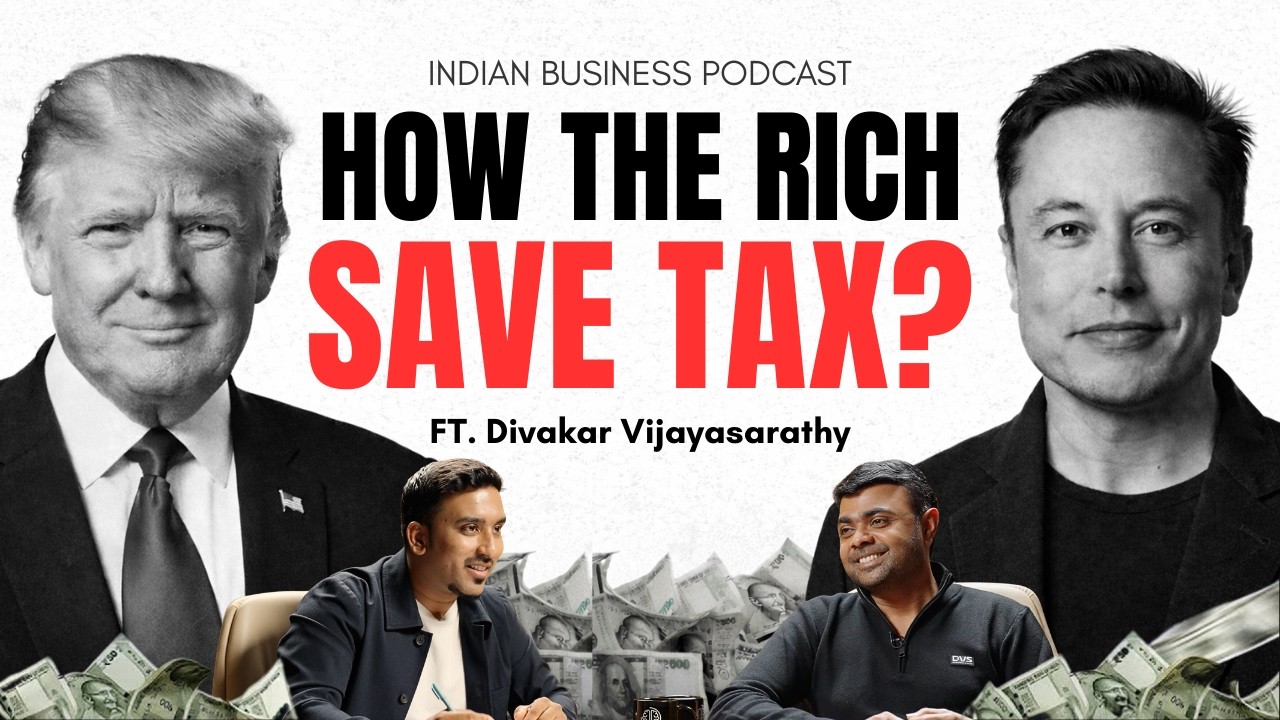
The host cites reports that Donald Trump paid no income tax in 10 of 15 years and that Tesla paid no federal tax on over 2 billion dollars of profit.
Tax as language
The guest says a levy called Jiza taught him that tax is not only for collection but to promote behaviour, in his words not levy but language.
The three Ps
He says governments reward priority, paranoia and prohibition, such as jobs, semiconductors or defence, and stigmatised goods like tobacco.
Solve for a government's fear
He says solving for a government's fear or dream, such as self-sufficiency in AI or defence, tends to be rewarded with incentives.
Dubai is not tax-free
He says Dubai is by no means a tax-free market and living there has its own costs and pains.
Four types of countries
He groups countries as source, destination, conduit and tax havens, and says conduits like Singapore and Dubai exist because small simple states can write simple rules.
What matters most
He says people want more money, peace, opportunity and mobility, and should optimise for one rather than all four.
The Conversation Breakdown
The opening claims
⏱ Untimed topicThe host cites reports that Donald Trump paid no income tax in 10 of 15 years and that Tesla paid no federal tax on over 2 billion dollars of profit.
Tax as language
⏱ Untimed topicThe guest says a levy called Jiza taught him that tax is not only for collection but to promote behaviour, in his words not levy but language.
The three Ps
⏱ Untimed topicHe says governments reward priority, paranoia and prohibition, such as jobs, semiconductors or defence, and stigmatised goods like tobacco.
Solve for a government's fear
⏱ Untimed topicHe says solving for a government's fear or dream, such as self-sufficiency in AI or defence, tends to be rewarded with incentives.
Dubai is not tax-free
⏱ Untimed topicHe says Dubai is by no means a tax-free market and living there has its own costs and pains.
Four types of countries
⏱ Untimed topicHe groups countries as source, destination, conduit and tax havens, and says conduits like Singapore and Dubai exist because small simple states can write simple rules.
What matters most
⏱ Untimed topicHe says people want more money, peace, opportunity and mobility, and should optimise for one rather than all four.
Core Frameworks & Ideas
The three Ps - the guest's framework
Look for incentives tied to government priority, paranoia and prohibition.
World by design - his country types
Match source, destination, conduit and haven countries to what you value most.
Five-step decision process - his method
Clarify vision, principles, options and decision frameworks before choosing.
Actionable Next Steps
- ✓Write which one of money, peace, opportunity and mobility matters most to you.
- ✓Read what your own country's tax incentives are rewarding and why.
- ✓Ask a qualified tax professional before changing where you live or how you structure income.
- ✓Treat all claims in the episode as the guest's own and verify them with official sources.
Notable Quotes
“It's not levy, it's language.”
“You actually solve for a government's fear or dream.”
“Dubai is by no means a tax-free market.”
The One Thing to Remember
Diwakar Vijay Sarathi argues taxes work as a language that rewards what a government prioritises, fears or discourages, and that choosing where to base yourself depends on what you want most.