


How to build a $600 million company without raising money (with ButcherBox CEO Mike Salguero)
Executive Summary
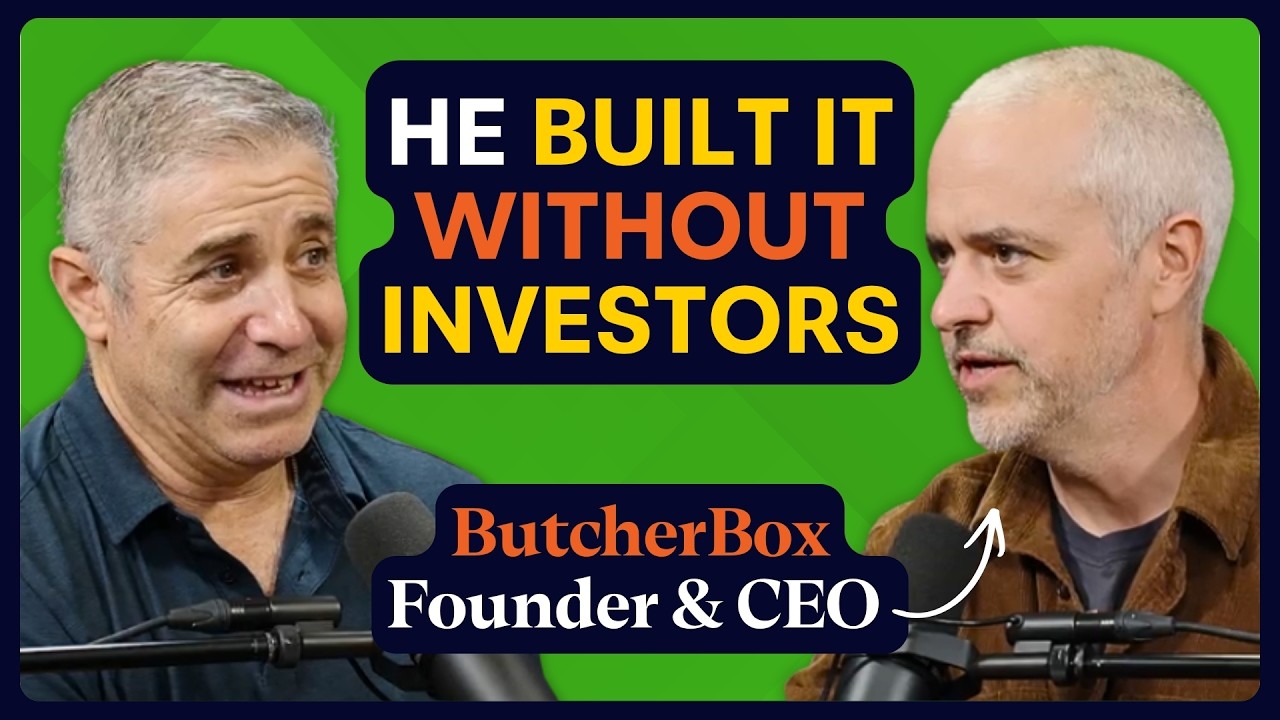
Mike Salguero and Jeff Berman discuss demand testing, team composition, a limited initial product range and customer acquisition at ButcherBox. Business outcomes and prices are his historical account, not current verified figures or investment advice. Selected operating passages only; health and incidental AI comparisons omitted. Metadata follows the linked YouTube video. Official transcript is machine-generated; topic sections are untimed. Source: https://mastersofscale.com/episode/how-to-beef-up-your-business/
Key Takeaways
Test demand before a large commitment
Salguero describes capping his initial investment and using Kickstarter to learn whether customers wanted meat delivery. Early purchases supplied a signal, not proof that the whole business would work. Define what a small test needs to show before committing to a wider launch.
Change the product when the response challenges it
He recalls an early shopper survey suggesting a beef-only box was less attractive than a mix of proteins. That response changed the product direction. Treat a survey as learning to investigate rather than a guaranteed purchase, and do not disguise who is asking when conducting your own research.
Choose partners for the difficult years
Looking back at CustomMade, he says raising money tied the company to an original marketplace plan even as problems appeared. His account emphasizes pressure despite formal founder rights. Capital choices involve relationships and expectations, not only a check or a term sheet.
Combine grit with relevant experience
He calls the mix of early-career persistence and deep industry experience a barbell strategy. His example pairs inexperienced teammates with a retired meat-industry operator. That is a team-design story, not an age rule; assess each person's actual skills, willingness and role.
Limit choices that multiply operations
The initial box let customers choose species while the company selected cuts. Salguero connects this constraint with simpler inventory and making a good box. A smaller range can reduce operating complexity, but customers still need to understand what they are buying.
Make acquisition economics explicit
He says the need for first-box profitability pushed the team beyond paid social ads toward different acquisition channels. The dollar amounts are historical, not benchmarks. Know what an initial order earns after its costs before choosing how much to pay to bring in a customer.
Find savings that preserve customer value
Salguero describes negotiating box, dry-ice and tape costs rather than weakening the product. Operational details can matter even when marketing gets more attention. Check the effect on delivery and quality, because a cheaper input is not a saving if it creates failures customers must bear.
The Conversation Breakdown
Test demand before a large commitment
⏱ Untimed topicSalguero describes capping his initial investment and using Kickstarter to learn whether customers wanted meat delivery. Early purchases supplied a signal, not proof that the whole business would work. Define what a small test needs to show before committing to a wider launch.
Change the product when the response challenges it
⏱ Untimed topicHe recalls an early shopper survey suggesting a beef-only box was less attractive than a mix of proteins. That response changed the product direction. Treat a survey as learning to investigate rather than a guaranteed purchase, and do not disguise who is asking when conducting your own research.
Choose partners for the difficult years
⏱ Untimed topicLooking back at CustomMade, he says raising money tied the company to an original marketplace plan even as problems appeared. His account emphasizes pressure despite formal founder rights. Capital choices involve relationships and expectations, not only a check or a term sheet.
Combine grit with relevant experience
⏱ Untimed topicHe calls the mix of early-career persistence and deep industry experience a barbell strategy. His example pairs inexperienced teammates with a retired meat-industry operator. That is a team-design story, not an age rule; assess each person's actual skills, willingness and role.
Limit choices that multiply operations
⏱ Untimed topicThe initial box let customers choose species while the company selected cuts. Salguero connects this constraint with simpler inventory and making a good box. A smaller range can reduce operating complexity, but customers still need to understand what they are buying.
Make acquisition economics explicit
⏱ Untimed topicHe says the need for first-box profitability pushed the team beyond paid social ads toward different acquisition channels. The dollar amounts are historical, not benchmarks. Know what an initial order earns after its costs before choosing how much to pay to bring in a customer.
Find savings that preserve customer value
⏱ Untimed topicSalguero describes negotiating box, dry-ice and tape costs rather than weakening the product. Operational details can matter even when marketing gets more attention. Check the effect on delivery and quality, because a cheaper input is not a saving if it creates failures customers must bear.
Core Frameworks & Ideas
Barbell strategy - guest label
Combine persistence with relevant experience while choosing roles by capability rather than age.
Product constraint - discussed approach
Limit the initial choices to reduce inventory complexity and explain those limits clearly.
Box-one profitability - guest label
Compare acquisition cost with what the first order earns after costs; historical amounts are not universal targets.
Actionable Next Steps
- ✓Define the evidence needed from a small demand test.
- ✓Remove one product option that adds little value but much complexity.
- ✓Calculate the costs and margin of an initial order.
- ✓Review one packaging saving for its effect on the customer.
Notable Quotes
“Constraining yourself is really important in entrepreneurship.”
“I called that the barbell strategy.”
“We had no experience with meat.”
The One Thing to Remember
Use a small demand test, a clear product constraint and honest unit economics to guide the next step.