


How to Build a Life That Matters & Get What You Want Starting Today
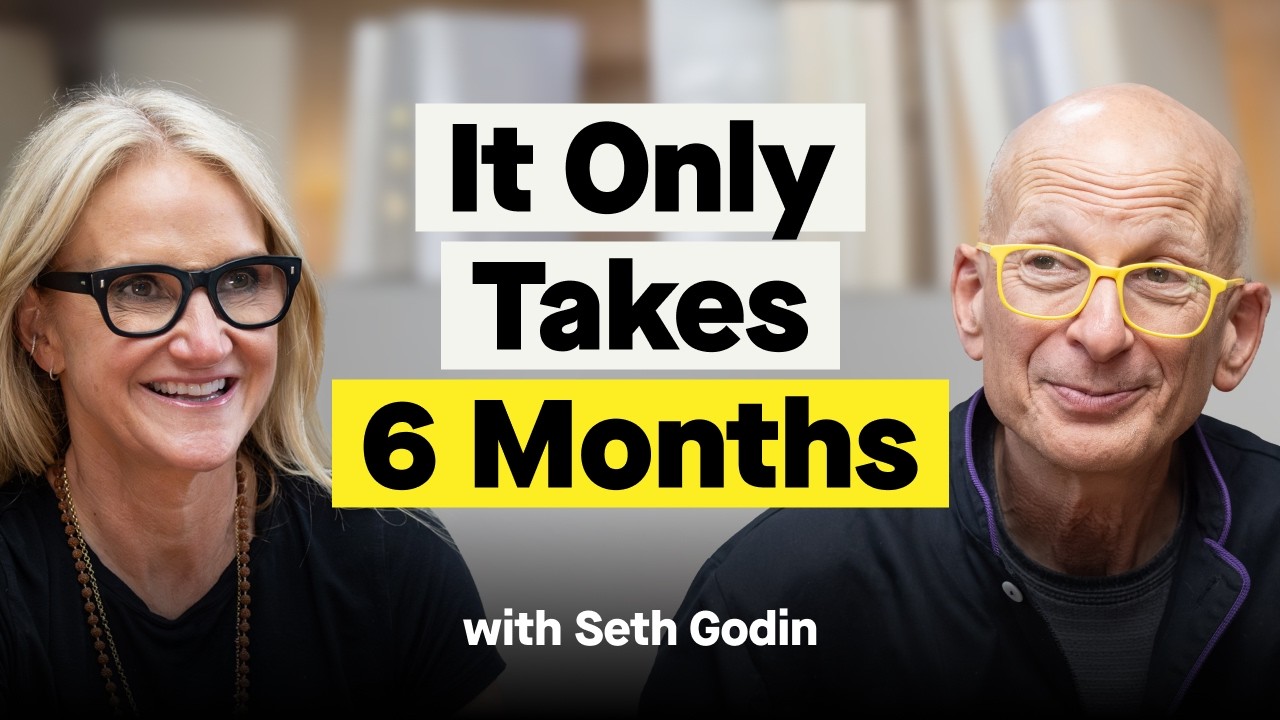
Executive Summary
Godin encourages choosing meaningful work without waiting for an invitation. He asks who the work is for and what it is for, then recommends the smallest contribution that could make a difference. He also distinguishes a solvable problem from a condition that must be accepted. This is a focused summary of those early themes, not the full later conversation. The advice is his perspective, not a promise of earnings or a clinical framework.
Key Takeaways
Useful work is broader than paid employment
Godin includes making pottery, raising children and volunteering as forms of productive work. He sees doing work well as gratifying even when it is unpaid. That is his view of a meaningful life, not a claim that everyone must always be productive or that rest and disability reduce a person’s worth.
A nagging project may deserve deliberate attention
Robbins describes unfinished ideas that remain important despite a busy schedule. Godin’s response is to choose yourself rather than wait to be authorised to begin. The idea invites a person to identify a meaningful contribution, not assume every persistent thought should become a business or a major new obligation.
Picking yourself is taking a first action
Godin contrasts waiting for a publisher or employer to select you with making something to offer. His examples are about agency and willingness to test work. External approval may still be necessary for regulated, paid or organizational activity; personal initiative does not override those boundaries.
Intentional design asks who and what the work is for
His two questions identify a specific audience and intended effect. A work aimed at one group need not win everybody’s approval. The exercise clarifies a project’s purpose before effort grows, rather than treat all attention, popularity or criticism as equally relevant.
The smallest viable audience can be very small
Godin asks which smallest group would make an impact worthwhile, even a household or one child. This reframes success away from reaching everyone. The size must fit the purpose: a small useful contribution and a sustainable commercial product may need different audiences and measures.
Start with a contribution rather than a total overhaul
His examples include volunteering for a limited time or starting a lunch book group rather than redesigning an entire workplace. The point is a small test whose result can guide another step. Real volunteer roles and work events still require the organization’s process and any relevant permission.
Separate a problem from an unchangeable situation
Godin calls a condition that cannot be changed a situation, while a problem has a possible solution even if it is unwelcome. The distinction redirects attention toward a response one can make. It is a decision lens, not a reason to dismiss injustice, skip support or assume a complex issue has an easy answer.
The Conversation Breakdown
Intentional design and small beginnings
⏱ 22:18Godin asks who a contribution serves and what it should do, then reduces the scope to a smallest viable audience and a small first piece of work. His examples test whether a useful change can begin without a full reinvention.
Core Frameworks & Ideas
Who’s it for? What’s it for?
Name the audience and purpose before expanding the work.
Smallest viable contribution
Choose a small version that could still matter to someone.
Problem versus situation
Distinguish a solvable obstacle from a condition your response must account for.
Actionable Next Steps
- ✓Name the person or group your next project is for.
- ✓Write the specific effect you want that work to have.
- ✓Choose a small version you can test without a large commitment.
- ✓Separate one blocker into what can change and what your plan must accept.
Notable Quotes
“There’s something I call intentional design, and it’s two simple questions. Who’s it for? And what’s it for?”
“Problems have solutions. You just might not like them in the short run.”
“And if it works, you get to do it more. And if it doesn’t work, you can stop.”
The One Thing to Remember
Name who your work serves, then make the smallest useful version.