


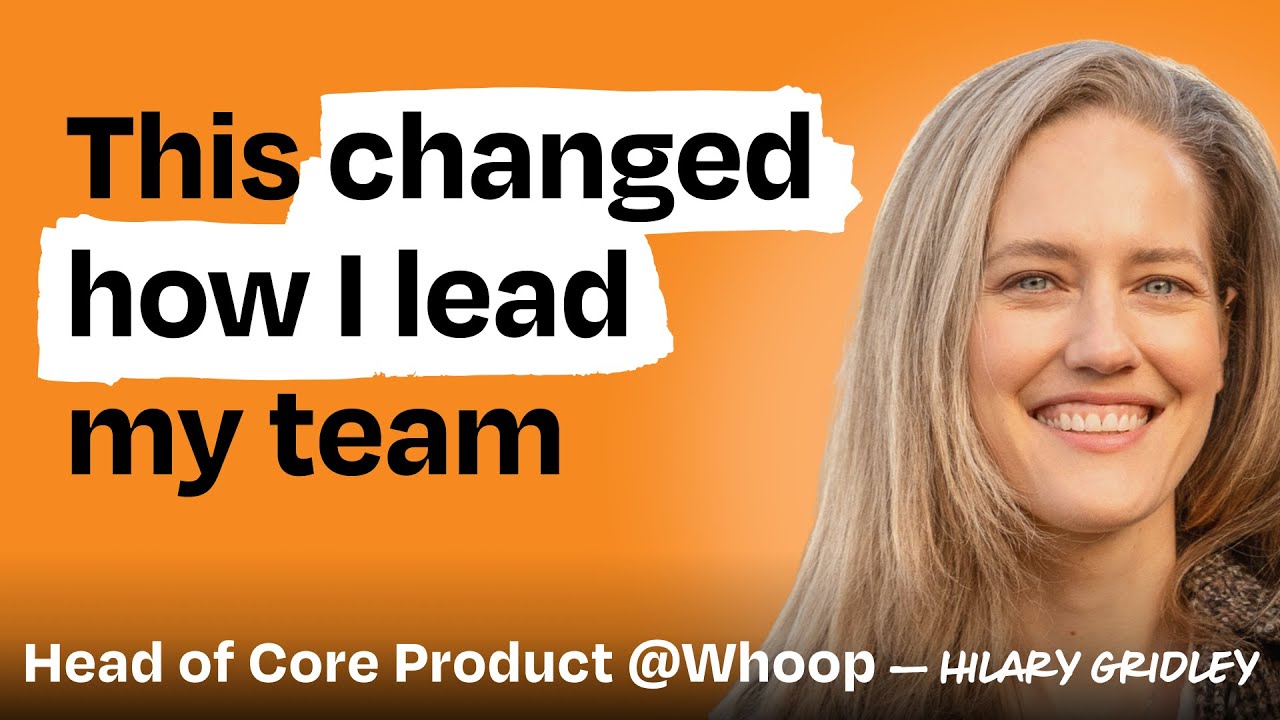
How to build a team that can “take a punch” | Hilary Gridley (Head of Core Product, Whoop)
Executive Summary
A Lenny's Podcast conversation with Hilary Gridley, head of core product at Whoop, on how to build a team that can take a punch: handling hard feedback, earning your place in meetings, doing hard things and understanding other people's worldviews. PARTIAL COVERAGE: the episode runs about 115 minutes and the available caption text is cut off, so this summary covers roughly the first 40 percent and may miss later topics. Her examples are her own. This is a summary of her views, not professional or medical advice.
Key Takeaways
Learning to take a punch
Gridley says the theme is helping people deal with hard things and build hard things, and that she has been drawn to regulated areas and products with high emotional stakes.
Counter-programming the narrative
She says to stop litigating another person's impression of you and ask what action you can take to show who you know yourself to be.
Not the protagonist
She says people think work is about influencing the CEO, but in the story of work you are probably not the protagonist.
Earn your place in meetings
She says every additional person in a meeting makes others less candid, so you should earn your place by saying valuable things.
Fear is the blocker
She says people come up with rational-sounding excuses not to speak up, but the blocker is fear of saying the wrong thing or looking stupid.
Easy mode
She says too many product managers play on easy mode, building products for people exactly like themselves, and she wishes they took on harder problems.
Understand other worldviews
She says asking in what world this person's view makes sense makes relationships richer, reduces frustration and helps you persuade, and says reading fiction helped her build that habit.
The Conversation Breakdown
Learning to take a punch
⏱ Untimed topicGridley says the theme is helping people deal with hard things and build hard things, and that she has been drawn to regulated areas and products with high emotional stakes.
Counter-programming the narrative
⏱ Untimed topicShe says to stop litigating another person's impression of you and ask what action you can take to show who you know yourself to be.
Not the protagonist
⏱ Untimed topicShe says people think work is about influencing the CEO, but in the story of work you are probably not the protagonist.
Earn your place in meetings
⏱ Untimed topicShe says every additional person in a meeting makes others less candid, so you should earn your place by saying valuable things.
Fear is the blocker
⏱ Untimed topicShe says people come up with rational-sounding excuses not to speak up, but the blocker is fear of saying the wrong thing or looking stupid.
Easy mode
⏱ Untimed topicShe says too many product managers play on easy mode, building products for people exactly like themselves, and she wishes they took on harder problems.
Understand other worldviews
⏱ Untimed topicShe says asking in what world this person's view makes sense makes relationships richer, reduces frustration and helps you persuade, and says reading fiction helped her build that habit.
Core Frameworks & Ideas
Take a punch - Gridley's theme
Build skill in handling hard feedback so it feels less threatening.
Earn your seat - Gridley's meeting rule
Add something valuable or do not attend.
Whose world makes this sensible? - Gridley's question
Ask it before judging someone's behaviour.
Actionable Next Steps
- ✓Before your next meeting, write the one valuable thing you will say.
- ✓Pick one hard problem you have been avoiding and take a first step.
- ✓When someone asks for something odd, ask what world makes it sensible.
- ✓Name one action that shows who you are, rather than arguing about an impression.
Notable Quotes
“every additional person in a meeting has a cost”
“people are really good at coming up with very rational sounding reasons to not do things that just make them uncomfortable”
“But in the story of work, you are probably not the protagonist.”
The One Thing to Remember
Gridley says that when people learn to take a punch they become less afraid of getting one, and that is most of the challenge of building skills.