


How to Build Products People Can’t Quit (Product Psychology Playbook)
Executive Summary
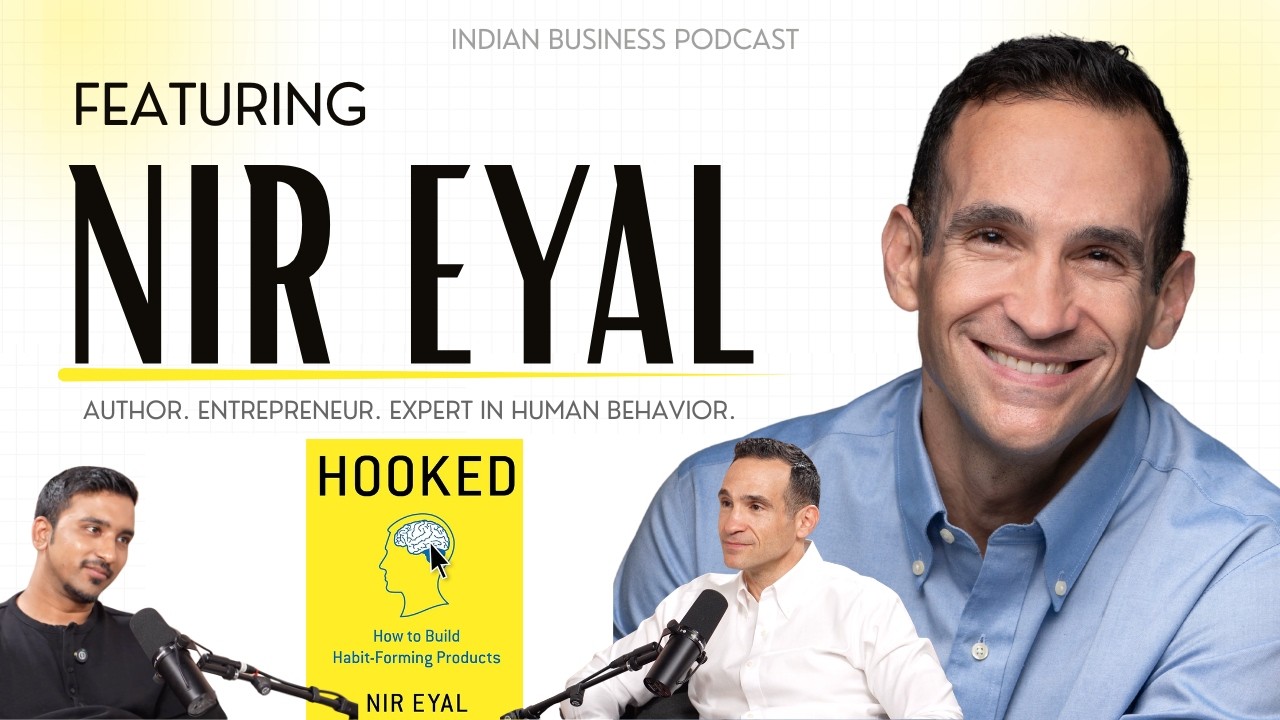
A Think School conversation with Nir Eyal, author of Hooked, on why consumer startups with good products fail and how to build products people come back to using the Hook model (trigger, action, variable reward, investment). PARTIAL COVERAGE: the episode runs about 69 minutes and the available caption text is cut off, so this summary covers the first part, including the Fitbod case study, and not the final section. Examples and figures are the speakers' own claims and are unverified. This is a summary of Eyal's views, not advice.
Key Takeaways
Growth, engagement, monetization
Eyal says every startup needs growth, engagement and monetization, and a startup usually has two with a plan for the third.
The leaky bucket
He says high-growth companies often buy users who flush out again, which is throwing good money after bad.
Engagement cannot be bought
He says you can buy growth with ads but engagement must be built into product design, so fix retention before scaling.
The Hook model
He describes four steps: trigger, action, variable reward and investment, the framework behind his book and Stanford class.
External to internal triggers
He says external triggers such as billboards and notifications are training wheels, and a product becomes game-changing when internal triggers such as hunger or uncertainty bring users back.
Physical products and habit
He says a physical package can be its own external trigger, and tells a story about a preventative inhaler placed by the toothbrush to create a new habit.
Fitbod case study
He says Fitbod targets gym-goers who feel uncertain, gives a variable daily workout, and improves with each logged set, which makes it a habit, and says a product should be used at least once a week to change habits.
The Conversation Breakdown
Growth, engagement, monetization
⏱ Untimed topicEyal says every startup needs growth, engagement and monetization, and a startup usually has two with a plan for the third.
The leaky bucket
⏱ Untimed topicHe says high-growth companies often buy users who flush out again, which is throwing good money after bad.
Engagement cannot be bought
⏱ Untimed topicHe says you can buy growth with ads but engagement must be built into product design, so fix retention before scaling.
The Hook model
⏱ Untimed topicHe describes four steps: trigger, action, variable reward and investment, the framework behind his book and Stanford class.
External to internal triggers
⏱ Untimed topicHe says external triggers such as billboards and notifications are training wheels, and a product becomes game-changing when internal triggers such as hunger or uncertainty bring users back.
Physical products and habit
⏱ Untimed topicHe says a physical package can be its own external trigger, and tells a story about a preventative inhaler placed by the toothbrush to create a new habit.
Fitbod case study
⏱ Untimed topicHe says Fitbod targets gym-goers who feel uncertain, gives a variable daily workout, and improves with each logged set, which makes it a habit, and says a product should be used at least once a week to change habits.
Core Frameworks & Ideas
Hook model - Nir Eyal's framework
Trigger, action, variable reward, investment.
Growth, engagement, monetization - Eyal's startup test
Have at least two, with a plan for the third.
Internal trigger first - Eyal's view
Find the frequent uncomfortable feeling your product relieves.
Actionable Next Steps
- ✓Write down the internal trigger that would make a user open your product.
- ✓Measure how often your users come back each week.
- ✓Map one product flow into trigger, action, reward and investment.
- ✓Check Eyal's claims about Fitbod and the inhaler against public sources.
Notable Quotes
“You can always buy growth.”
“You cannot buy engagement.”
“I think the minimum is at least once a week.”
The One Thing to Remember
Eyal says you can buy growth but you cannot buy engagement, so build habit-forming design into the product first.