


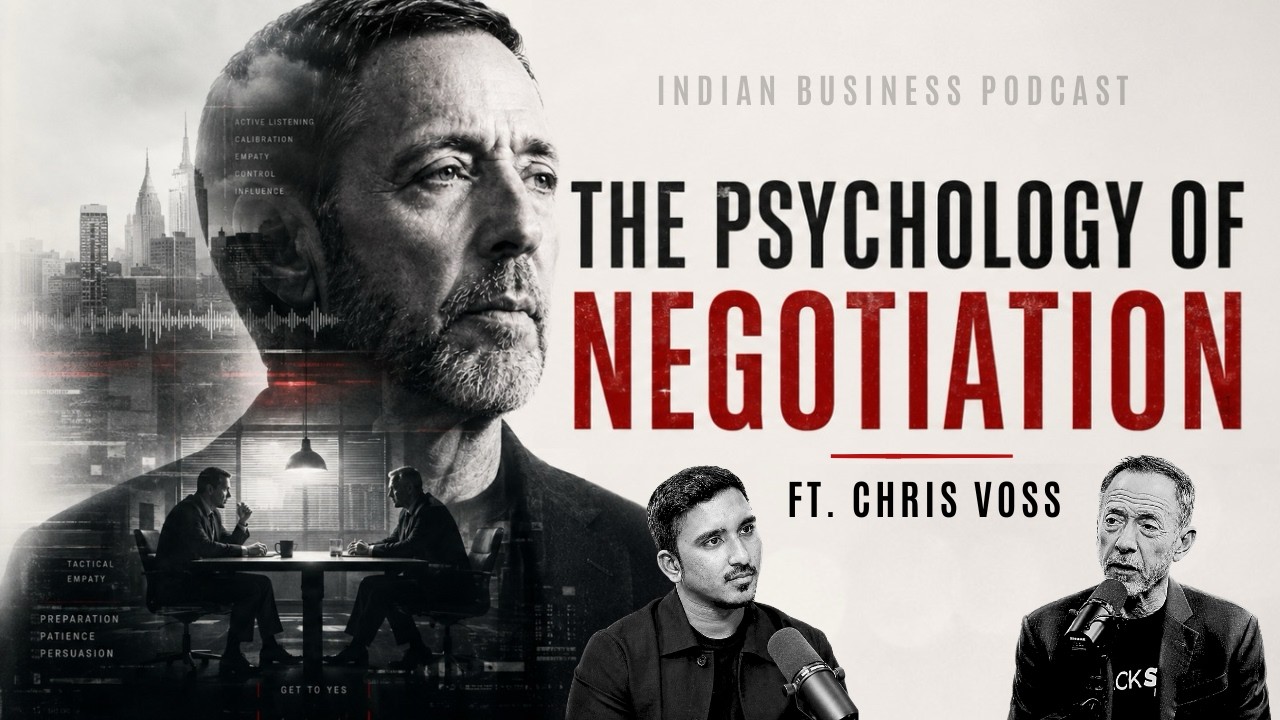
How to WIN Any Argument & Spot a Liar: FBI Negotiation Secrets | Chris Voss
Executive Summary
Former FBI hostage negotiator Chris Voss talks with Think School about negotiation: why most people mistake articulate speech for good communication, how to use open-ended what and how questions, mirroring, labeling, calibrated no-questions, and how to read three negotiator types, including how to spot a liar. He works through a pay-raise and an investor example live. Coverage comes from approximately the first 50,000 characters of third-party captions of an 83 minute episode, so the last part of the liar discussion and later topics are not covered. All stories and numbers (for example guessing body language right about a third of the time) are Voss's own statements, not independently checked. This is general communication advice, not legal or medical advice. Captions are automatic with errors. Topics are untimed; metadata follows YouTube. Source: https://youtubetotranscript.com/transcript?v=vfbCbk54XeE
Key Takeaways
Negotiation is hearing, not speaking
Voss says most people think negotiation is about articulate expression, but the real key is whether you comprehended the other side and read between the lines. He suggests asking a question in six words and making a point in six seconds.
Use what and how questions
He says what questions uncover problems, such as what is the biggest challenge you face, and how questions create implementation, such as how am I supposed to do that, which is a polite way to say no.
Empathy is not agreement
Using a 40 percent raise request, he says to first see how it looks to your boss, as more cost for the same work. He suggests asking how you can be involved in projects critical to the company's future, then negotiating pay once the boss sees value.
Mirroring
He describes repeating the last three to five words to get people to talk, to test how firm a term is, and to buy time when surprised. He says to use a downward tone for comprehension and an upward tone for curiosity. He tells a Chase bank robbery story where a mirror made the robber reveal a hidden driver.
Labeling and the accusations audit
He says labeling a positive emotion strengthens it and labeling a negative emotion defuses it. He recommends listing the negative things the other side might think about you before they say them, and going quiet after a label so the other side can respond.
Calibrated no-questions
He says people who are asked yes questions often feel cornered, so ask questions where no is a safe answer, such as is now a bad time to talk or are you against this. He says the company has a list of ten such rewrites.
Follow-ups, ghosting and spotting liars
He estimates about 20 percent of ghosting deals will close anyway, 60 percent need nurturing, and 20 percent are lost. He describes three negotiator types, assertive, analyst and accommodating, and says assertive people tend to lie by gaslighting. These are his estimates and views.
The Conversation Breakdown
Negotiation is hearing, not speaking
⏱ Untimed topicVoss says most people think negotiation is about articulate expression, but the real key is whether you comprehended the other side and read between the lines. He suggests asking a question in six words and making a point in six seconds.
Use what and how questions
⏱ Untimed topicHe says what questions uncover problems, such as what is the biggest challenge you face, and how questions create implementation, such as how am I supposed to do that, which is a polite way to say no.
Empathy is not agreement
⏱ Untimed topicUsing a 40 percent raise request, he says to first see how it looks to your boss, as more cost for the same work. He suggests asking how you can be involved in projects critical to the company's future, then negotiating pay once the boss sees value.
Mirroring
⏱ Untimed topicHe describes repeating the last three to five words to get people to talk, to test how firm a term is, and to buy time when surprised. He says to use a downward tone for comprehension and an upward tone for curiosity. He tells a Chase bank robbery story where a mirror made the robber reveal a hidden driver.
Labeling and the accusations audit
⏱ Untimed topicHe says labeling a positive emotion strengthens it and labeling a negative emotion defuses it. He recommends listing the negative things the other side might think about you before they say them, and going quiet after a label so the other side can respond.
Calibrated no-questions
⏱ Untimed topicHe says people who are asked yes questions often feel cornered, so ask questions where no is a safe answer, such as is now a bad time to talk or are you against this. He says the company has a list of ten such rewrites.
Follow-ups, ghosting and spotting liars
⏱ Untimed topicHe estimates about 20 percent of ghosting deals will close anyway, 60 percent need nurturing, and 20 percent are lost. He describes three negotiator types, assertive, analyst and accommodating, and says assertive people tend to lie by gaslighting. These are his estimates and views.
Core Frameworks & Ideas
Mirrors and labels - Voss's toolkit
Mirrors repeat the last few words; labels name the emotion behind them.
Calibrated questions - Voss's method
What and how questions make the other side solve your problem with you.
Three negotiator types - Voss's model
Assertive, analyst and accommodating people each react differently under pressure.
Actionable Next Steps
- ✓Rewrite your next ask as a six-word question.
- ✓Practise mirroring on one low-stakes conversation today.
- ✓Replace a yes question with a no question in your next email.
- ✓Before a negotiation, write what the deal looks like from the other side.
Notable Quotes
“Ask your question in six words”
“Save people from their own fears”
“Empathy is also not agreement”
The One Thing to Remember
Negotiation is about making the other side feel understood, so listen first and keep your own words short.