


India’s Dirty Secret: How is the Power Crisis Paralysing India? How to fix it?
Executive Summary
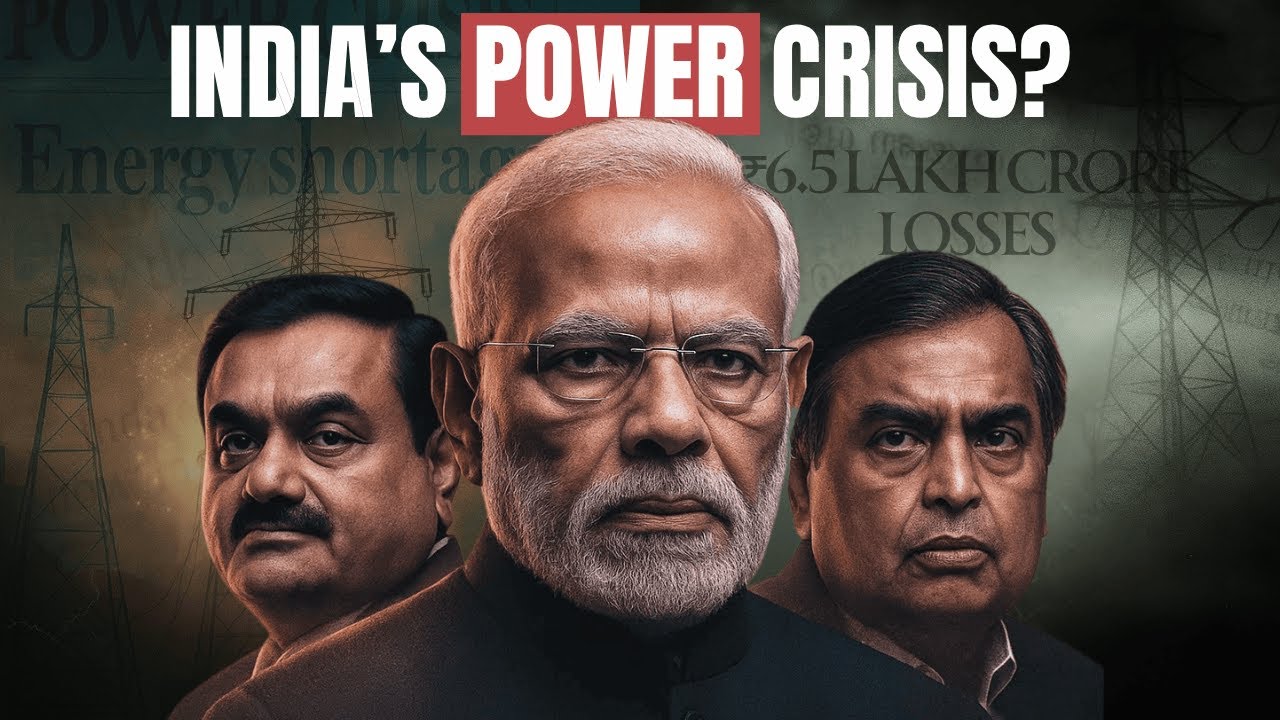
A Think School podcast conversation about India's power sector with the host and three guests: a smart-meter company founder (named Aush Singhal in the captions), investor Vive Jin and investor Arvin Kothari. The episode runs about 102 minutes. PARTIAL COVERAGE: the available caption text is cut off, so this summary covers only the opening discussion (the intro, the introductions, the three problems, the T&D loss and grid explanations and the start of the supply-chain walkthrough), not the later investing and entrepreneurship sections. Names, company names and numbers are as spelled in automatic captions and may be wrong. All figures and views are the speakers' statements, not independently checked, and nothing here is investment advice. Sponsor: the captions name Odo (spelling as captioned). Topics are untimed; metadata follows YouTube. Source: https://youtubetotranscript.com/transcript?v=C_Wk44s2TWY
Key Takeaways
Framing
The host says that although the 2018 claim was that every village was electrified, industries still face outages, and he sets three questions: why the crisis, how investors benefit, and how entrepreneurs can build in the sector.
The guests
One guest runs a board and MDF business and a family office, one runs an investment firm backing growth sectors, and one co-founded a company digitising the energy grid since 2011.
Three issues
A guest names coal output, grid infrastructure and transmission and distribution (T&D) losses as the three problems.
Coal
A guest says Coal India's output grew only about 2 percent over a decade because of approvals, local opposition and bureaucracy, which forced coal imports.
T&D losses
A guest explains losing about 15 to 16 units in 100 on the way to consumers against about 2 percent in China, from transmission, unauthorised use and mismatches between supply and demand.
Grid and renewables
Guests say India's national grid is better than the US or European ones but needs a two-way upgrade for rooftop solar and storage, and that renewables with storage can meet incremental demand.
Supply chain and discoms
A guest walks through generation, transmission, distribution and trading, and says distribution companies' losses are about 2 percent of GDP and hard to fix without better metering and data.
The Conversation Breakdown
Framing
⏱ Untimed topicThe host says that although the 2018 claim was that every village was electrified, industries still face outages, and he sets three questions: why the crisis, how investors benefit, and how entrepreneurs can build in the sector.
The guests
⏱ Untimed topicOne guest runs a board and MDF business and a family office, one runs an investment firm backing growth sectors, and one co-founded a company digitising the energy grid since 2011.
Three issues
⏱ Untimed topicA guest names coal output, grid infrastructure and transmission and distribution (T&D) losses as the three problems.
Coal
⏱ Untimed topicA guest says Coal India's output grew only about 2 percent over a decade because of approvals, local opposition and bureaucracy, which forced coal imports.
T&D losses
⏱ Untimed topicA guest explains losing about 15 to 16 units in 100 on the way to consumers against about 2 percent in China, from transmission, unauthorised use and mismatches between supply and demand.
Grid and renewables
⏱ Untimed topicGuests say India's national grid is better than the US or European ones but needs a two-way upgrade for rooftop solar and storage, and that renewables with storage can meet incremental demand.
Supply chain and discoms
⏱ Untimed topicA guest walks through generation, transmission, distribution and trading, and says distribution companies' losses are about 2 percent of GDP and hard to fix without better metering and data.
Core Frameworks & Ideas
Three problems of Indian power - guests' framing
Coal output, grid infrastructure and T&D losses.
Power value chain - guest's walkthrough
Generation, transmission, distribution, then traders and exchanges.
Leaky pipe analogy - guest's explanation
Losses between supply and demand are hard to find without metering and data.
Actionable Next Steps
- ✓Check the T&D loss and coal output figures against official power ministry data.
- ✓Look up how your own state's distribution company reports losses.
- ✓Note which points are the guests' opinions or forecasts, such as the 5 to 7 year timeline.
- ✓Watch the full episode for the investing and entrepreneurship parts not covered here.
Notable Quotes
“we have almost 15 to 16% kind of a loss versus a China where you know the losses are just 2%”
“It's a problem of leakage, right?”
“So think of it as a water pipeline, right?”
The One Thing to Remember
The guests say India's power problem is mainly coal output, grid infrastructure and transmission and distribution losses, and that it is fixable with grid upgrades and renewables.