


India’s NEXT Economic Crisis: Super El Niño 2026 | Case Study
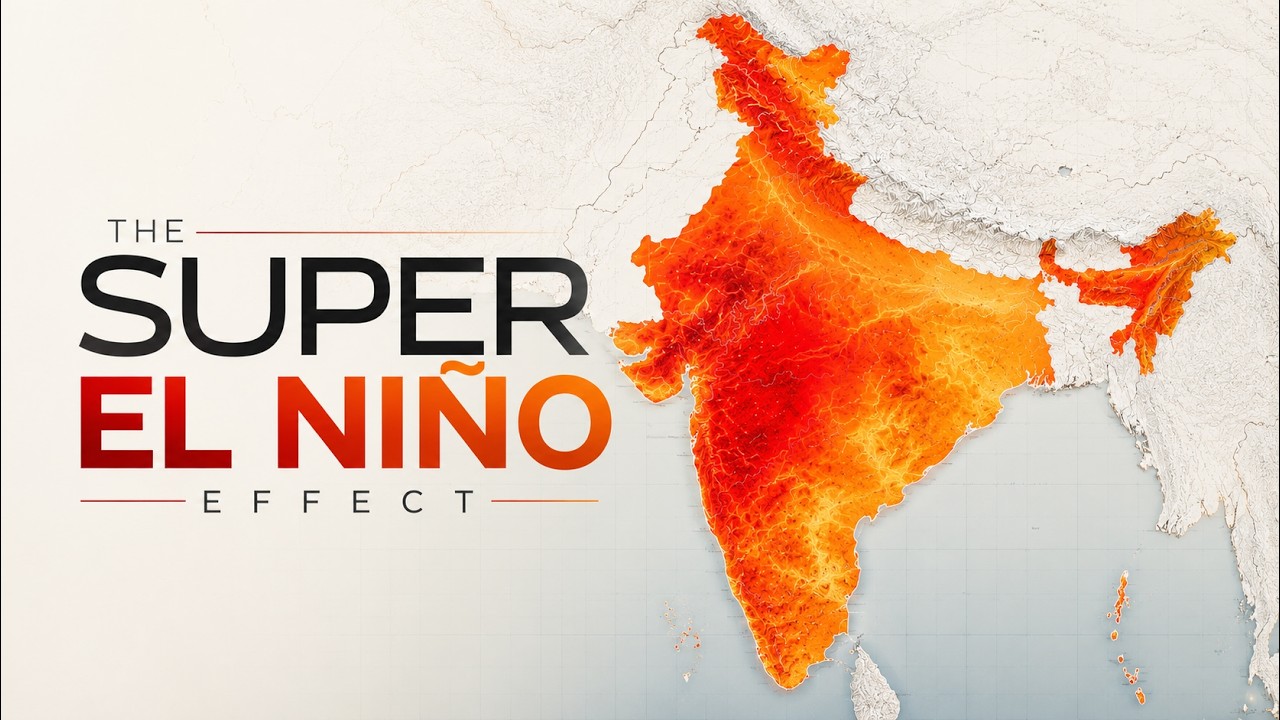
Executive Summary
A Think School case study on the Super El Nino the narrator says was forming in May 2026 and what it could mean for India's monsoon, farm income and economy. He explains why the monsoon matters, how low and high pressure drives it, how El Nino breaks the Pacific pattern in three ways, past super El Ninos and their economic effects, and what India can do. Sponsor: Ditto, named in a mid-roll advertisement for a free health insurance consultation; that read is an advertisement, and nothing here is medical, insurance or financial advice. COVERAGE: the full caption track was available, so this note covers the whole roughly 20 minute video. All forecasts, figures and historical claims are the narrator's own and are not independently checked.
Key Takeaways
Why the monsoon matters
The narrator says the monsoon provides 80% of India's water need, agriculture is about 17% of GDP but employs 43% of the workforce, and 44% of farmland has no irrigation.
Sponsor: Ditto
A mid-roll read promotes a free health insurance review with Ditto. This is the sponsor's advertisement, not advice.
Rain and the economy
He cites the Asian Development Bank figure that 1% more rain equals 0.16% more GDP, and says rural India is 37% of FMCG spending.
History of super El Ninos
He says only five have hit in 75 years, with GDP growth crashing to negative 0.6% in 1972 and food inflation hitting 6 to 7% in 2015.
The hot room idea
He explains wind flows from high to low pressure, so a hot subcontinent and a cooler Indian Ocean pull in the monsoon.
Three attacks on the monsoon
He says El Nino warms the Indian Ocean, flips the Indonesian low pressure into high pressure, and weakens the trade winds.
What India can do
He says India needs drip, sprinkler and solar irrigation and to move people from agriculture to manufacturing, and notes the FCI held 604 lakh tons of grain on 1 April 2026.
The Conversation Breakdown
Why the monsoon matters
⏱ Untimed topicThe narrator says the monsoon provides 80% of India's water need, agriculture is about 17% of GDP but employs 43% of the workforce, and 44% of farmland has no irrigation.
Sponsor: Ditto
⏱ Untimed topicA mid-roll read promotes a free health insurance review with Ditto. This is the sponsor's advertisement, not advice.
Rain and the economy
⏱ Untimed topicHe cites the Asian Development Bank figure that 1% more rain equals 0.16% more GDP, and says rural India is 37% of FMCG spending.
History of super El Ninos
⏱ Untimed topicHe says only five have hit in 75 years, with GDP growth crashing to negative 0.6% in 1972 and food inflation hitting 6 to 7% in 2015.
The hot room idea
⏱ Untimed topicHe explains wind flows from high to low pressure, so a hot subcontinent and a cooler Indian Ocean pull in the monsoon.
Three attacks on the monsoon
⏱ Untimed topicHe says El Nino warms the Indian Ocean, flips the Indonesian low pressure into high pressure, and weakens the trade winds.
What India can do
⏱ Untimed topicHe says India needs drip, sprinkler and solar irrigation and to move people from agriculture to manufacturing, and notes the FCI held 604 lakh tons of grain on 1 April 2026.
Core Frameworks & Ideas
Two low-pressure pools - the narrator's monsoon model
India's heated land and the warm pool near Indonesia both pull in moisture.
Three attacks - his El Nino framework
A cooked Indian Ocean, a flipped second window and dying trade winds weaken the rain.
Prevent, not only prepare - his policy view
Irrigation addresses the root cause while grain stocks only soften the aftermath.
Actionable Next Steps
- ✓Check how much of your own business or household spending depends on food prices or rural demand.
- ✓Look up your region's irrigation share to see how exposed it is to weak rain.
- ✓Follow the official monsoon forecasts for updates rather than one video.
- ✓Treat the forecasts and figures as the narrator's claims and verify them; this is not financial, insurance or medical advice.
Notable Quotes
“So, late rain can't save a dying crop, weak rain can't refill a dried well, and patchy rain can't feed 600 million people working in agriculture.”
“But unfortunately, there is nothing little about what it does to a country like India.”
“So we cannot let a random current from across the ocean decide the fate of 600 million people in our country.”
The One Thing to Remember
The narrator argues a forecast Super El Nino could weaken India's monsoon and hurt farm income, and says irrigation and moving people beyond agriculture are the lasting fixes.