


Inside Gong: How teams work with design partners, their pod structure, autonomy, trust, and more
Executive Summary
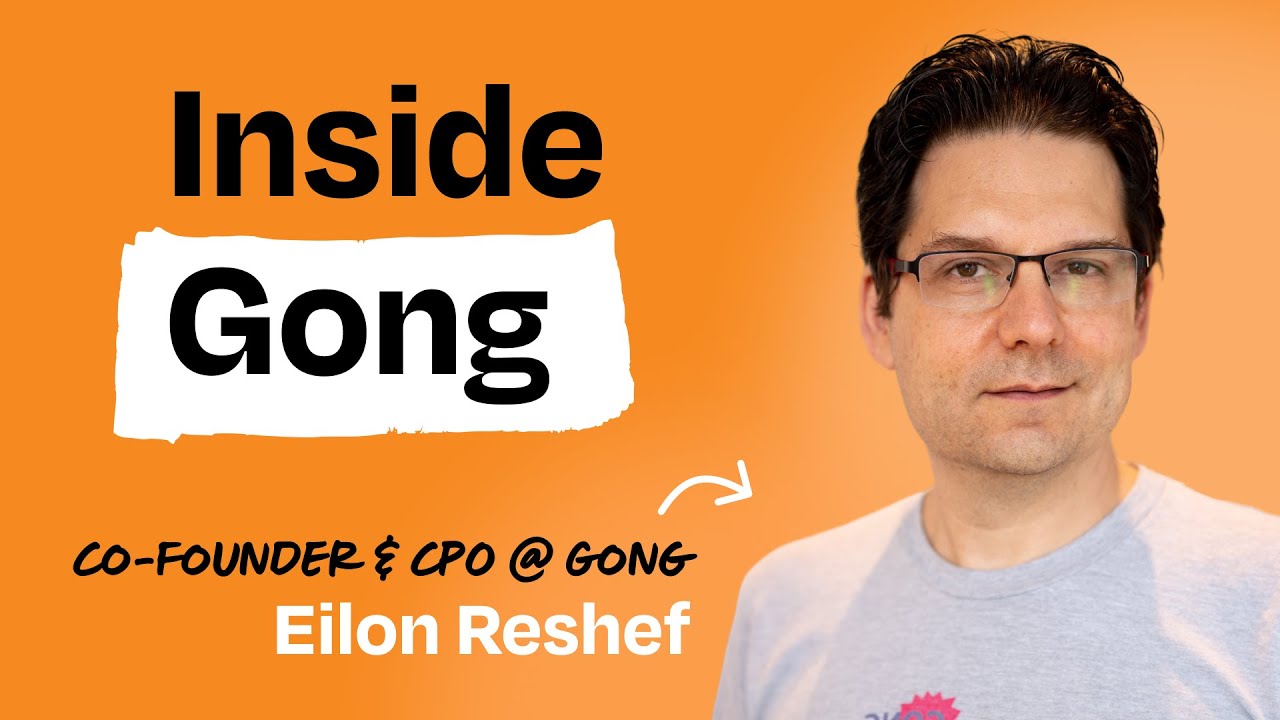
Lenny's Podcast episode in which Lenny Rachitsky talks with Eilon Reshef, co-founder and chief product officer at Gong. Eilon describes Gong's pod model, started around 2016, where small cross-functional pods of a product manager, a designer and engineers own an outcome, and how pods work with design partners drawn mostly from existing customers. He says a research coordinator sets up customer meetings so product managers can focus on learning, and that design partners should guide the team rather than him. He also explains his spiral method for learning a complex topic by asking each expert who else to speak with until he stops hearing anything new, and mentions embedded AI specialist teams that iterate quickly. Sponsors named: WorkOS and the Think Fast, Talk Smart podcast. PARTIAL COVERAGE: the captions cover the full conversation, but this summary highlights the pod model, design partners and the spiral method only, so other segments are not summarized. All views are the speakers' own and are not independently checked. Nothing here is financial, legal or investment advice.
Key Takeaways
The pod model
Eilon says Gong began pods around 2016, with a product manager, designer and engineers in each.
Pods own outcomes
He says each pod is given an outcome and autonomy over how to reach it.
Design partners guide
Eilon says that ideally design partners guide the team, not him.
Mostly existing customers
He says design partners are usually existing customers who expressed interest in the capability.
A research coordinator
He says one person sets up customer meetings for product managers, borrowing an idea from recruiting.
The spiral method
He says you keep asking each expert who else to speak with until you hear nothing new.
Embedded AI specialists
He says specialist AI teams embedded with pods can iterate very quickly.
The Conversation Breakdown
The pod model
⏱ Untimed topicEilon says Gong began pods around 2016, with a product manager, designer and engineers in each.
Pods own outcomes
⏱ Untimed topicHe says each pod is given an outcome and autonomy over how to reach it.
Design partners guide
⏱ Untimed topicEilon says that ideally design partners guide the team, not him.
Mostly existing customers
⏱ Untimed topicHe says design partners are usually existing customers who expressed interest in the capability.
A research coordinator
⏱ Untimed topicHe says one person sets up customer meetings for product managers, borrowing an idea from recruiting.
The spiral method
⏱ Untimed topicHe says you keep asking each expert who else to speak with until you hear nothing new.
Embedded AI specialists
⏱ Untimed topicHe says specialist AI teams embedded with pods can iterate very quickly.
Core Frameworks & Ideas
Pod model - Eilon's team structure
A small cross-functional team owns one outcome.
Design partner loop - Eilon's approach
Pick existing customers who asked for the capability and let them guide.
Spiral method - Eilon's learning loop
Ask who else to speak with until nothing is new.
Actionable Next Steps
- ✓Define one outcome per small team and give it autonomy.
- ✓Recruit design partners from customers who already asked for the capability.
- ✓Consider a coordinator who books customer meetings.
- ✓Try the spiral method on one topic, treating it as Eilon's approach.
Notable Quotes
“Ideally design partners guide you, not me.”
“I call it the spiral because it's going in circles around the target”
“there's one person who's basically a research coordinator”
The One Thing to Remember
Eilon Reshef says Gong built autonomous pods that work with design partners from existing customers, and that he learns new topics by spiraling around experts until nothing new is left.