


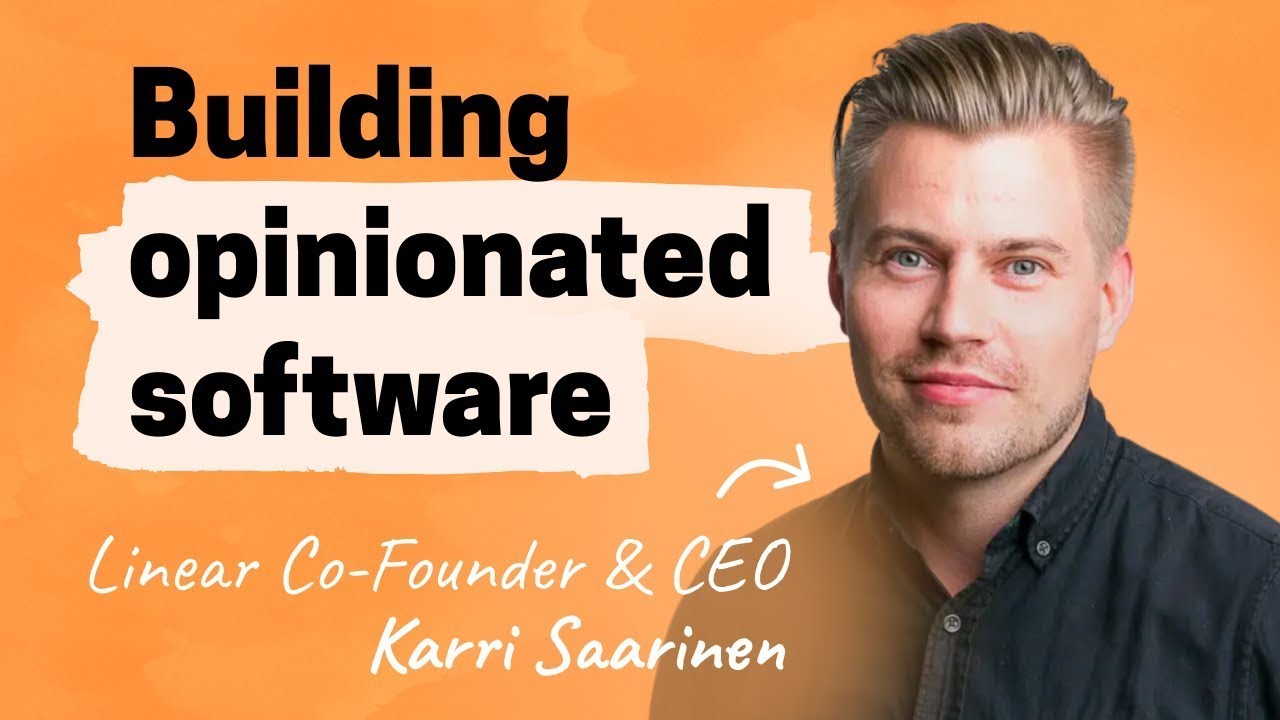
Inside Linear: Building with taste, craft, and focus | Karri Saarinen (co-founder, designer, CEO)
Executive Summary
Karri Saarinen discusses Linear's early testing, rapid improvement, opinionated defaults, specific users, ongoing quality and understanding a candidate's reasoning. Selected third-party transcript coverage excludes sponsor reads, numerical company claims and paid-trial mechanics. Linear examples are his accounts, unverified here. Untimed editorial topics are not video chapters.
Key Takeaways
Test early without pretending it is finished
Saarinen describes putting early work in the app for internal use, then inviting interested customers to try it. A rough experience is disclosed as unfinished at that stage. General release gets a different quality bar, so early shipping is not an excuse to expose everyone to unfinished work.
Build to discover the right design
He says building helps the team understand how a feature should work. An extended attempt to perfect designs before trying them can delay that learning. The process pairs early implementation with feedback instead of treating the first design as settled.
Ship and improve quickly
Craft does not mean never releasing until everything is perfect. Saarinen tries to combine rapid delivery with rapid fixing and improvement. He still expects another look before a wider release, which keeps speed tied to responsibility for the resulting experience.
Give users useful defaults
He argues that workplace tools should reduce the effort spent configuring the tool itself. An opinionated workflow can let a team concentrate on its actual work. This is his product philosophy, not a claim that flexibility is always harmful.
Design for someone specific
His design mantra is to make something for someone rather than everything for everyone. A generalized solution can lose the choices that make it useful. Clear users and a clear workflow make the team accountable for why its defaults fit.
Treat quality as a trust practice
Saarinen sees Linear as a retention and trust business. Continued use depends on delivering a good product repeatedly, not a single impressive launch. Small sources of friction matter because people encounter the tool during ongoing work.
Understand how people think
In hiring discussions he asks about decisions in past projects and what candidates are proud of. The aim is to understand reasoning and values, not only see a polished artifact. He also describes learning how someone approaches a problem in the team's environment.
The Conversation Breakdown
Test early without pretending it is finished
⏱ Untimed topicSaarinen describes putting early work in the app for internal use, then inviting interested customers to try it. A rough experience is disclosed as unfinished at that stage. General release gets a different quality bar, so early shipping is not an excuse to expose everyone to unfinished work.
Build to discover the right design
⏱ Untimed topicHe says building helps the team understand how a feature should work. An extended attempt to perfect designs before trying them can delay that learning. The process pairs early implementation with feedback instead of treating the first design as settled.
Ship and improve quickly
⏱ Untimed topicCraft does not mean never releasing until everything is perfect. Saarinen tries to combine rapid delivery with rapid fixing and improvement. He still expects another look before a wider release, which keeps speed tied to responsibility for the resulting experience.
Give users useful defaults
⏱ Untimed topicHe argues that workplace tools should reduce the effort spent configuring the tool itself. An opinionated workflow can let a team concentrate on its actual work. This is his product philosophy, not a claim that flexibility is always harmful.
Design for someone specific
⏱ Untimed topicHis design mantra is to make something for someone rather than everything for everyone. A generalized solution can lose the choices that make it useful. Clear users and a clear workflow make the team accountable for why its defaults fit.
Treat quality as a trust practice
⏱ Untimed topicSaarinen sees Linear as a retention and trust business. Continued use depends on delivering a good product repeatedly, not a single impressive launch. Small sources of friction matter because people encounter the tool during ongoing work.
Understand how people think
⏱ Untimed topicIn hiring discussions he asks about decisions in past projects and what candidates are proud of. The aim is to understand reasoning and values, not only see a polished artifact. He also describes learning how someone approaches a problem in the team's environment.
Core Frameworks & Ideas
Staged feedback
Try unfinished work internally and with interested customers before a wider release.
Opinionated defaults
Make deliberate workflow choices for a specific user so configuration does not become the user's main job.
Decision-based discussion
Ask why past product choices were made and what a candidate would do differently.
Actionable Next Steps
- ✓Choose a small audience for early feedback and explain what is unfinished.
- ✓Plan an improvement pass and a check before general release.
- ✓Name the specific user behind a workflow default.
- ✓Ask a candidate to explain a past decision and what they are proud of.
Notable Quotes
“Whenever we build a new feature one of the things is we don't want to spend tons of time upfront just designing it, then polishing it perfectly.”
“We try to balance this thinking with the fact that we should be always pushing things out very quickly, but then also fixing them, improving them very quickly.”
“Also, I think it's always nice that people can share something they think they did really well and we can spend time on it versus just asking something more like negative things.”
The One Thing to Remember
Pair early feedback with a deliberate quality check before wider release.