


Iran declared WAR : Why did America Kill Iran's Supreme Leader?
Executive Summary
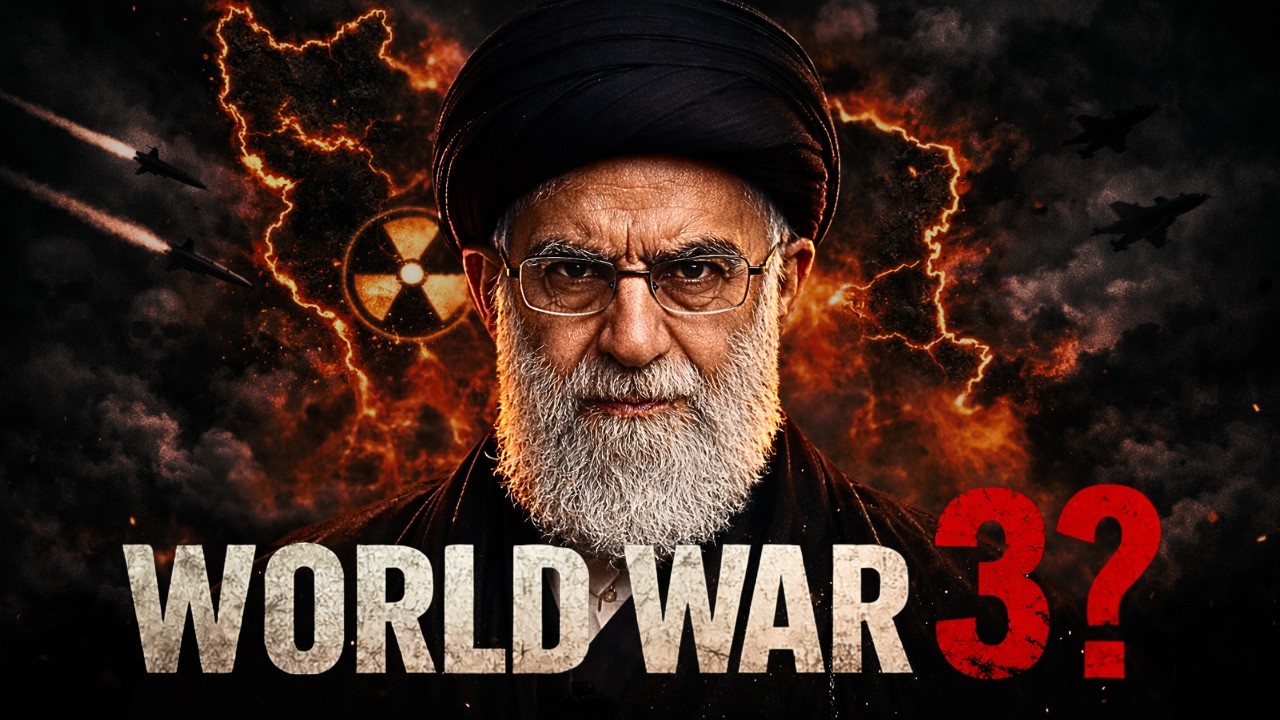
The 2026 strikes on Iran trace back to one number: 60%. When the IAEA reported Iran had enriched uranium past 60% - far beyond the 3-5% needed for power plants and closing on the 90% weapons-grade line - Israel and the US moved, as Israel had against Iraq in 1981 and Syria in 2007. The episode lays out three reasons a nuclear Iran is treated as a special case: its leadership has openly called Israel a 'cancerous tumor' while arming Hezbollah, Hamas and the Houthis around it; Iran sits on the Strait of Hormuz, the passage for 20% of the world's daily crude, and a bomb would turn that choke point into blackmail leverage even America could not answer; and a nuclear Iran would set off a Middle East arms race, with Saudi Arabia's Crown Prince on record saying 'If they get one, we have to get one.' Iran's retaliation - missiles and drones at US bases and at civilian areas in the UAE, Qatar, Kuwait, Bahrain and Saudi Arabia - has put the whole region on red alert, and the episode closes on the hope that Russia and China stay out. FULL COVERAGE: captions appear complete. Sponsor: Neuro.
Key Takeaways
The 60% number that triggered the strikes
Natural uranium holds 0.7% U-235; 3-5% enrichment runs power plants, 10-20% serves medical uses, and 90% is weapons-grade. When the IAEA reported Iran past 60% and closing on 90%, Israel and the US treated it as a bomb program, not an energy program.
The precedent: strike before the bomb exists
In 1981 Israeli jets destroyed Iraq's Osirak reactor - the start of Saddam Hussein's long downfall - and in 2007 Israel hit Syria's reactor. The 2026 strikes on Iran follow the same doctrine.
Why Iran is different from other nuclear states
Nine countries hold nuclear weapons without triggering strikes. Iran's case differs: its Supreme Leader called Israel a 'cancerous tumor that must be eradicated', and Tehran already arms Hezbollah, Hamas, the Houthis and Syrian militias - an encirclement Israel has answered with a shoot-first philosophy since 1979.
The Strait of Hormuz is the world's energy heartbeat
20% of global daily crude - the exports of Saudi Arabia, the UAE, Iraq and Kuwait - passes through this narrow strait on Iran's coast. A nuclear-armed Iran could hold the route hostage, spike oil prices and push the world toward inflation and recession.
The arms-race fear
If Iran gets the bomb, regional rivals will follow. Saudi Arabia's Crown Prince said it plainly in an interview clip: 'If they get one, we have to get one.'
Iran's retaliation widened the map
Within hours of the strikes, ballistic missiles and drones hit US bases and civilian areas - including hotels on Palm Jumeirah and airspace around the Burj Khalifa - across the UAE, Qatar, Kuwait, Bahrain and Saudi Arabia, shutting Dubai's airport.
The remaining escalation risk
With the Middle East on red alert and talk of a regional alliance forming against Iran, the episode's closing worry is that Russia or China entering the fight is what turns a regional war into a world war.
The Conversation Breakdown
The night the Middle East lit up
⏱ Untimed topicCoordinated US-Israel strikes on Tehran, Iran's missile and drone retaliation across five Gulf states, and the killing of Iran's Supreme Leader.
Enrichment, explained
⏱ Untimed topicWhat U-235 enrichment means, why 60% has no civilian justification, and the 90% weapons-grade red line.
1981 and 2007: the doctrine's history
⏱ Untimed topicIsrael's strikes on Iraq's Osirak reactor and Syria's reactor as the template for the 2026 operation.
Why Iran is a special case
⏱ Untimed topicStated intent against Israel, the proxy encirclement through Hezbollah, Hamas and the Houthis, and Israel's 40 years on red alert.
The Strait of Hormuz choke point
⏱ Untimed topicHow 20% of world crude flows through one narrow strait, and what nuclear blackmail over it would mean for oil prices and the world economy.
The arms race Saudi Arabia has promised
⏱ Untimed topicThe Crown Prince's 'we have to get one' position and the cascade a nuclear Iran would set off across the region.
Where the conflict goes next
⏱ Untimed topicCivilian-area attacks, a possible Middle Eastern alliance against Iran, and the Russia-China question that decides whether this stays regional.
Core Frameworks & Ideas
The Enrichment Ladder
Read nuclear intent from the number: 3-5% is power, 10-20% is medicine, 60% has no civilian use, 90% is weapons-grade - each rung narrows the plausible deniability.
Strike-Before-the-Bomb Doctrine
Israel's consistent playbook since 1981: when a hostile state nears weapons capability, destroy the program militarily before deterrence locks in - Iraq and Syria as precedent, Iran as the latest case.
Choke-Point Leverage
Geographic control of a narrow trade artery (the Strait of Hormuz) converts into economic blackmail power; adding nuclear weapons makes that leverage untouchable, which is why outside powers intervene.
Actionable Next Steps
- ✓Track uranium-enrichment percentages in conflict news - the number, not the rhetoric, tells you how close the red line is.
- ✓When energy markets move on Middle East news, check the Strait of Hormuz first: it carries 20% of daily world crude.
- ✓Read escalation news in layers: strikes, retaliation geography (military vs civilian targets), then great-power posture (Russia, China) - each layer signals a different risk level.
- ✓Map a country's alliances and proxies (Hezbollah, Hamas, Houthis) before judging how a conflict can spread.
Notable Quotes
“If they get one, we have to get one.”
“So, this isn't just a choke point. It is literally the heartbeat of the world's energy system.”
“20% of the entire world's daily crude oil passes through the Strait of Hormuz.”
The One Thing to Remember
Nuclear red lines are enforced before they are crossed: 60% enrichment has no civilian explanation, and the 1981 Iraq and 2007 Syria strikes show Israel's doctrine - act before the bomb exists, not after.