


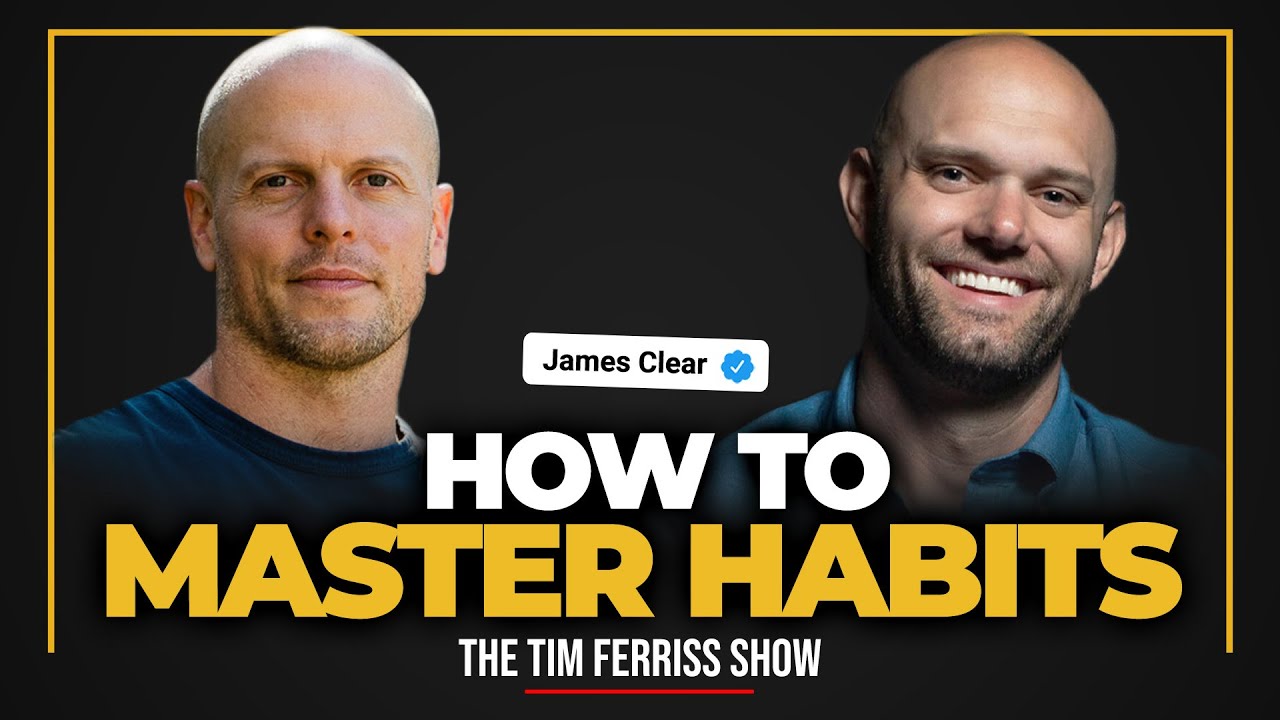
James Clear, Atomic Habits - Strategies for Mastering Habits
Executive Summary
Clear connects lasting habits with reflection, supportive environments and small actions that reinforce a chosen identity. He describes reviewing priorities, reducing friction and treating a habit’s starting version as something to establish before improving. The notes focus on source-read habit passages, not every part of the book-launch discussion.
Key Takeaways
Reflection lets a system change course
Clear uses annual and shorter reviews to ask what he is optimizing for and whether current habits can carry him toward it. A calendar or log can reveal where attention actually went. The practice is for examining a trajectory, not grading a life against someone else’s success criteria or assuming that a goal should never change.
Reduce the scope rather than abandon the schedule
He describes doing a smaller version of a planned activity when the full version is not possible. That preserves a point of contact with the routine instead of making every imperfect day a zero. This is a behavioral suggestion, not a reason to ignore illness, recovery, safety or circumstances that genuinely require stopping.
Systems can be physical, digital or social
Clear’s examples include keeping distracting devices elsewhere and collecting raw material for a newsletter. Their value is to make the desired action easier to begin. He acknowledges that a phone-away routine does not fit every job; an environment should support real responsibilities rather than block access that others reasonably need.
Identity grows through repeated evidence
He describes actions as votes for the kind of person one wants to become and suggests proving a chosen identity through small wins. The metaphor connects self-description with behavior. It does not mean every missed day defines a person or that affirming an identity alone changes circumstances.
Audience incentives need not choose the identity
Clear discusses the risk of letting algorithms shape a creator’s behavior and eventually their sense of self. He starts instead with the life and work he wants, then asks how to pursue reach within those constraints. This is his approach to creative decisions, not a current claim about any platform’s ranking system.
Changing a habit can mean replacing its function
He distinguishes eliminating, reducing and substituting a behavior. A substitution asks what repeated problem or experience the old habit serves, then searches for another way to meet it. The notes do not turn caffeine, alcohol or food examples into medical advice or imply that serious dependence is solved by a simple swap.
Establish the starting version before optimizing it
Clear’s two-minute rule scales a desired habit down to a very small action. His four-law lens asks how to make it obvious, attractive, easy and satisfying. The goal is reliable entry into the practice, not a claim that two minutes is always sufficient for the desired result or that every human behavior follows a universal formula.
The Conversation Breakdown
Starting a good habit
⏱ 1:05:47Clear uses his four-law lens and two-minute rule to discuss making a habit easier to begin. The timestamp is the owning-video chapter start; the written audio chapter list differs.
Core Frameworks & Ideas
Four laws of behavior change
Clear’s lens: obvious, attractive, easy and satisfying; reverse them when examining an unwanted habit.
Two-minute rule
Scale the starting action down, establish it, then consider increasing the scope.
Identity-based habits
Accumulate small actions that provide evidence for a chosen self-description.
Actionable Next Steps
- ✓Ask what you are optimizing for before adding a new routine.
- ✓Choose a small starting version of one desired action.
- ✓Remove one avoidable friction point without blocking necessary responsibilities.
- ✓Review whether the current system supports the future you actually want.
Notable Quotes
“The first thing is I give myself permission to reduce the scope but stick to the schedule.”
“every action you take is a vote for the type of person you wish to become.”
“A habit must be established before it can be improved.”
The One Thing to Remember
Make the repeatable starting action easy enough to show up for.