


Laws of Hype Creation : How Comet engineered Hype to build 167 cr Sneaker brand?
Executive Summary
Comet founder Utkarsh Gupta and Ganesh Prasad discuss sneaker design, customer stories, Instagram discovery and product development. Selected coverage from approximately the first 50,000 characters of third-party English captions, not the full interview; the unseen ending is not summarized. Political analogy and sponsor material are omitted. Revenue, market comparisons, engagement and sales anecdotes are the speakers' accounts, not independently verified figures. Captions contain errors and no named speakers; attribution follows the exchange. Topics are untimed; metadata follows YouTube. Source: https://youtubetotranscript.com/transcript?v=CSiNS9566Vk
Key Takeaways
Map aspiration and accessibility separately
Gupta describes plotting brands by how aspirational they feel and how affordable or attainable they are. In his interpretation, that exposed room for an Indian sneaker brand. Use the map as a hypothesis about customers, not a settled verdict on competitors; test where people see the actual gap.
Look at what customers want to participate in
He recalls watching sneaker culture and noticing Indian interest in stories and collections that were difficult to access. Consumption of content can reveal interest without proving purchase demand. Compare what people watch with what they can buy and what they actually choose.
Give the product a locally meaningful story
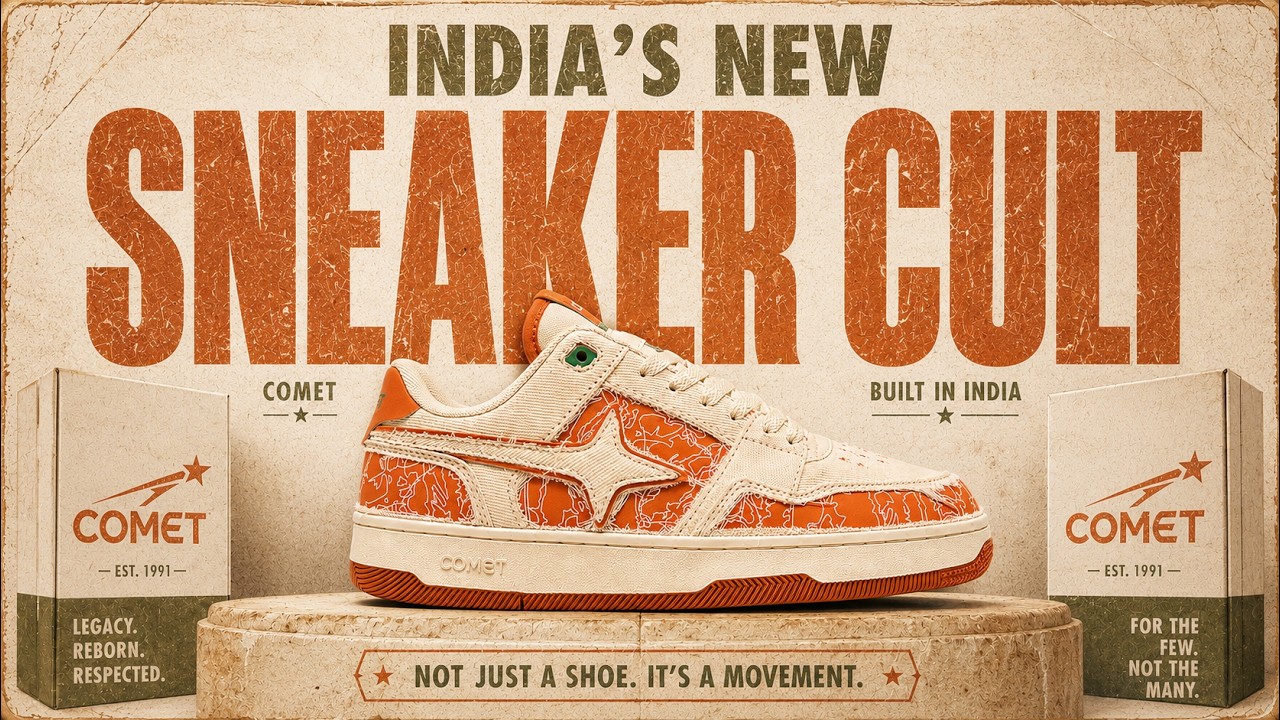
Gupta argues that a shoe can carry experiences and references customers recognize from their own lives. The mango design illustrates that approach without relying entirely on an imported celebrity association. Start with a meaningful idea, then make the product itself express it.
Use novelty for discovery, not as a substitute for quality
He describes unusual drops as a reason to stop scrolling in a crowded feed. A conventional core shoe can still be valuable later in the customer journey. Separate what earns the first look from what makes someone satisfied after buying.
Give each channel a defined job
In his account, established products contribute much of the revenue and appear in ads, while organic Instagram emphasizes fresh designs and stories. Repeating the whole catalog everywhere misses that distinction. Decide which channel introduces the brand and which helps a buyer choose a reliable product.
Build a story customers can carry
A visible logo and an unusual shoe give the owner something to recognize and explain in person. Gupta treats customer conversation as part of distribution. Check whether the story is easy to retell and supported by the product, rather than expecting customers to repeat marketing copy.
Do the engineering behind the design
The discussion describes sole development, material tests and the technical challenge of a peelable layered shoe. A design concept needed a usable physical product and packaging to match. Budget for the hidden development work instead of treating an appealing story as proof that production will be simple.
The Conversation Breakdown
Map aspiration and accessibility separately
⏱ Untimed topicGupta describes plotting brands by how aspirational they feel and how affordable or attainable they are. In his interpretation, that exposed room for an Indian sneaker brand. Use the map as a hypothesis about customers, not a settled verdict on competitors; test where people see the actual gap.
Look at what customers want to participate in
⏱ Untimed topicHe recalls watching sneaker culture and noticing Indian interest in stories and collections that were difficult to access. Consumption of content can reveal interest without proving purchase demand. Compare what people watch with what they can buy and what they actually choose.
Give the product a locally meaningful story
⏱ Untimed topicGupta argues that a shoe can carry experiences and references customers recognize from their own lives. The mango design illustrates that approach without relying entirely on an imported celebrity association. Start with a meaningful idea, then make the product itself express it.
Use novelty for discovery, not as a substitute for quality
⏱ Untimed topicHe describes unusual drops as a reason to stop scrolling in a crowded feed. A conventional core shoe can still be valuable later in the customer journey. Separate what earns the first look from what makes someone satisfied after buying.
Give each channel a defined job
⏱ Untimed topicIn his account, established products contribute much of the revenue and appear in ads, while organic Instagram emphasizes fresh designs and stories. Repeating the whole catalog everywhere misses that distinction. Decide which channel introduces the brand and which helps a buyer choose a reliable product.
Build a story customers can carry
⏱ Untimed topicA visible logo and an unusual shoe give the owner something to recognize and explain in person. Gupta treats customer conversation as part of distribution. Check whether the story is easy to retell and supported by the product, rather than expecting customers to repeat marketing copy.
Do the engineering behind the design
⏱ Untimed topicThe discussion describes sole development, material tests and the technical challenge of a peelable layered shoe. A design concept needed a usable physical product and packaging to match. Budget for the hidden development work instead of treating an appealing story as proof that production will be simple.
Core Frameworks & Ideas
Aspiration versus accessibility - discussed map
Compare customer desire and attainability as separate dimensions.
Core products versus drops - discussed portfolio
Give reliable sellers and experimental conversation starters different roles.
Product as story - editorial label
Express the idea through design, use and packaging so customers can retell it.
Actionable Next Steps
- ✓Plot competitors by customer aspiration and accessibility.
- ✓Define the job of organic posts separately from paid ads.
- ✓Write the story a customer could naturally tell about the product.
- ✓List the physical tests needed to support a new design idea.
Notable Quotes
“I will not show you things you've seen before.”
“not every story is about association with a celebrity.”
“if you truly want to test things out you should be pure in your experiments”
The One Thing to Remember
Use an original story to earn attention, then make the product experience strong enough to support it.