


Marketing so good, you couldn’t tell it’s a scam
Executive Summary
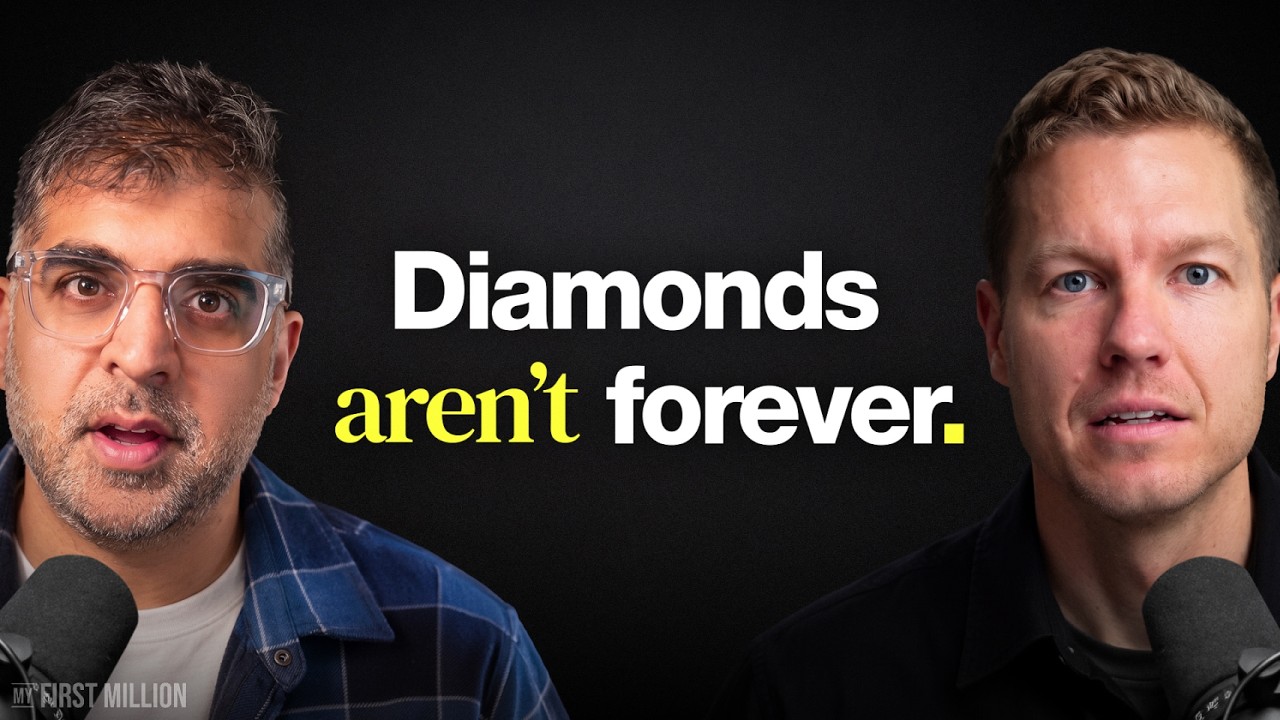
My First Million episode 871, in which hosts Shaan Puri and Sam Parr discuss how the diamond industry used marketing to shape what people pay for diamonds. They go through a short history of diamonds, how De Beers consolidated supply, the four Cs and the grading body that supports them, falling lab-grown prices, and a few related marketing examples. Sponsor: HubSpot, named in the episode description. PARTIAL COVERAGE: this note covers the opening, the history and De Beers section, the four Cs discussion, and the final segment, and does not cover every part of the roughly 32 minute episode. The hosts' claims about prices, history and industry practice are their own and are not independently checked. This is a summary of their views, not investment or purchasing advice.
Key Takeaways
Lab-grown prices are falling
The hosts say diamond prices are down sharply from their peak, and give a 2 carat lab-grown stone price in the low hundreds of dollars, which one host calls the price of dinner. These are their figures.
Diamonds began as a sign of power
They say diamonds were once rare and worn by kings and queens as a sign of power and wealth, not love or proposals.
A discovery that threatened prices
They say a big discovery in South Africa in the late 1800s made diamonds plentiful, which threatened sellers who relied on rarity.
Consolidating supply
They say Cecil Rhodes and another founder bought up mines and merged them into De Beers, locking up supply to protect prices.
The four Cs gave a language for pricing
They say the four Cs gave sellers language for price discrimination, so small differences that need a microscope can drive big price gaps.
The same pattern in wine and ratings
They compare it to wine, where a vocabulary and a professional class create a pricing gradient, and note that grading is done by a third-party nonprofit, the Gemological Institute of America.
Lab-grown prices are falling
The hosts say diamond prices are down sharply from their peak, and give a 2 carat lab-grown stone price in the low hundreds of dollars, which one host calls the price of dinner. These are their figures.
Diamonds began as a sign of power
They say diamonds were once rare and worn by kings and queens as a sign of power and wealth, not love or proposals.
A discovery that threatened prices
They say a big discovery in South Africa in the late 1800s made diamonds plentiful, which threatened sellers who relied on rarity.
Marketing examples beyond diamonds
The hosts also touch on marketing around other products and end with a site that shows how lucky it is to be born where and when you were.
The Conversation Breakdown
Lab-grown prices are falling
⏱ Untimed topicThe hosts say diamond prices are down sharply from their peak, and give a 2 carat lab-grown stone price in the low hundreds of dollars, which one host calls the price of dinner. These are their figures.
Diamonds began as a sign of power
⏱ Untimed topicThey say diamonds were once rare and worn by kings and queens as a sign of power and wealth, not love or proposals.
A discovery that threatened prices
⏱ Untimed topicThey say a big discovery in South Africa in the late 1800s made diamonds plentiful, which threatened sellers who relied on rarity.
Consolidating supply
⏱ Untimed topicThey say Cecil Rhodes and another founder bought up mines and merged them into De Beers, locking up supply to protect prices.
The four Cs gave a language for pricing
⏱ Untimed topicThey say the four Cs gave sellers language for price discrimination, so small differences that need a microscope can drive big price gaps.
The same pattern in wine and ratings
⏱ Untimed topicThey compare it to wine, where a vocabulary and a professional class create a pricing gradient, and note that grading is done by a third-party nonprofit, the Gemological Institute of America.
Lab-grown prices are falling
⏱ Untimed topicThe hosts say diamond prices are down sharply from their peak, and give a 2 carat lab-grown stone price in the low hundreds of dollars, which one host calls the price of dinner. These are their figures.
Diamonds began as a sign of power
⏱ Untimed topicThey say diamonds were once rare and worn by kings and queens as a sign of power and wealth, not love or proposals.
A discovery that threatened prices
⏱ Untimed topicThey say a big discovery in South Africa in the late 1800s made diamonds plentiful, which threatened sellers who relied on rarity.
Marketing examples beyond diamonds
⏱ Untimed topicThe hosts also touch on marketing around other products and end with a site that shows how lucky it is to be born where and when you were.
Core Frameworks & Ideas
Control scarce supply - the hosts' reading of De Beers
They argue the group locked up supply so prices held.
Create a grading language - the four Cs
They say a shared vocabulary lets sellers charge across a wide price range.
Third-party validation - the grading body
They point to an outside grader as part of why buyers trust the scale.
Actionable Next Steps
- ✓Look at one product you sell or buy and note what language is used to justify its price.
- ✓Check whether an outside grader or standard backs your claims.
- ✓Compare the price of a lab-made and natural version of any product you care about.
- ✓Check any price and history claims from the episode independently.
Notable Quotes
“Can we talk about the incredible scam that is the diamond industry?”
“Diamonds used to be very very rare and it was worn by like kings and queens, royalty.”
“The four C's gave them language to use for pricing discrimination.”
“Can we talk about the incredible scam that is the diamond industry?”
“Diamonds used to be very very rare and it was worn by like kings and queens, royalty.”
“The four C's gave them language to use for pricing discrimination.”
The One Thing to Remember
The hosts argue that a scarce, supply-controlled product plus a language of grades can turn marketing into price.