


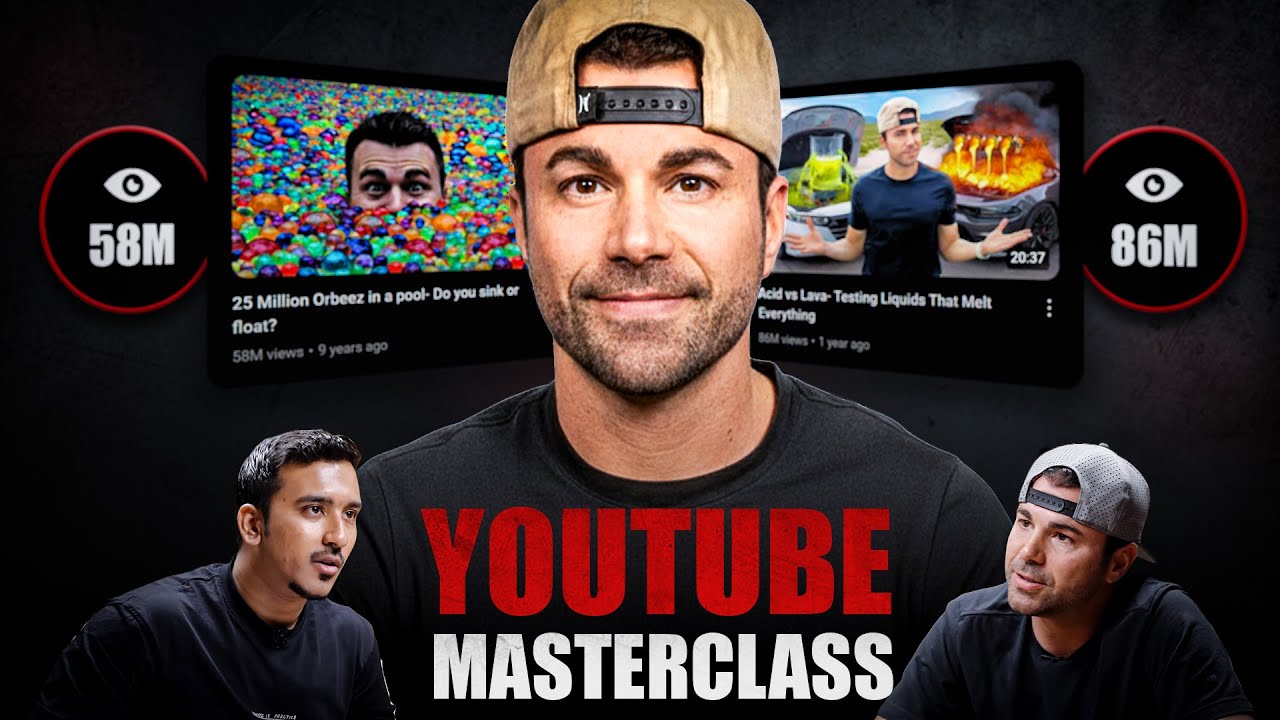
@MarkRober on NASA, Apple & How to Go Viral on YouTube? | IBP EP33
Executive Summary
Mark Rober and Ganesh Prasad discuss curiosity, making science inviting and maintaining a clear purpose as a team grows. Selected creator and leadership coverage from approximately the first 50,000 characters of third-party captions, not the full interview; the unseen ending is not summarized. AI remarks, policy and numerical space-program comparisons are omitted. NASA and Apple workplace stories are Rober's recollections, not current company policies. Captions contain errors and no named speakers; attribution follows the exchange. Topics are untimed; metadata follows YouTube. Source: https://youtubetotranscript.com/transcript?v=M173e445SxY
Key Takeaways
Make curiosity a reason to continue learning
Rober connects learning with projects a person genuinely wants to investigate. His examples contrast discovering something through an engaging activity with working only for a grade. Choose a manageable experiment that invites questions, while recognizing that his personal experience does not establish one method for everyone.
Encourage an idea without prescribing every step
He recalls his mother celebrating a childhood solution even when she did not share all his technical interests. The story is about making room for exploration, not a guarantee about parenting outcomes. Support a small attempt and ask what the person learned rather than taking over the whole problem.
Use a video as an invitation, not a complete education
Rober describes broadly appealing projects that carry lessons about the scientific method and chemistry. His aim is to make the moment of understanding enjoyable enough to encourage further learning. An entertaining introduction can open a subject without claiming to replace deeper study.
Choose a cadence that protects the work
He recalls continuing with roughly one video a month even when other publishing patterns were fashionable. This is his operating choice rather than a rule that every creator should copy. Match the schedule to the time and quality your format needs, then check whether it remains sustainable.
Reward useful contribution rather than tenure alone
Rober argues that people creating value should receive recognition, responsibility and compensation that reflects their contribution. He frames this as a leadership choice that can help retain capable people. Define contribution clearly and apply fair criteria rather than treating years of service as the sole measure.
Put a small number of priorities behind the purpose
His Apple discussion emphasizes simplicity and focused effort rather than pursuing every possible project. The useful question is whether a decision improves the end-user experience. Reduce competing work only after checking what the customer and team actually need.
Pass values through repeated decisions and training
Rober describes new people learning from existing people and later training the next group. He uses a north-star question to make a value practical in daily choices. Preserve the purpose through behavior and onboarding rather than relying only on a founder's personal presence.
The Conversation Breakdown
Make curiosity a reason to continue learning
⏱ Untimed topicRober connects learning with projects a person genuinely wants to investigate. His examples contrast discovering something through an engaging activity with working only for a grade. Choose a manageable experiment that invites questions, while recognizing that his personal experience does not establish one method for everyone.
Encourage an idea without prescribing every step
⏱ Untimed topicHe recalls his mother celebrating a childhood solution even when she did not share all his technical interests. The story is about making room for exploration, not a guarantee about parenting outcomes. Support a small attempt and ask what the person learned rather than taking over the whole problem.
Use a video as an invitation, not a complete education
⏱ Untimed topicRober describes broadly appealing projects that carry lessons about the scientific method and chemistry. His aim is to make the moment of understanding enjoyable enough to encourage further learning. An entertaining introduction can open a subject without claiming to replace deeper study.
Choose a cadence that protects the work
⏱ Untimed topicHe recalls continuing with roughly one video a month even when other publishing patterns were fashionable. This is his operating choice rather than a rule that every creator should copy. Match the schedule to the time and quality your format needs, then check whether it remains sustainable.
Reward useful contribution rather than tenure alone
⏱ Untimed topicRober argues that people creating value should receive recognition, responsibility and compensation that reflects their contribution. He frames this as a leadership choice that can help retain capable people. Define contribution clearly and apply fair criteria rather than treating years of service as the sole measure.
Put a small number of priorities behind the purpose
⏱ Untimed topicHis Apple discussion emphasizes simplicity and focused effort rather than pursuing every possible project. The useful question is whether a decision improves the end-user experience. Reduce competing work only after checking what the customer and team actually need.
Pass values through repeated decisions and training
⏱ Untimed topicRober describes new people learning from existing people and later training the next group. He uses a north-star question to make a value practical in daily choices. Preserve the purpose through behavior and onboarding rather than relying only on a founder's personal presence.
Core Frameworks & Ideas
North-star question - guest concept
Ask whether a decision advances the purpose or improves the end-user experience.
Curiosity-led learning - discussed approach
Use an interesting small project to invite questions and further study.
Culture through people - guest explanation
Have current team members demonstrate and teach the values to those who follow.
Actionable Next Steps
- ✓Write the purpose question your team can apply to a real decision.
- ✓Review one project that may distract from that purpose.
- ✓Design a small learning experiment around a question you genuinely care about.
- ✓Include one example of the team's values in the next onboarding conversation.
Notable Quotes
“you need a north star”
“the people who come in are trained by the previous people”
“you hold those values sacred”
The One Thing to Remember
Use a clear purpose to choose the work, then pass that purpose on through decisions and training.