


Marty Cagan: Strong Opinions, loosely held
Executive Summary
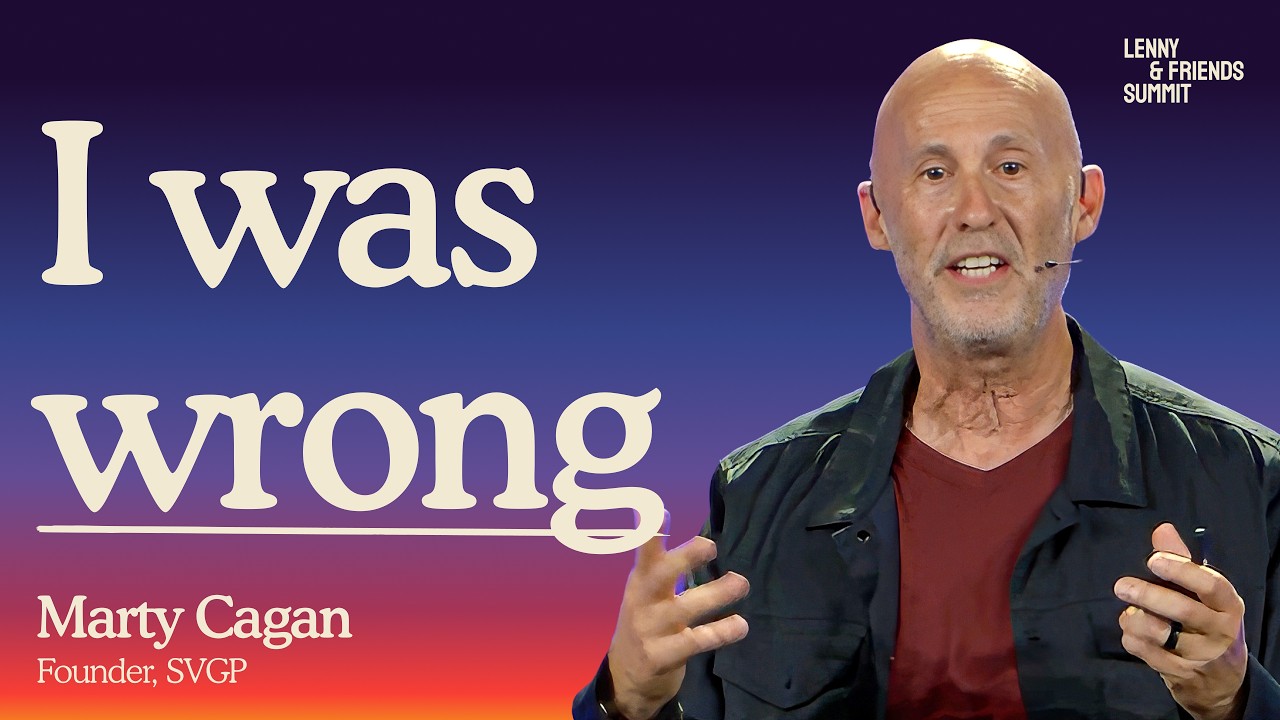
A Lenny's Podcast talk recorded live at the Lenny and Friends Summit on September 10, 2026 in San Francisco, in which product leader Marty Cagan shares ten regrets about his product advice since the first edition of his book Inspired in 2008. He says he understated business viability, product leadership and solution discovery, and that predictable roadmaps and process can stop teams learning what customers need. He also argues that outcomes and clear thinking matter even as AI makes building easier. Sponsor: no third-party sponsor is named in the description; the talk is presented by Lenny's Podcast and the Lenny and Friends Summit. PARTIAL COVERAGE: this note is based on the opening, the first regret on business viability, a middle section on why users churn and humility, and the description, and does not cover all ten regrets in the roughly 22 minute talk. All views are Cagan's own.
Key Takeaways
Two models
He says he saw two kinds of product work at the summit, which he calls the project model and the product model.
Principles over tools
He says he is not interested in the latest process or framework, because the job is solving problems and achieving outcomes.
Ten regrets
He says he drew the line at the 2008 first edition of Inspired and picked the top ten things he regrets.
Business viability
He says his most embarrassing regret is that he understated how important it is that a solution works for the business as well as the customer.
Ask why people churn
He says almost nobody follows up when a user churns, yet the reason people use or drop a product is the key to innovation.
Product people are early adopters
He says product people try many products, most of them poor, and rarely hear back after leaving.
Humility
He says the longer he works, the more he sees humility and an open mind as essential for product people.
The Conversation Breakdown
Two models
⏱ Untimed topicHe says he saw two kinds of product work at the summit, which he calls the project model and the product model.
Principles over tools
⏱ Untimed topicHe says he is not interested in the latest process or framework, because the job is solving problems and achieving outcomes.
Ten regrets
⏱ Untimed topicHe says he drew the line at the 2008 first edition of Inspired and picked the top ten things he regrets.
Business viability
⏱ Untimed topicHe says his most embarrassing regret is that he understated how important it is that a solution works for the business as well as the customer.
Ask why people churn
⏱ Untimed topicHe says almost nobody follows up when a user churns, yet the reason people use or drop a product is the key to innovation.
Product people are early adopters
⏱ Untimed topicHe says product people try many products, most of them poor, and rarely hear back after leaving.
Humility
⏱ Untimed topicHe says the longer he works, the more he sees humility and an open mind as essential for product people.
Core Frameworks & Ideas
Product model versus project model - Cagan's split
Judge work by outcomes for customers and the business, not by delivering a roadmap.
Viability check - his top regret
Confirm customers will buy it and that it works for the business.
Ask why they left - his discovery question
Contact churned users and ask why they stopped using the product.
Actionable Next Steps
- ✓Ask three churned users why they stopped using your product.
- ✓Write down for one feature how it works for the business, not only the customer.
- ✓Review whether your team measures outcomes or delivered features.
- ✓Treat the advice as Cagan's own view and test it against your context.
Notable Quotes
“I completely understated the importance of business viability.”
“The job of product is to solve problems for our customers and achieve outcomes for our business.”
“I try products constantly.”
The One Thing to Remember
Marty Cagan says the product job is solving customer problems and delivering business outcomes, and that he regrets underplaying business viability and customer discovery.