


Modi In China : Is India About to Make a HUGE Mistake in China Relations?
Executive Summary
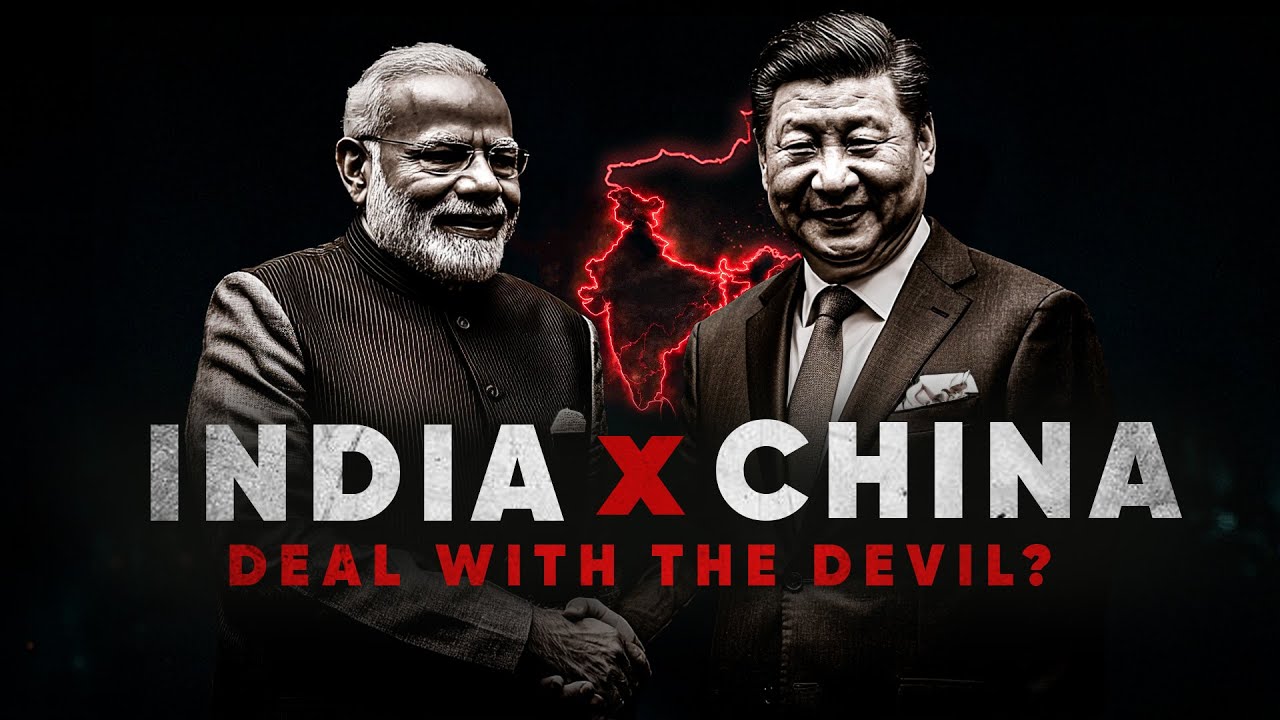
Trump's 50% tariffs on Indian goods have coincided with a sudden India-China thaw: Jaishankar's 'three mutuals' formulation, China reportedly resuming supplies of fertilizers, rare earths and tunnel-boring machines, and Modi's first China visit in seven years. The host's case: Washington's real target is India's Rs 99 trillion agricultural market, which no Indian government can open - 150 million people work in agriculture, Indian farms average 0.74 hectares against 188 in the US, and an SBI study cited in the episode says US exporters could land milk at Rs 32 a liter against a Rs 50 domestic price. Meanwhile China's 600% rise in manufacturing wages since 2005 pushed it from Barbie dolls to BYD electric cars, which makes the two economies complementary: China is exiting exactly the low-margin, job-rich manufacturing India needs, and the Xiaomi model (designed in Beijing, 99% assembled in India) shows the template. But the episode's conclusion rejects choosing sides: India runs a $45 billion trade surplus with the US, sends half its IT exports and 40% of pharma exports there, runs on American digital platforms, and the 1962 war is why China remains, in the host's framing, an unknown angel versus America's known devil.
Key Takeaways
The stated reason for tariffs is Russian oil; the episode argues the real target is India's farm market
The host points out that China bought 47% of Russia's crude exports to India's 38% (Dec 2022-Jun 2025, as cited), and the EU was the largest buyer of Russian LNG - yet India got the 50% tariff. His reading of US official statements: Washington wants American companies into India's Rs 99 trillion agricultural sector.
Why no Indian government opens agriculture: the numbers make it survival, not policy
Agriculture employs 150 million Indians; average farm size is 0.74 hectares versus 188 in the US; American farmers borrow at 3-5% while Indian farmers pay moneylenders 15-30%. The episode argues cheap US imports would bankrupt millions of farmers and create food-import dependence, invoking the 1943 Bengal famine as the historical warning.
The SBI milk study is the episode's concrete example
Milk sells at about Rs 50 a liter in India; the SBI document cited says subsidized US exporters could land it at Rs 32 - a 36% gap that could force Indian prices down 15-25% in a 3-5% margin business, meaning farmers sell at a loss.
China's wage inflation is the hidden reason an alliance suddenly makes economic sense
Chinese manufacturing labor rose from $0.79/hour in 2005 to over $6/hour in 2021 - a 600% increase. Low-margin work (Barbie dolls at $1, Nike assembly at $25) became unsustainable, so China climbed to high-margin products; BYD went from phone batteries to the world's largest EV maker.
The complementarity argument: China is exiting what India needs, and Xiaomi already runs the template
As China abandons low-value manufacturing, China+1 shifts are landing in India (Foxconn, Samsung, Hasbro's planned moves). Xiaomi designs in Beijing but assembles 99% of India-sold devices in India via contract manufacturers - design margins for China, jobs for India, plus a combined 2.8-billion-person market.
The case against ditching America is measured in dependence, not sentiment
India-US trade grew from $20 billion in 2000 to $118 billion in 2024 with a $45 billion Indian surplus; about 50% of India's IT exports and 40% of pharma exports go to the US; daily digital life runs on American platforms; and the US supplies 10% of defense imports, creating decade-long maintenance dependencies.
1962 is the reason the China option fails the trust test
The episode recounts Nehru's Hindi-Chini bhai-bhai, the 1954 Panchsheel agreement, India's support for China's UN seat - and China's coordinated assault of 20 October 1962. The host's closing frame: America is a known devil whose rules India understands; China is an unknown angel with a history of betrayal, so the strategy is to balance, never beg.
The Conversation Breakdown
Cold open: an unthinkable thaw
⏱ Untimed topicA montage of the new reality - Jaishankar's 'differences must not become disputes' statement, Trump's 50% tariffs, China's reported resumption of fertilizer and rare-earth supplies, and Modi set to visit China for the first time in seven years - frames the episode's question: is an India-China alliance emerging, and should India want one?
Sponsor read: InCred Money
⏱ Untimed topicThe host reads an ad for InCred Money's unlisted-shares platform: zero brokerage, entry from Rs 200, a Rs 250 cashback offer via the episode link, plus the platform's own cautions about liquidity, lock-ins and price swings and the host's statement that he is not a SEBI-registered advisor.
What the episode says Trump actually wants
⏱ Untimed topicThe host compares who actually buys Russian energy - China at 47% of crude exports, the EU leading on LNG - and argues the tariff logic doesn't add up unless the real goal is prying open India's Rs 99 trillion agricultural market, a sector every Indian government, BJP or Congress, has protected.
Why Indian agriculture can't be opened
⏱ Untimed topicThe structural mismatch: 150 million workers, sub-hectare farms versus 188-hectare US averages, 15-30% informal credit versus 3-5% subsidized loans, and mechanized US cultivation. The SBI milk study (Rs 50 domestic versus Rs 32 landed) illustrates the outcome, and the 1943 Bengal famine is invoked as the food-dependence warning.
How China outgrew low-margin manufacturing
⏱ Untimed topicChina's four-decade industrial playbook - $1 Barbie dolls and $25 Nike assembly lifting 800 million out of poverty - hit the wage-inflation wall: labor at $0.79/hour in 2005 became $6-plus by 2021. BYD's evolution from phone batteries to the world's largest EV maker is the episode's proof of the move to high-margin products.
The complementarity case and the Xiaomi model
⏱ Untimed topicChina+1 is already moving low-value production to India, Vietnam and Mexico. Xiaomi's model - designed in Beijing, 99% of India-sold devices assembled in India by contract manufacturers - shows how the two economies fit: high-margin design for China, job-rich assembly for India, a shared 2.8-billion-person market, and BRICS as the enabling bloc.
Why India can't ditch America, and the 1962 problem
⏱ Untimed topicThe counterweight: a $118 billion US trade relationship with a $45 billion surplus, IT and pharma export dependence, American digital platforms, and growing defense ties. Then the history: Nehru's Hindi-Chini bhai-bhai and Panchsheel answered by the 1962 invasion. The closing dilemma - known devil versus unknown angel - resolves into a strategy of balance so India never has to beg, borrow or break.
Core Frameworks & Ideas
The wage-ladder escape
When a manufacturing economy's labor costs multiply (China: $0.79 to $6-plus an hour), low-margin products become impossible and the country must climb to higher-margin goods or lose the work to cheaper rivals. Use it to read which industries a rising economy will exit - and who inherits them.
The complementarity test for alliances
Two economies make durable partners when one is abandoning exactly what the other needs: China's exit from low-margin manufacturing matches India's need for job-rich industry. The Xiaomi model (design where margins are, assemble where jobs are needed) is the operational template.
Known devil versus unknown angel
The episode's decision frame for strategic partnerships: weigh a flawed partner whose rules and limits you understand against an attractive partner with a record of betrayal. Economic logic sets the ceiling; historical trust sets the floor - so balance rather than commit.
Actionable Next Steps
- ✓When a trade or tariff story breaks, separate the stated reason from the economic interest: list what each side actually buys from and sells to the other before accepting the official framing.
- ✓Founders and operators: map your supply chain against the China+1 shift the episode describes - components, assembly and contract manufacturing are moving, and the beneficiaries are the firms positioned where the work lands.
- ✓Students of policy: track the 'three mutuals' formulation and BRICS outcomes over the next year as a live test of whether the India-China thaw produces anything tangible beyond statements.
- ✓Before repeating any figure from this episode (oil shares, the SBI milk study, trade totals), check the underlying source - these are the episode's claims from August 2025, useful as arguments, not as settled data.
Notable Quotes
“That's a 600% increase in labor cost.”
“This wasn't optional. It was survival”
“economics is only half the story.”
“ways that we cannot ever forgive.”
The One Thing to Remember
The episode's frame for every India-China headline: the economics of an alliance are compelling (a 2.8-billion-person complementary market), but the US trade surplus and the memory of 1962 mean India's rational strategy is to balance both powers, not pick one.