


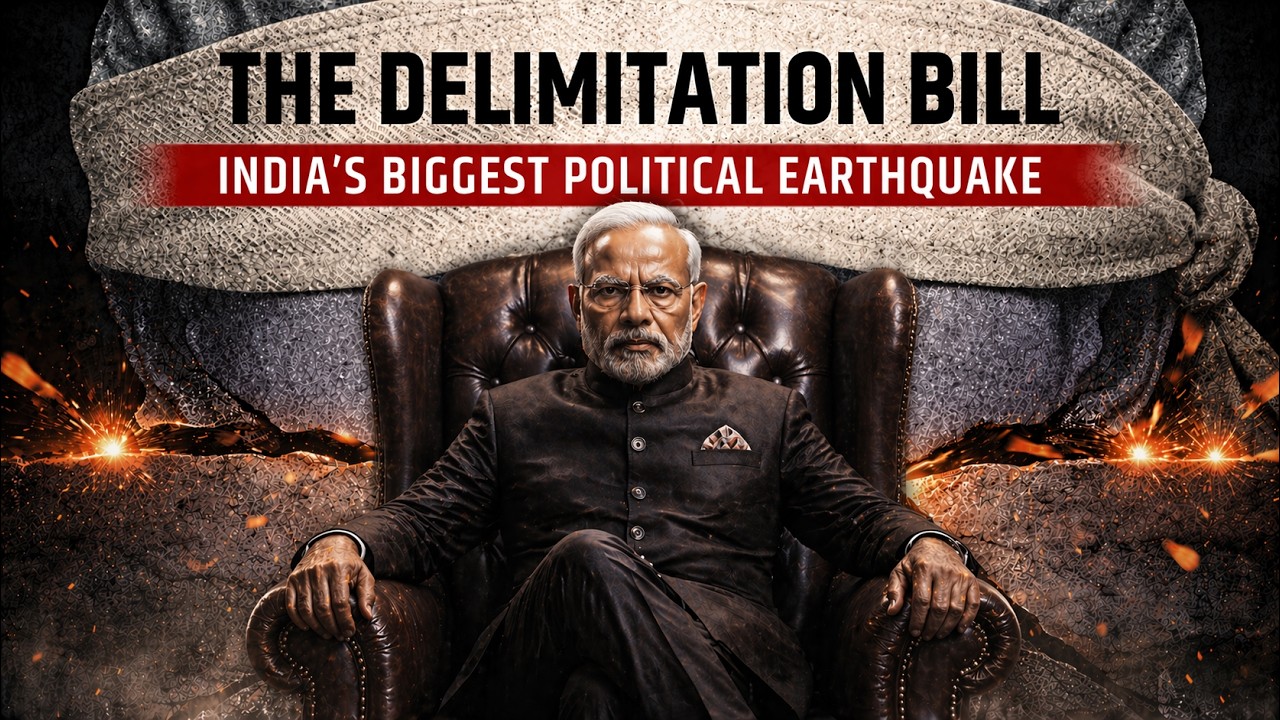
Modi’s Political Disaster: Why is South India Protesting Against the Delimitation Bill?
Executive Summary
A Think School political explainer from April 2026 on the Indian government's delimitation bills and why southern states object. The presenter explains how constituency boundaries and seat counts were frozen from 1971, the proposed expansion of the Lok Sabha from 543 to 850 seats, the opposition's objections about the missing pro rata wording, the choice of census and a clause barring court challenges, gerrymandering, and the tax-share dispute between states. He includes a clip of the finance minister's reply and says both sides have legitimate grievances. The caption text covers the whole video. All political claims, seat projections, tax-return figures and the opposition's and government's positions are as the presenter reports them and are not independently checked. He says none of the feared outcomes is guaranteed. This is not political advice. Captions are automatic with errors. Topics are untimed; metadata follows YouTube. Source: https://youtubetotranscript.com/transcript?v=39CPjv3-C5A
Key Takeaways
The bills
He says the government introduced three bills on 16 April 2026, and the one on delimitation would expand the Lok Sabha from 543 to 850 seats, with 815 for states and 35 for union territories, which southern parties fear could shift power north.
Why boundaries matter
He cites a Cambridge University study that each standard deviation increase in constituency size cuts an MP's cabinet chance by 22 percent, and compares Kerala seats of about 18 lakh people with Uttar Pradesh seats of about 30 lakh.
The 1976 freeze
He says delimitation took place in 1952, 1963 and 1973, then the 42nd amendment froze seats on 1971 census data and the 84th amendment extended it, so as not to punish states that controlled population, until 2026.
Population-only effect
He says that on population alone, Uttar Pradesh would gain 17 seats, Bihar 11, and Tamil Nadu and Kerala would lose up to 9 and 6, with the Hindi belt gaining 43 and five southern states losing 24.
The government's offer
He says the Home Minister announced a roughly 50 percent increase with no state losing seats and the south going from 129 to 195 seats, keeping its share near 23.8 percent.
The opposition's objections
He says the word pro rata is not in the bill, Parliament can choose the census by simple majority, and a clause says commission orders cannot be questioned in any court, and uses a village example and the 2023 Assam delimitation to explain gerrymandering, while saying none of this is guaranteed.
The money dispute
He cites returns per 100 rupees of tax of 13.9 for Karnataka, 29.7 for Tamil Nadu and 63.4 for Kerala against 333.2 for Uttar Pradesh and 922.5 for Bihar, includes the finance minister's reply that the narrative is distorted, and says both sides have a point.
The Conversation Breakdown
The bills
⏱ Untimed topicHe says the government introduced three bills on 16 April 2026, and the one on delimitation would expand the Lok Sabha from 543 to 850 seats, with 815 for states and 35 for union territories, which southern parties fear could shift power north.
Why boundaries matter
⏱ Untimed topicHe cites a Cambridge University study that each standard deviation increase in constituency size cuts an MP's cabinet chance by 22 percent, and compares Kerala seats of about 18 lakh people with Uttar Pradesh seats of about 30 lakh.
The 1976 freeze
⏱ Untimed topicHe says delimitation took place in 1952, 1963 and 1973, then the 42nd amendment froze seats on 1971 census data and the 84th amendment extended it, so as not to punish states that controlled population, until 2026.
Population-only effect
⏱ Untimed topicHe says that on population alone, Uttar Pradesh would gain 17 seats, Bihar 11, and Tamil Nadu and Kerala would lose up to 9 and 6, with the Hindi belt gaining 43 and five southern states losing 24.
The government's offer
⏱ Untimed topicHe says the Home Minister announced a roughly 50 percent increase with no state losing seats and the south going from 129 to 195 seats, keeping its share near 23.8 percent.
The opposition's objections
⏱ Untimed topicHe says the word pro rata is not in the bill, Parliament can choose the census by simple majority, and a clause says commission orders cannot be questioned in any court, and uses a village example and the 2023 Assam delimitation to explain gerrymandering, while saying none of this is guaranteed.
The money dispute
⏱ Untimed topicHe cites returns per 100 rupees of tax of 13.9 for Karnataka, 29.7 for Tamil Nadu and 63.4 for Kerala against 333.2 for Uttar Pradesh and 922.5 for Bihar, includes the finance minister's reply that the narrative is distorted, and says both sides have a point.
Core Frameworks & Ideas
Over and under representation - presenter's explanation
Seats with fewer voters are easier to win and more often produce ministers.
Gerrymandering - presenter's village example
Moving boundaries alone can turn 60 percent of votes into 80 percent of seats.
Rewarding good governance versus equal weight - presenter's tension
Population-based seats and protection for states that controlled population pull in opposite directions.
Actionable Next Steps
- ✓Read the bill's text and clauses he cites, including the court-challenge clause.
- ✓Check the seat tables and tax return figures against official sources.
- ✓Compare statements from the government and opposition, not only one account.
- ✓Look up the constituency size in your own state.
Notable Quotes
“none of this is guaranteed to happen”
“Both sides have legitimate grievances”
“the states that did everything right”
The One Thing to Remember
Seat allocation by population alone and by fixed ratio each hurt someone, so the rules and the court oversight matter.