


No Greenwashing: The Real Steps to Sustainable Beauty at Scale
Executive Summary
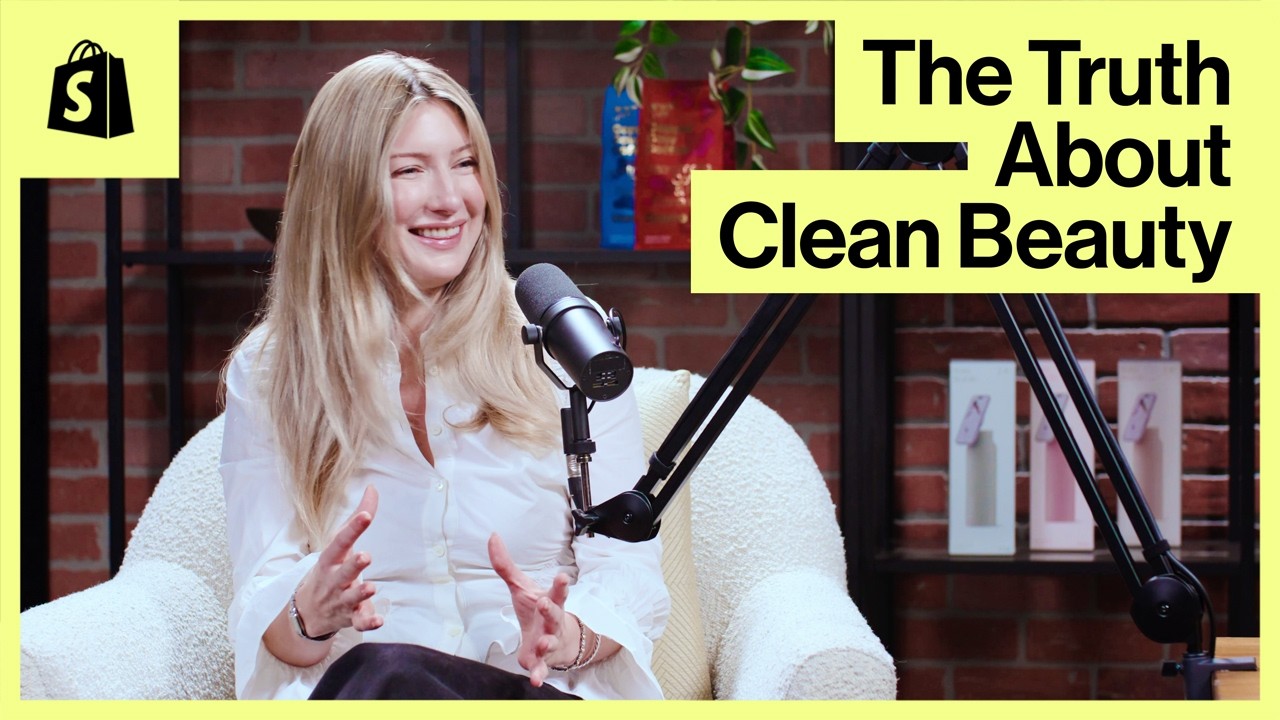
A Shopify Masters interview, hosted by Serena Smith, with a chemical engineer and brand CEO identified in the captions as Kaylee (surname not reliably captioned). She is now CEO of a sustainable skincare brand backed by Pamela Anderson (spelled Sanszi in the captions) and earlier founded a waterless hair care brand. She covers why waterless, 50-plus formulas made from scratch, why sustainability alone does not sell, home compostable packaging, and the Mindful Beauty Award with Shopify. Sponsor: Shopify, which presents the show. PARTIAL COVERAGE: this note is based on the opening, a middle section on compostable packaging, the closing section and the description, and does not cover every part of the roughly 47 minute conversation. Brand and name spellings follow the captions and may be imperfect. All claims and figures are the speakers' own and are not independently checked.
Key Takeaways
Why waterless
She says she learned liquid shampoo and conditioner were on average 80 percent water, so brands were packaging and shipping water around the world.
Hearing it was impossible
She says labs and manufacturers told her it could not be made, so she formulated it herself and took it from her bedroom floor to Sephora shelves.
Over 50 iterations
She says her first formula took more than 50 versions, and she handed samples to Sephora staff to test.
Performance beats sustainability
She says her first brand marketed sustainability over performance, and she learned that people will not buy on sustainability alone.
Consumer education
She says innovative products need education on how to use them, and that the story still needs telling.
Home compostable packaging
She says a home compostable, water-compatible material was a huge deal for her and now sits in the adapt cream and cleanser refill.
Mindful Beauty Award
She says she began her business with a $10,000 grant and that the award with Shopify is her way of paying it forward to women founders.
The Conversation Breakdown
Why waterless
⏱ Untimed topicShe says she learned liquid shampoo and conditioner were on average 80 percent water, so brands were packaging and shipping water around the world.
Hearing it was impossible
⏱ Untimed topicShe says labs and manufacturers told her it could not be made, so she formulated it herself and took it from her bedroom floor to Sephora shelves.
Over 50 iterations
⏱ Untimed topicShe says her first formula took more than 50 versions, and she handed samples to Sephora staff to test.
Performance beats sustainability
⏱ Untimed topicShe says her first brand marketed sustainability over performance, and she learned that people will not buy on sustainability alone.
Consumer education
⏱ Untimed topicShe says innovative products need education on how to use them, and that the story still needs telling.
Home compostable packaging
⏱ Untimed topicShe says a home compostable, water-compatible material was a huge deal for her and now sits in the adapt cream and cleanser refill.
Mindful Beauty Award
⏱ Untimed topicShe says she began her business with a $10,000 grant and that the award with Shopify is her way of paying it forward to women founders.
Core Frameworks & Ideas
Work first, sustainability second - her lesson
Lead with product performance, then add the sustainability story.
Solve it yourself - her path
When told something is impossible, formulate and test it directly with real users.
Educate, then sell - her view
Teach customers what terms like compostable mean so they can act on them.
Actionable Next Steps
- ✓Test your product's performance claim with ten real users before leaning on sustainability messaging.
- ✓Write a one-line explanation of each sustainability term you use, such as home compostable.
- ✓Hand samples to people who work in your category and collect their feedback.
- ✓Treat the figures and claims as the speakers' own and verify them before repeating them.
Notable Quotes
“people aren't going to buy something just based off of sustainability”
“I started my business with a $10,000 grant”
“packaging and shipping water all over the world”
The One Thing to Remember
The guest says sustainable beauty only scales when the product works first, and that packaging, education and performance have to be solved together.