


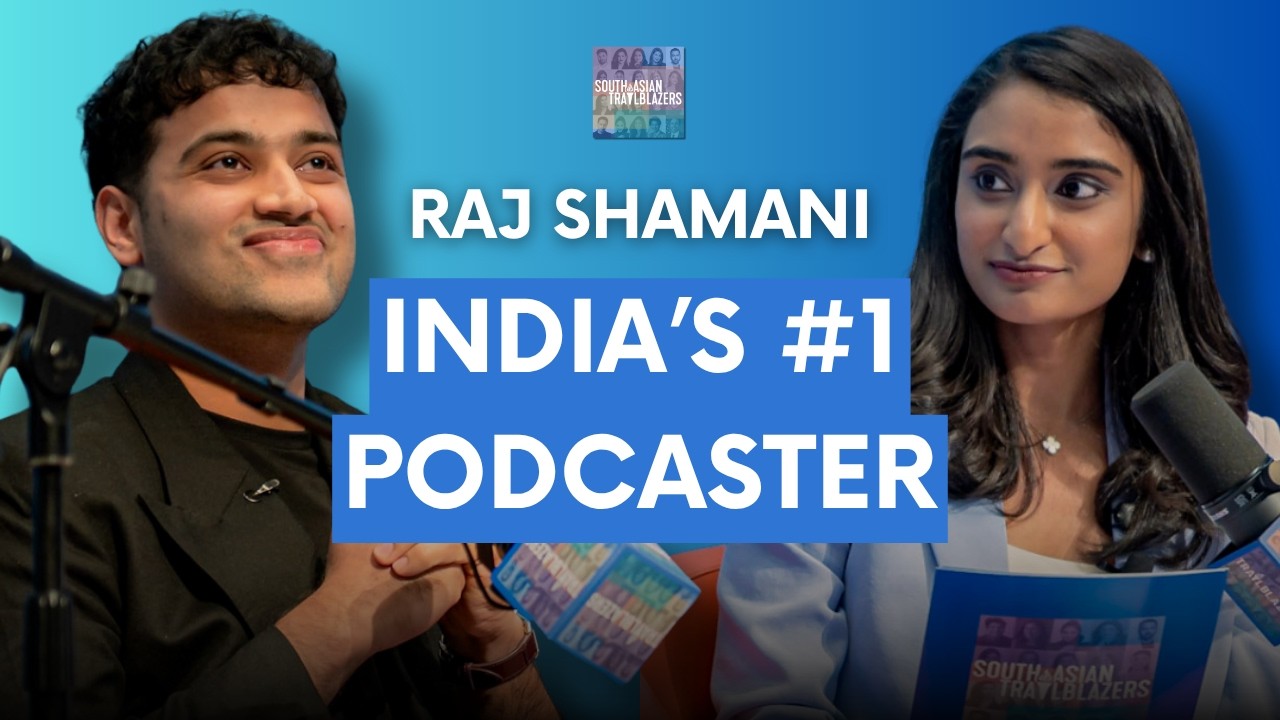
Raj Shamani: Building the #1 Podcast in India and Becoming #1 in the World
Executive Summary
Shamani recounts starting small in a family soap business and using speaking as a way to promote it. He describes saying no to material that does not fit his editorial goals, valuing usefulness over sensationalism and thinking about trust as deposits and withdrawals. Rankings and performance figures are his or the episode's claims, not verified results or guaranteed outcomes.
Key Takeaways
He corrects a simplified origin story
Shamani says some public accounts overstate hardship in his childhood and gives a different explanation of why he became serious about work. This is his recollection, not independently checked family history. The useful point is to distinguish a person's actual account from a neat motivational story rather than amplifying sensitive details.
A small business became his first learning setting
He recounts unanswered applications to larger consumer-goods companies and then beginning with his father's soap business. He frames that experience as a source of lessons. It is a personal story, not a verified capital requirement or proof that a similarly small start will lead to a media career.
Speaking began as promotion for him
Shamani says his early aim in appearing on stages was for people to hear him and buy products, not simply to become celebrated as a speaker. The account separates the activity from its original business purpose. It does not mean every speaking opportunity produces sales or that audience attention is equivalent to customer trust.
His no strategy sets editorial boundaries
He describes rejecting categories and opportunities to make a more distinct product. His ranking rhetoric is not independently verified. The supported lesson is having a clear view of what does not fit a project, rather than a universal rule to reject most opportunities or impose his exclusions on other creators.
He judges an episode by whether it helps thinking
Shamani says some recorded conversations do not get published because they lack useful insights or because he did not ask good questions. His reported production counts are not checked. The distinction is between having material and having material that meets a stated editorial purpose.
Values matter when attention is tempting
He gives values over views as a phrase used in his office and recounts declining sensational material. The anecdote does not establish any allegation against an unnamed guest. It illustrates his stated preference for useful teaching over attention, not proof that every past editorial choice has met that standard.
Trust is a ledger metaphor in his account
He describes public choices as small deposits or withdrawals of trust. This is a framework for considering reputation, not a measurable bank balance or an objective assessment of a whole society. The useful question is how an action affects the audience's reason to rely on a creator, beyond immediate reach.
The Conversation Breakdown
Values and saying no
⏱ 18:49Shamani explains how he uses saying no to distinguish his work, then discusses values and usefulness as filters for publication. His reported rankings and viewing figures are not independently checked. The account describes his editorial approach rather than establishing a universal success formula.
Core Frameworks & Ideas
Say-no boundaries
Define what does not fit the purpose and values of a project.
Usefulness filter
Evaluate whether material improves understanding rather than only whether it can attract attention.
Trust ledger metaphor
Consider the accumulated reputation effects of public choices without treating trust as a precise numeric balance.
Actionable Next Steps
- ✓Write down one boundary that protects a project's purpose.
- ✓Evaluate a piece of material for usefulness, not only its likely reach.
- ✓Consider how a public choice could affect trust.
- ✓Distinguish an appealing origin story from the person's source account.
Notable Quotes
“So if you're very clear about what you're not going to do, that will set you apart.”
“Values over views, sense over sensationalism, teachings over trends.”
“Every right thing that you do, it's a deposit. Every wrong thing that you do, it's a withdrawal.”
The One Thing to Remember
Ask whether a public choice builds trust, not only whether it draws attention.