


Rewriting the Script: Reese Witherspoon's Entrepreneurial Leap to Impact | The Founder Mindset
Executive Summary
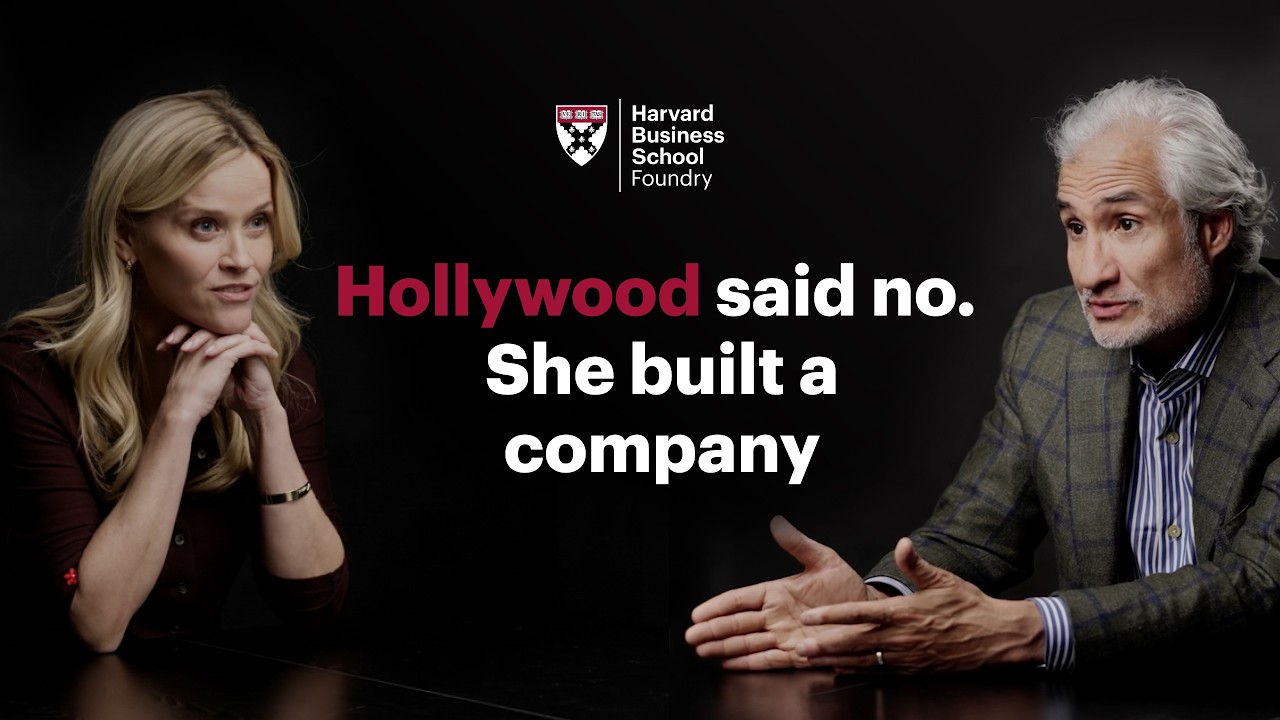
Witherspoon describes turning frustration with available stories into a practical effort to develop different ones. Her founder lessons are to listen for a real gap, start with a manageable project, learn from failed attempts and build a team whose skills complement yours. Satchu’s commitment and judgment frameworks are his interpretation; the business stories are her recollections.
Key Takeaways
A listening tour changed the question
Witherspoon recalls asking studio heads what they were developing and seeing a gap between the stories she wanted to see and the projects available. She began thinking about independently developing packages rather than only waiting for better roles. This is her account of those conversations, not an independent audit of the industry.
Move from complaint to a response
She describes repeatedly discussing the problem before realizing she was not providing a solution. The turning point was taking responsibility for a contribution she could make. The lesson is not that one person must solve an entire system, but that repeated frustration can be converted into a concrete, testable proposal.
Start with an increment rather than the whole vision
Witherspoon says even one project a year could make her part of the solution, then describes increasing the scope as she gained traction. Her elephant-and-toe image captures that small starting point. It is a way to make a large ambition actionable, not proof that every small start will grow.
Successful projects and a sustainable company are different
She says working for producer fees left her struggling with overhead and employee costs even after projects received attention. That pushed her to think about ownership and a different business structure. The summary does not verify financial figures or prescribe deal terms; it preserves the distinction she makes between making projects and building a business.
Failure can reveal a better fit
Witherspoon describes wanting to understand why another project worked better and being willing to admit what she missed. In one format experiment, she says an unsuccessful attempt helped her find an approach that felt more authentic. Her point is to examine the mismatch, rather than treat a disappointing result as the end of learning.
Ownership can make the mission shared
She says she wanted team members to feel that the company was theirs and to be rewarded for leaving comfortable jobs. This is her rationale for sharing equity, as she tells it. It does not establish current compensation terms or suggest one equity structure suits every company; the broader idea is to connect contribution and ownership.
Fill gaps with partners and ask basic questions
Witherspoon separates her strengths in stories and creator relationships from finance and production skills she says others bring. She recommends understanding knowledge gaps and working with people who are better in those areas. Asking for an explanation also makes it easier for others to admit uncertainty and improves shared clarity.
The Conversation Breakdown
Listening for a gap
⏱ Untimed topicWitherspoon recalls a listening tour that helped her identify a response she could develop.
From complaint to action
⏱ Untimed topicShe distinguishes repeatedly describing a problem from providing a solution.
Starting incrementally
⏱ Untimed topicA single project could be a first contribution without solving the whole problem.
Projects versus a company
⏱ Untimed topicHer producer-fee account leads into a discussion of ownership and sustainability.
Failure as feedback
⏱ Untimed topicShe discusses examining what a failed attempt teaches about fit and approach.
Team ownership
⏱ Untimed topicShe explains why she wanted employees to feel ownership in the company.
Complementary partnerships
⏱ Untimed topicShe recommends filling knowledge gaps and being willing to ask for explanations.
Core Frameworks & Ideas
Problem to response
Witherspoon turns repeated frustration into a contribution she can attempt.
Small first commitment
Her toe-of-the-elephant image makes a large vision easier to begin.
Complementary skills
Know what you do well and deliberately partner for the areas you do not.
Actionable Next Steps
- ✓Write the problem and one response you could test separately.
- ✓Define a first project small enough to begin.
- ✓List the skills the project needs and your gaps.
- ✓Ask a partner to explain a term you do not understand.
Notable Quotes
“I realized I was admiring a problem. But I wasn’t providing a solution.”
“Make sure that you understand the gaps in your own knowledge and fill those gaps with people who are better than you.”
“I wanted them to feel ownership in the company.”
The One Thing to Remember
Recognizing a problem is the beginning. A small, workable response moves it toward a solution.