


Ritz Carlton Founder - A Masterclass On Customer Service | PBD #735
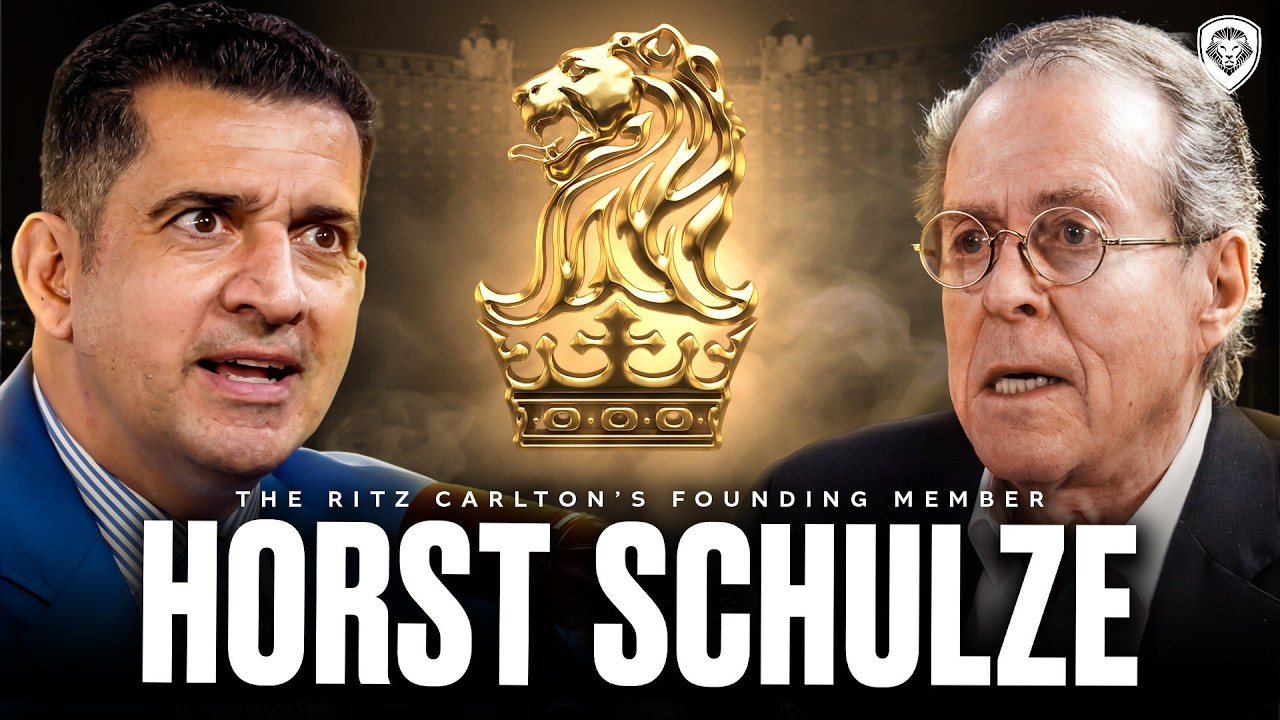
Executive Summary
Schulze describes service as a shared purpose supported by careful selection, orientation, training and a respectful work environment. He argues that leaders should inspect those conditions before blaming employees and recounts giving staff defined authority to solve guest problems. These notes focus on supported hospitality leadership passages. Topic sections are untimed, not official video chapters; historical practices are his account, not current Ritz-Carlton policy.
Key Takeaways
A function is different from a purpose
Schulze distinguishes bringing food and drink from an intent to create well-being for guests. He says people should join a vision rather than simply fulfill a function. This is his service philosophy, not proof that every organization has one purpose or that a slogan alone changes customer experience.
Leadership owns the conditions for service
He asks whether an underperforming employee was selected well, oriented properly, trained adequately and given the right environment. His account places responsibility on leadership before blame. It does not mean individual conduct never matters; it supplies a practical sequence of questions about how the organization prepared the person.
Orientation should explain belonging and objectives
Schulze contrasts paperwork and a vague team speech with explaining customers, expected behavior and how colleagues treat one another. He calls a team a group working toward a common objective. The idea is to make the shared objective concrete, not to omit legal onboarding or assume enthusiasm can replace training.
Standards begin before the first guest interaction
He describes making behavior expectations clear during selection and rehearsing greetings during orientation. He sees appearance and the first encounter as parts of service. These are his standards and anecdotes, not a scientifically established distance threshold or a universal dress rule for every workplace.
Empowerment needs training and defined limits
Schulze recounts allowing employees to make guest-service decisions within a financial limit after careful preparation. The amount is historical and not copied as a recommendation or verified current hotel policy. The design distinction is clear authority plus training, rather than unrestricted spending or responsibility without permission.
Any employee may become the complaint’s first contact
He explains that a guest may bring a problem to whoever is nearby, so staff need preparation to listen and respond. His guest-service account does not establish a universal complaint-resolution statistic. The practical concern is whether the first person knows the next step and can act within a understood boundary.
Delegation still includes improvement and standards
Schulze describes giving leaders objectives and asking what has improved and what they envision next. He connects respectful treatment with expectations rather than treating them as opposites. These are his management practices, not a guarantee that a particular review cadence or hotel brand’s methods fit every business.
The Conversation Breakdown
Purpose and intent
⏱ Untimed topicSchulze distinguishes carrying out a function from the intended experience for the guest.
Leadership responsibility
⏱ Untimed topicHe examines selection, orientation, training and environment before blaming a service failure on staff.
Shared objectives
⏱ Untimed topicOrientation explains who the customer is and what behavior supports the common goal.
First impressions
⏱ Untimed topicHe describes rehearsed greetings and clear standards as parts of hospitality service.
Bounded empowerment
⏱ Untimed topicHe recounts preparing employees to resolve guest problems within defined authority.
Delegation and improvement
⏱ Untimed topicLeaders retain objectives and review progress while giving others room to act.
Core Frameworks & Ideas
Selection, orientation, training and environment
Schulze’s sequence for examining why employee performance may fall short.
Function versus intent
Connect the task with the experience it is intended to create.
Bounded empowerment
Match authority with training, a limit and an escalation path.
Actionable Next Steps
- ✓Write the purpose behind a service task in one plain sentence.
- ✓Review selection, orientation, training and support before assigning blame.
- ✓Clarify what a frontline person can decide and when to escalate.
- ✓Choose an observable improvement to review rather than relying only on a team slogan.
Notable Quotes
“So it's not the employee, it's me.”
“Our intent is to instill well-being in people.”
“A team is a group of people who work toward a common objective.”
The One Thing to Remember
Before blaming a service failure on an employee, examine how the leader selected, prepared and supported that person.