


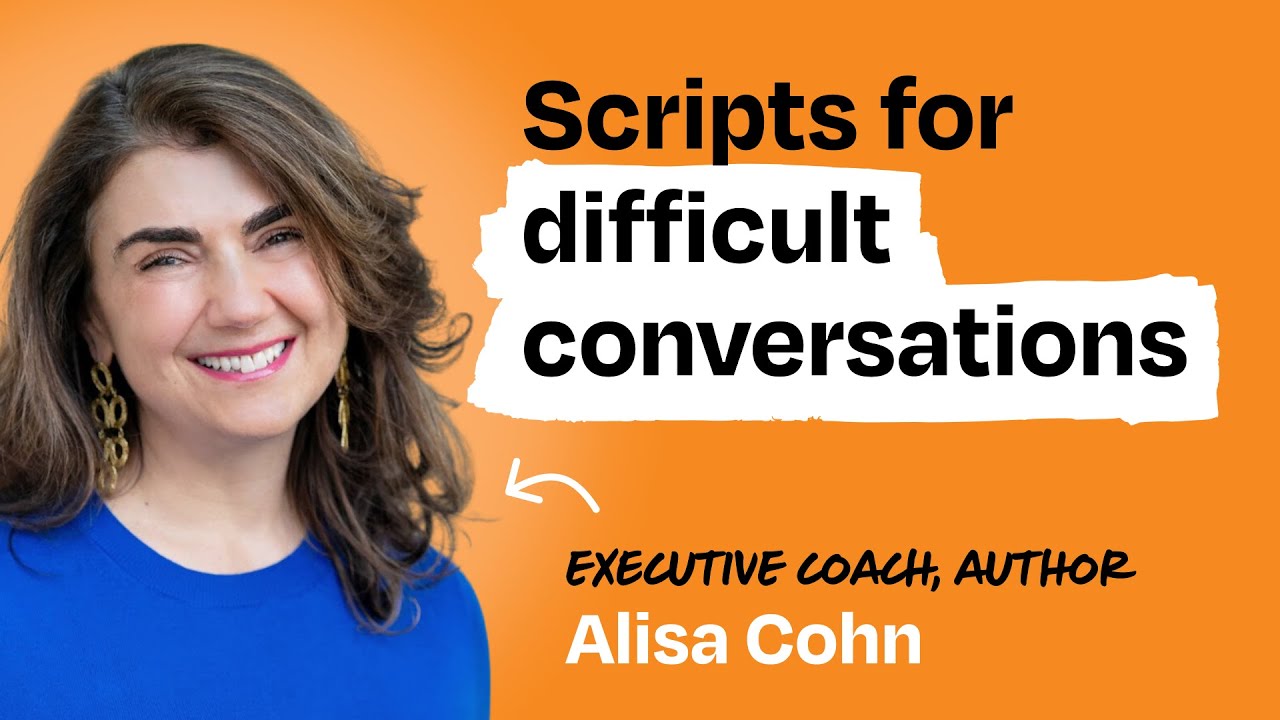
Scripts for navigating difficult conversations | Alisa Cohn (executive coach)
Executive Summary
Executive coach Alisa Cohn discusses difficult workplace conversations, specific feedback and meeting follow-through. Selected third-party transcript coverage focuses on practical work communication. Client stories are her account, not independently verified. This is not employment or legal advice. Untimed editorial topics are not video chapters.
Key Takeaways
Prepare the purpose before the script
Cohn asks leaders to examine what makes the conversation uncomfortable and what they hope it will improve. Avoidance can deny someone useful information about their work. The purpose is a better working relationship or performance, not venting frustration.
Practice words you can actually say
She gives clients sample openings but asks them to make the wording their own. Practice turns a vague intention to give feedback into a conversation you can begin. Keep the tone neutral rather than unloading on the other person.
Build feedback around evidence and expectations
Cohn's writing example names missing structure and conclusions, then points to good examples and possible help. The feedback connects observable work to the expected standard. Before giving it, ask what evidence supports your assessment rather than relying only on an impression.
Pause instead of fighting about a reaction
If the exchange becomes heated, she suggests noticing the changed tone, restating why the discussion matters and checking whether to continue or pause. The conversation still needs to happen. A pause is a tool to listen and reset, not a way to evade the issue.
Deliver disappointing news clearly
Her promotion example gives the decision early, explains the reasons and discusses future skill-building. Cohn urges compassion for the person hearing it. A hopeful future should not become a false promise of a later promotion or a softened account of the decision.
Make positive feedback specific too
She argues that praise should be prepared with the same care as correction. Naming what worked gives people useful information and builds trust. A vague good job does less to help someone repeat the effective behavior.
Finish meetings with shared next steps
Cohn ends with what was decided, who does what by when and who else needs to know. Asking people can reveal different understandings of the same meeting. Leave time for this ritual and assign follow-up so the next meeting does not simply repeat the old decisions.
The Conversation Breakdown
Prepare the purpose before the script
⏱ Untimed topicCohn asks leaders to examine what makes the conversation uncomfortable and what they hope it will improve. Avoidance can deny someone useful information about their work. The purpose is a better working relationship or performance, not venting frustration.
Practice words you can actually say
⏱ Untimed topicShe gives clients sample openings but asks them to make the wording their own. Practice turns a vague intention to give feedback into a conversation you can begin. Keep the tone neutral rather than unloading on the other person.
Build feedback around evidence and expectations
⏱ Untimed topicCohn's writing example names missing structure and conclusions, then points to good examples and possible help. The feedback connects observable work to the expected standard. Before giving it, ask what evidence supports your assessment rather than relying only on an impression.
Pause instead of fighting about a reaction
⏱ Untimed topicIf the exchange becomes heated, she suggests noticing the changed tone, restating why the discussion matters and checking whether to continue or pause. The conversation still needs to happen. A pause is a tool to listen and reset, not a way to evade the issue.
Deliver disappointing news clearly
⏱ Untimed topicHer promotion example gives the decision early, explains the reasons and discusses future skill-building. Cohn urges compassion for the person hearing it. A hopeful future should not become a false promise of a later promotion or a softened account of the decision.
Make positive feedback specific too
⏱ Untimed topicShe argues that praise should be prepared with the same care as correction. Naming what worked gives people useful information and builds trust. A vague good job does less to help someone repeat the effective behavior.
Finish meetings with shared next steps
⏱ Untimed topicCohn ends with what was decided, who does what by when and who else needs to know. Asking people can reveal different understandings of the same meeting. Leave time for this ritual and assign follow-up so the next meeting does not simply repeat the old decisions.
Core Frameworks & Ideas
Evidence-based feedback
State the observed work, the expected standard and a concrete path to improve without turning the feedback into a personal judgment.
Pause and reset
Notice a changed tone, restate the purpose and decide whether to continue or take time to digest, while keeping the issue on the agenda.
Three-question meeting close
Ask what was decided, who does what by when and who else needs to know. Surface disagreement before recording the next steps.
Actionable Next Steps
- ✓Write the first two sentences of the conversation and practice them aloud.
- ✓List observed evidence and the work standard it falls short of.
- ✓Give one piece of positive feedback that names exactly what worked.
- ✓Reserve the last five minutes of your next meeting for decisions, owners, deadlines and people to inform.
Notable Quotes
“You always have to make it your own and I don't think it's a problem of doing it the same way every time.”
“And I think it's really important to get in the habit of pointing out what your people are doing well as carefully as you need to prepare for pointing out what they need to improve.”
“So my three questions to end the meeting are, what did we decide here? Who needs to do what by when? And who else needs to know?”
The One Thing to Remember
Prepare the purpose, use observable evidence and leave with a shared understanding of what happens next.