


Shark Tank Investments & Pitching ft. Ritesh, Radhika and Vineeta | Indian Business Podcast | Ep 1
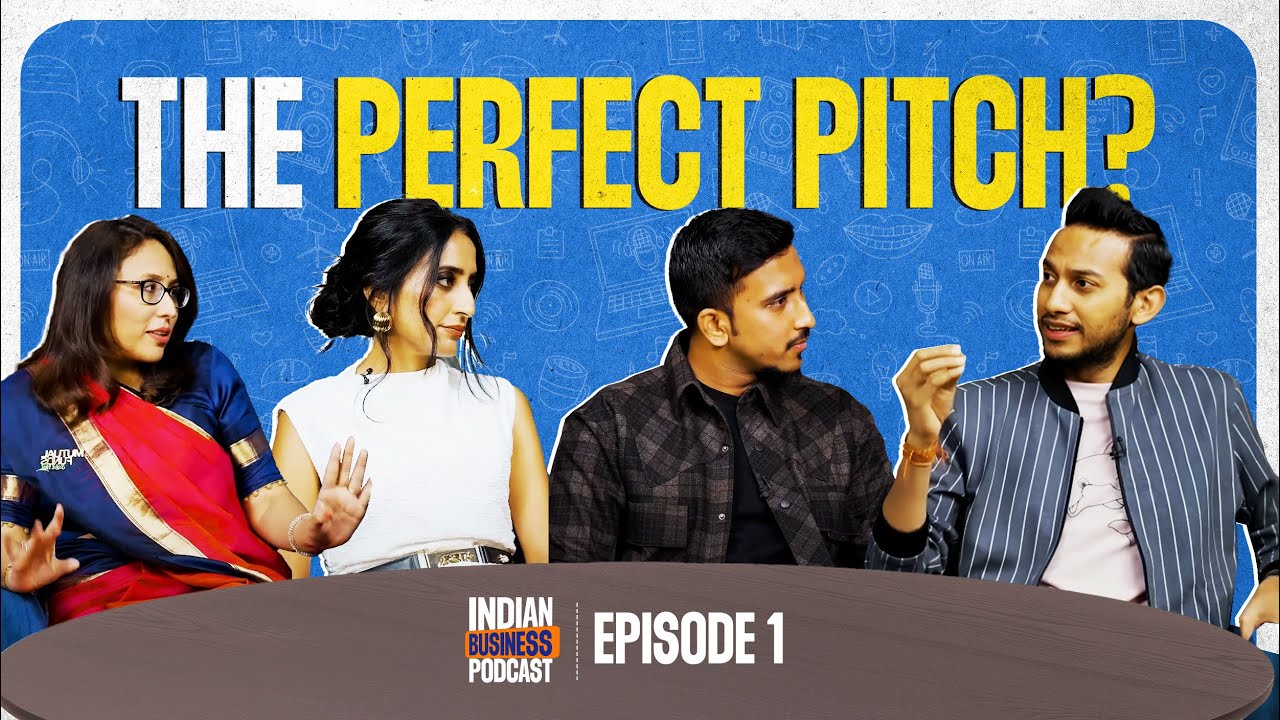
Executive Summary
In the first Indian Business Podcast episode, Ganesh Prasad asks Shark Tank India investors Radhika Gupta, Ritesh Agarwal and Vineeta Singh how they judge startups, size a market and pitch to investors. Coverage comes from approximately the first 50,000 characters of third-party captions, not the full conversation; later questions are not summarized. This is educational discussion of the panelists' views, not investment advice, and portfolio figures and market claims are theirs and not independently checked. Captions contain errors and no named speakers, so attribution follows the exchange and is given at panel level where the speaker is unclear. Topics are untimed; metadata follows YouTube. Source: https://youtubetotranscript.com/transcript?v=CnaFfKV625c
Key Takeaways
Judge the inputs, not the gold mine
One panelist says a big outcome cannot be controlled, so she looks at input parameters. She names the founder, a meaningful consumer problem in a large enough market, and numbers that work. It is her view that a startup cannot be known in advance to become a billion-dollar company.
Back the founder when the model may change
A panelist says that in early bets the only thing to rely on is the founder, because business models change and pivots are common. Traits mentioned include hustle, resilience, humility and focus. He says only a few of his early deals will reach a large outcome and many may not survive.
A good founder cannot fix a small market
A panelist says that putting a good founder in a small market means the market wins. She describes deals with strong products and traction that she could not do because the addressable market was too small. She adds that founders often size their market from people like themselves.
Build the market size from first principles
The panel discusses sizing a new market by using proxies where no reports exist, such as estimating hotel demand from observed behavior. They contrast founders who quote a random number with those who build one logically. One panelist says her beauty subscription company first used the wrong, broader market definition.
Choose your reason for investing
One panelist says starting angel investing only to make money leads to disappointment, and lists learning, working with founders and long-term returns as better reasons. He notes early stage investments can lose liquidity during downturns. Another says she learns from founders, for example a mapping cost idea from a portfolio company.
What backs a founder with no pedigree
The panel discusses why investors back founders with no credentials. Answers include commitment to the cause, a big brain with a big heart, resilience after failure and execution over a long horizon. One panelist says Shark Tank India sends most capital to founders from small towns, which she says is different from the usual angel ecosystem.
Play the long game
A panelist says ideas are plentiful and copycats appear, so what separates survivors is long-term execution and people. She compares early-stage investing to compounding over 7 to 10 years. She says category creation and consumer education take time in under-penetrated Indian markets.
The Conversation Breakdown
Judge the inputs, not the gold mine
⏱ Untimed topicOne panelist says a big outcome cannot be controlled, so she looks at input parameters. She names the founder, a meaningful consumer problem in a large enough market, and numbers that work. It is her view that a startup cannot be known in advance to become a billion-dollar company.
Back the founder when the model may change
⏱ Untimed topicA panelist says that in early bets the only thing to rely on is the founder, because business models change and pivots are common. Traits mentioned include hustle, resilience, humility and focus. He says only a few of his early deals will reach a large outcome and many may not survive.
A good founder cannot fix a small market
⏱ Untimed topicA panelist says that putting a good founder in a small market means the market wins. She describes deals with strong products and traction that she could not do because the addressable market was too small. She adds that founders often size their market from people like themselves.
Build the market size from first principles
⏱ Untimed topicThe panel discusses sizing a new market by using proxies where no reports exist, such as estimating hotel demand from observed behavior. They contrast founders who quote a random number with those who build one logically. One panelist says her beauty subscription company first used the wrong, broader market definition.
Choose your reason for investing
⏱ Untimed topicOne panelist says starting angel investing only to make money leads to disappointment, and lists learning, working with founders and long-term returns as better reasons. He notes early stage investments can lose liquidity during downturns. Another says she learns from founders, for example a mapping cost idea from a portfolio company.
What backs a founder with no pedigree
⏱ Untimed topicThe panel discusses why investors back founders with no credentials. Answers include commitment to the cause, a big brain with a big heart, resilience after failure and execution over a long horizon. One panelist says Shark Tank India sends most capital to founders from small towns, which she says is different from the usual angel ecosystem.
Play the long game
⏱ Untimed topicA panelist says ideas are plentiful and copycats appear, so what separates survivors is long-term execution and people. She compares early-stage investing to compounding over 7 to 10 years. She says category creation and consumer education take time in under-penetrated Indian markets.
Core Frameworks & Ideas
Three input parameters - one panelist's lens
Founder quality, a meaningful problem in a large market, and numbers that work.
Market size from proxies - discussed method
Where reports are missing, estimate market size from observed behavior and a benchmark, and show the logic.
Long-horizon execution - panelist's view
Survivors tend to execute steadily over seven to ten years in categories that take time to build.
Actionable Next Steps
- ✓Write how you would size your market from first principles and show the steps.
- ✓Check whether your target customers reach beyond people like you.
- ✓State your own reason for backing or building the business.
- ✓List what you would do if the next downturn lasted two years.
Notable Quotes
“gold mine is an outcome”
“you put a good founder in a small Market the market wins”
“there is no shortage of ideas”
The One Thing to Remember
Look past the pitch: the founder, a large enough problem and numbers that work matter most.