


Super You's EPIC ₹100 Crore Blueprint: INSANE Marketing SECRETS Nobody Talks About! IBP 46
Executive Summary
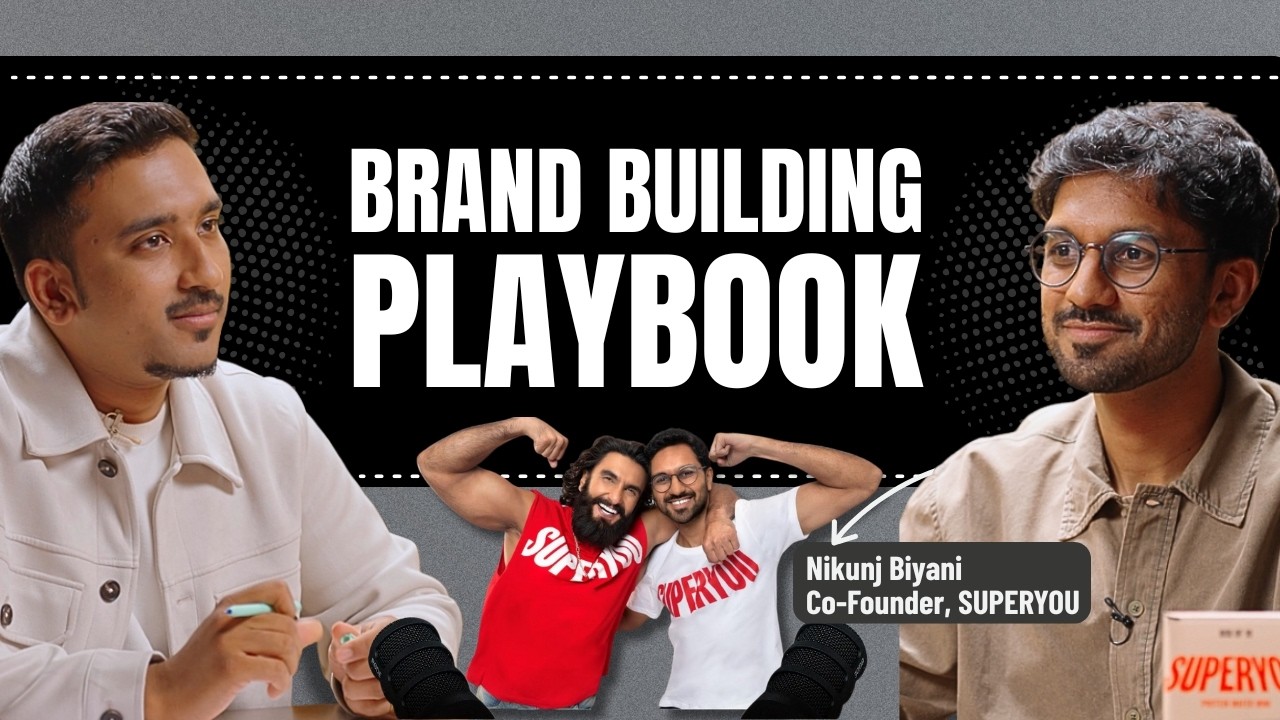
SuperYou co-founder Nikunj Biyani and Ganesh Prasad discuss finding gaps in familiar FMCG categories, shaping a clear brand with Ranveer Singh and matching price to expectations. Selected business coverage from approximately the first 50,000 characters of third-party captions, not the full interview; the unseen ending is not summarized. Nutrition, ingredient and product-health claims are omitted, and revenue/market-size anecdotes are not independently verified. Captions contain errors and no named speakers; attribution follows the exchange. Topics are untimed; metadata follows YouTube. Source: https://youtubetotranscript.com/transcript?v=G8UK7WcdF1Y
Key Takeaways
Observe behavior before declaring a market gap
Biyani connects his FMCG experience to watching how customers discover and buy products. He recommends observing several consumer groups and then comparing those observations with category data. A trend visible in your own circle can be real without representing the whole country.
Do not copy foreign demand assumptions
He pushes back on simple comparisons between India, China and Singapore because tastes, income and exposure differ. Foreign consumption figures may suggest a question, but they do not prove local demand. Research the specific customers and price range you intend to serve.
Reimagine a familiar category
The discussion points to biscuits and other established formats as places where presentation and experience may have changed slowly. Familiarity can make an innovation easier to explain. Look for a meaningful reason to choose the product instead of assuming a crowded category has no room.
Choose brand partners for personality fit
Biyani links Ranveer Singh with energy and zest for life, then connects those qualities to the brand design. Reach matters, but the intended identity needs to remain clear. A partner whose personality fits the promise can contribute more than an audience number alone.
Define a creative role beyond endorsement
He describes Singh trying products and giving frame-by-frame feedback on the first campaign while staying out of day-to-day operations. This is his account of the partnership, not a universal celebrity-brand model. Clarify the creative contribution, decision rights and operating responsibilities before making a partnership.
Make one message worth remembering
Biyani recalls being encouraged to do fewer things in a campaign and deliver one strong message. He distinguishes impression counts from whether a message actually lands. Test what people remember after seeing an asset rather than treating reach alone as proof of successful communication.
Let price set a testable expectation
His price-equals-expectation idea links the price point to the experience a customer anticipates. Meeting that expectation for one brand does not establish demand for the whole category. Compare the promise, actual product experience and alternatives before assuming buyers will pay a premium.
The Conversation Breakdown
Observe behavior before declaring a market gap
⏱ Untimed topicBiyani connects his FMCG experience to watching how customers discover and buy products. He recommends observing several consumer groups and then comparing those observations with category data. A trend visible in your own circle can be real without representing the whole country.
Do not copy foreign demand assumptions
⏱ Untimed topicHe pushes back on simple comparisons between India, China and Singapore because tastes, income and exposure differ. Foreign consumption figures may suggest a question, but they do not prove local demand. Research the specific customers and price range you intend to serve.
Reimagine a familiar category
⏱ Untimed topicThe discussion points to biscuits and other established formats as places where presentation and experience may have changed slowly. Familiarity can make an innovation easier to explain. Look for a meaningful reason to choose the product instead of assuming a crowded category has no room.
Choose brand partners for personality fit
⏱ Untimed topicBiyani links Ranveer Singh with energy and zest for life, then connects those qualities to the brand design. Reach matters, but the intended identity needs to remain clear. A partner whose personality fits the promise can contribute more than an audience number alone.
Define a creative role beyond endorsement
⏱ Untimed topicHe describes Singh trying products and giving frame-by-frame feedback on the first campaign while staying out of day-to-day operations. This is his account of the partnership, not a universal celebrity-brand model. Clarify the creative contribution, decision rights and operating responsibilities before making a partnership.
Make one message worth remembering
⏱ Untimed topicBiyani recalls being encouraged to do fewer things in a campaign and deliver one strong message. He distinguishes impression counts from whether a message actually lands. Test what people remember after seeing an asset rather than treating reach alone as proof of successful communication.
Let price set a testable expectation
⏱ Untimed topicHis price-equals-expectation idea links the price point to the experience a customer anticipates. Meeting that expectation for one brand does not establish demand for the whole category. Compare the promise, actual product experience and alternatives before assuming buyers will pay a premium.
Core Frameworks & Ideas
Observation plus category data - discussed approach
Compare firsthand consumer behavior with the size and maturity of the specific category.
One-punch communication - guest recollection
Concentrate the campaign on the message you most want people to retain.
Price equals expectation - guest concept
Use the price to define an experience you can deliver, rather than assuming premium pricing creates demand.
Actionable Next Steps
- ✓Observe buying behavior in the specific customer group you want to serve.
- ✓Write one clear reason to choose your product over familiar alternatives.
- ✓Test what people remember after seeing your next campaign asset.
- ✓List the expectations created by your price and compare them with the actual experience.
Notable Quotes
“Price equals expectation.”
“So throw one punch but pack that punch, right?”
“So say that one thing that's very important and let that get retained cuz that's more valuable right and that simplicity idea also comes from him in a sense.”
The One Thing to Remember
Find a reason to choose the product in a familiar category, communicate it clearly and meet the expectation created by the price.