


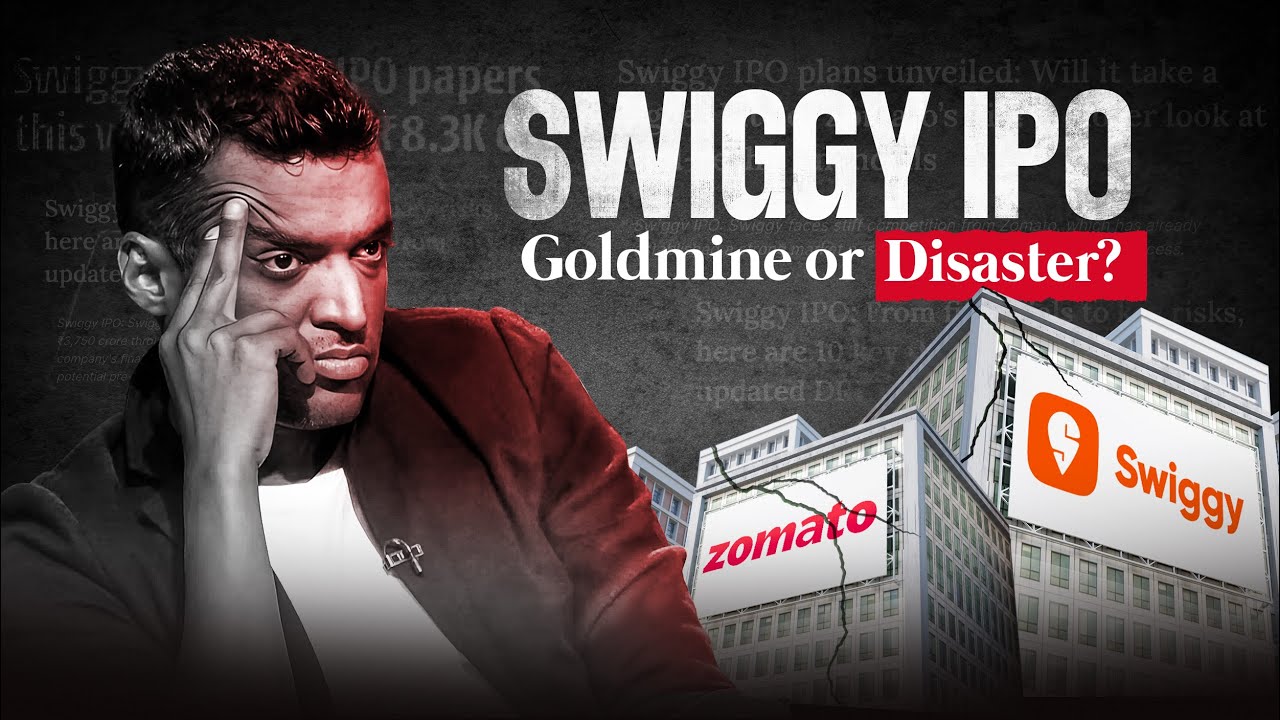
Swiggy IPO Goldmine or Disaster? Detailed Case study
Executive Summary
Think School case study on Swiggy's planned IPO, based on the narrator's reading of the company's roughly 400 page draft red herring prospectus. The narrator says the IPO is for about 11,664 crore rupees, with about 6,664 crore as an offer for sale and about 5,000 crore in fresh shares, and compares Swiggy with Zomato, Blinkit and Zepto. He explains the super app model, a hub and spoke delivery model that he says lowers delivery cost per order, differing acquisition and expansion strategies, and financials he says show revenue growing 36 percent while losses fell. He closes on risks, including leadership departures. Sponsor named: Odoo. COVERAGE: this note covers most of the roughly 18 minute video based on the captions. Figures, comparisons and predictions are the narrator's own and not independently checked. This is not financial, investment or legal advice and is not a recommendation about the IPO.
Key Takeaways
IPO size and use
He says the IPO is about 11,664 crore rupees, with about 6,664 crore to give existing investors an exit and about 5,000 crore in fresh shares.
Lessons from Zomato
He says Zomato was doubted at its IPO but its data let it build Blinkit, which he predicts could grow larger than the parent.
Super app model
He says multi-service use can raise engagement, retention and possibly lower acquisition cost.
Hub and spoke delivery
He says combining orders can cut delivery cost per order from roughly 33 rupees by sharing one delivery trip.
Acquire versus build
He says Zomato made 25 acquisitions while Swiggy made 11 and built more in-house.
Financials
He says Swiggy's revenue grew 36 percent from FY23 to FY24 while losses fell, but Zomato turned profitable.
Leadership risk
He says recent executive departures are the biggest concern even with a clear vision and funding.
The Conversation Breakdown
IPO size and use
⏱ Untimed topicHe says the IPO is about 11,664 crore rupees, with about 6,664 crore to give existing investors an exit and about 5,000 crore in fresh shares.
Lessons from Zomato
⏱ Untimed topicHe says Zomato was doubted at its IPO but its data let it build Blinkit, which he predicts could grow larger than the parent.
Super app model
⏱ Untimed topicHe says multi-service use can raise engagement, retention and possibly lower acquisition cost.
Hub and spoke delivery
⏱ Untimed topicHe says combining orders can cut delivery cost per order from roughly 33 rupees by sharing one delivery trip.
Acquire versus build
⏱ Untimed topicHe says Zomato made 25 acquisitions while Swiggy made 11 and built more in-house.
Financials
⏱ Untimed topicHe says Swiggy's revenue grew 36 percent from FY23 to FY24 while losses fell, but Zomato turned profitable.
Leadership risk
⏱ Untimed topicHe says recent executive departures are the biggest concern even with a clear vision and funding.
Core Frameworks & Ideas
Super app advantage - the narrator's lens
More services in one app can raise engagement and cut costs.
Hub and spoke delivery - the narrator's explanation
Batch orders to lower delivery cost per order.
Vision, funding and leadership - the narrator's growth test
A company needs all three to scale.
Actionable Next Steps
- ✓Read the company's own filing and independent analysis before forming a view.
- ✓Compare the unit economics claims with company disclosures.
- ✓Note which risks, such as leadership changes, matter most to you.
- ✓Treat the figures and predictions as the narrator's own, not as financial advice or an IPO recommendation.
Notable Quotes
“this delivery model alone makes an extraordinary difference to the unit economics of zomato and swii”
“swiggy went on an innovation spree and tried to build all the products inh house itself”
“the market will always help them grow unless the leadership messes up”
The One Thing to Remember
The narrator says Swiggy's super app and hub and spoke delivery model are real strengths, but leadership stability and continued losses are the big risks.