


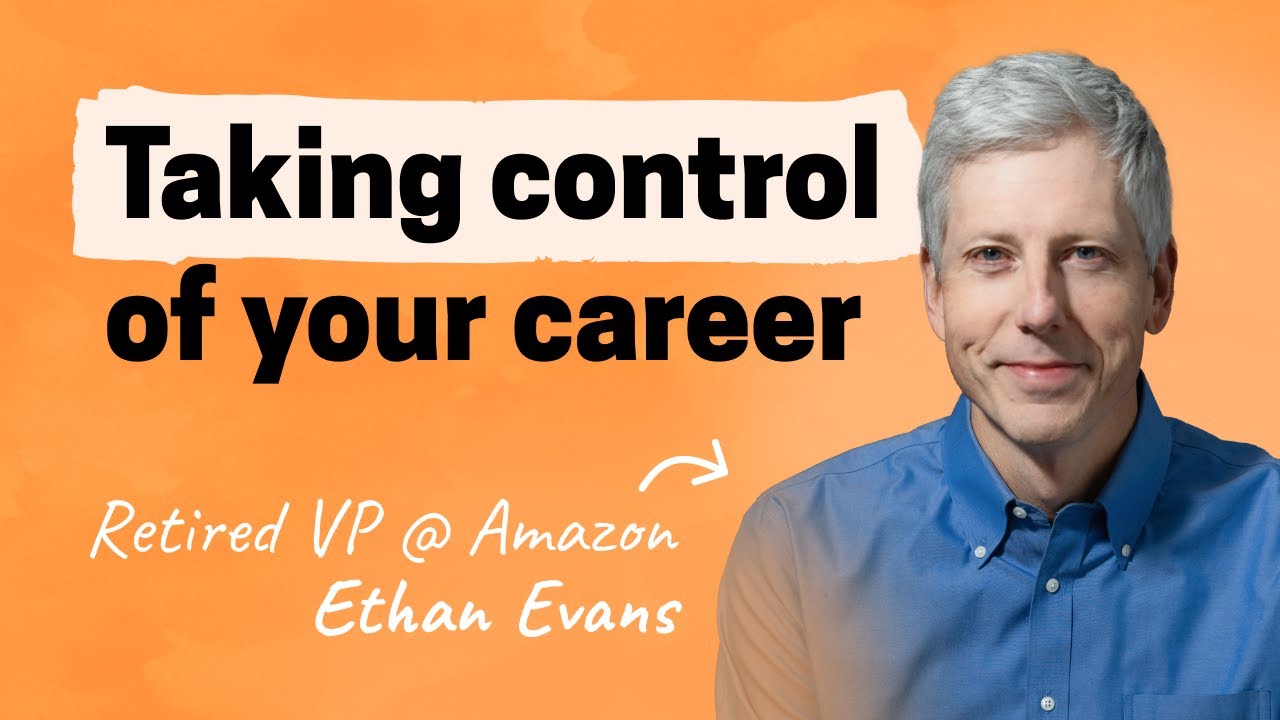
Taking control of your career | Ethan Evans (Amazon)
Executive Summary
Ethan Evans joins Lenny Rachitsky to discuss the Magic Loop, career plateaus, interview impact and communication during a launch failure. This selected coverage omits leadership-principles history, return-to-office, handshake and book-recommendation material. Amazon anecdotes and the framework's results are his account, unverified here, not promotion guarantees. Untimed topics are editorial, not video chapters.
Key Takeaways
Start with solid performance in the current job
Evans begins the Magic Loop with doing your job well, including asking for feedback and addressing problems. He does not say you must already be the star. A shared understanding of current performance is the starting point for asking for more opportunity.
Ask how you can help and follow through
The next steps are to ask your manager what they need and do the work you agree to take on. Evans frames this as building a partnership rather than seeking only exciting assignments. Keep commitments realistic and within the role's proper scope.
Connect the help to a clear career goal
After helping, ask whether another useful assignment could also move you toward a goal such as a new skill or role. Then repeat the conversation and work. Evans calls this the Magic Loop, but its effectiveness is his account, not a guarantee of promotion.
Understand both skill and opportunity constraints
He says senior promotions require being able to do the next job and the organization having a job that needs that level. Patience may be necessary even when performance is strong. Separate readiness from the availability of a role.
Practice next-level skills now
Evans suggests working with leadership on strategic projects and developing the influence or coordination needed at a higher level. Strong execution in the current function may not be enough for the next role. Choose practice that solves a real organizational problem rather than merely demonstrating ambition.
Explain impact in an interview
He advises showing interest in the opportunity and explaining why past work mattered. Describe the problem, your contribution and the resulting change for customers or the business. This is his interview advice, not a validated ranking of what every interviewer values.
Own a failure and give a next update time
In his Amazon launch-failure story, Evans says he took responsibility and sent proactive updates with the plan and the time of the next update. The anecdote is his account, unverified here. A clear update rhythm helps others understand the response without claiming the problem is already fixed.
The Conversation Breakdown
Start with solid performance in the current job
⏱ Untimed topicEvans begins the Magic Loop with doing your job well, including asking for feedback and addressing problems. He does not say you must already be the star. A shared understanding of current performance is the starting point for asking for more opportunity.
Ask how you can help and follow through
⏱ Untimed topicThe next steps are to ask your manager what they need and do the work you agree to take on. Evans frames this as building a partnership rather than seeking only exciting assignments. Keep commitments realistic and within the role's proper scope.
Connect the help to a clear career goal
⏱ Untimed topicAfter helping, ask whether another useful assignment could also move you toward a goal such as a new skill or role. Then repeat the conversation and work. Evans calls this the Magic Loop, but its effectiveness is his account, not a guarantee of promotion.
Understand both skill and opportunity constraints
⏱ Untimed topicHe says senior promotions require being able to do the next job and the organization having a job that needs that level. Patience may be necessary even when performance is strong. Separate readiness from the availability of a role.
Practice next-level skills now
⏱ Untimed topicEvans suggests working with leadership on strategic projects and developing the influence or coordination needed at a higher level. Strong execution in the current function may not be enough for the next role. Choose practice that solves a real organizational problem rather than merely demonstrating ambition.
Explain impact in an interview
⏱ Untimed topicHe advises showing interest in the opportunity and explaining why past work mattered. Describe the problem, your contribution and the resulting change for customers or the business. This is his interview advice, not a validated ranking of what every interviewer values.
Own a failure and give a next update time
⏱ Untimed topicIn his Amazon launch-failure story, Evans says he took responsibility and sent proactive updates with the plan and the time of the next update. The anecdote is his account, unverified here. A clear update rhythm helps others understand the response without claiming the problem is already fixed.
Core Frameworks & Ideas
Magic Loop
Do the current job well, ask how to help, follow through, connect further help with your goal and repeat.
Readiness plus opportunity
Develop the next-level skills while recognizing that a suitable role must also exist.
Own it and update
Take responsibility for the response, state the plan and commit to a next update time.
Actionable Next Steps
- ✓Ask your manager for feedback on current performance and address one clear gap.
- ✓Ask how you can help, then agree on a realistic commitment.
- ✓State the skill or role you want and discuss a useful assignment that builds it.
- ✓Describe the impact of a past project and, in a live problem, name the time of the next update.
Notable Quotes
“So step one is do your job well.”
“Then step two is ask your boss how you can help.”
“And what is in your control is to start practicing those next level skills.”
The One Thing to Remember
Build a partnership around useful work and a clear goal, then explain the impact and keep people informed when work goes wrong.