


The MONEY Machine : How 2 People Close 1,000 Enterprise Clients Every Month Using AI
Executive Summary
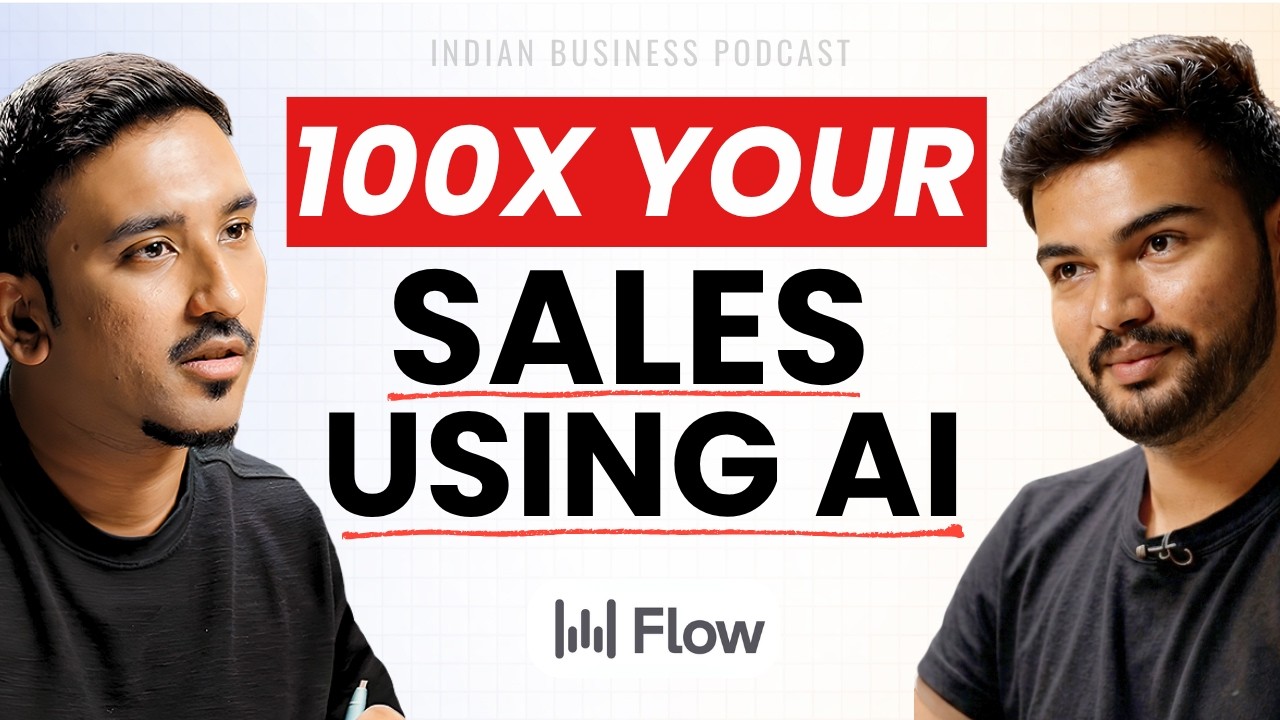
Wispr Flow closes roughly 1,000 enterprise deals a month with two salespeople by turning each sales stage into a system. The playbook: start product-led so thousands of consumers spread into companies, then use a unified data layer (users, usage analytics, support, marketing) queried by an LLM to find power users and their decision-makers - Tanay's rule is to automate only what is small, verifiable and clearly defined. Persona discovery is human work: a sharp, high-EQ learner forms hypotheses, talks to buyers, and only then automates the narrow segment (VP of engineering at 500-5,000-person companies gets a direct, low-pressure email). Feed AI everything you already know - past sponsors, results, context - because tokens spent rediscovering your own knowledge are tokens wasted. Ship automations in phases with human checks, budget a month per system, and keep conversion human for high-ticket deals while stripping all friction from low-ticket ones. FULL COVERAGE: captions appear complete. Sponsors: Odoo, Emergent; Wispr Flow featured. Not business advice.
Key Takeaways
Two people, 1,000 enterprise deals a month
Wispr Flow runs outreach, discovery and conversion largely on systems, with one person (Andrea) covering those stages and a second handling onboarding and post-sales. Tanay's claim: about 1,000 enterprise signups monthly. The same five-stage skeleton - outreach, discovery, conversion, onboarding, post-sales - holds at any B2B company; what changes is who (or what) does the work.
Product-led growth is the top of the enterprise funnel
The sales engine starts consumer-side: get lakhs of individual users first, then map which companies they work at, find the most influential user inside each, and expand from there. Website de-anonymization adds a second signal - six people from one company visiting your pricing page today is a warm account.
The customer discovery engine is one query away
Wispr invested early in a data layer connecting users, usage analytics, every marketing channel and sales/support conversations, with an LLM on top that queries it without hallucinating. Tanay's demo prompt: 'find all power users (20,000+ words dictated) whose title is VP of Engineering at companies of 500-5,000 people, sorted by size' - outreach begins from that list, not from cold lists.
Automate the narrow, verifiable slice first
His filter for what AI should touch: an extremely specific definition, a very small problem, and a result you can verify was done well. Example shipped: when a new VP of engineering becomes a power user, the right message on the right channel goes out automatically - no person in the loop. Then copy-paste the pattern to the next persona.
Persona discovery is human work, done in a week
You don't need a veteran seller: form a hypothesis (engineers love the product, so who buys for engineering teams?), call a few VPs of engineering just to understand them, and the messaging writes itself - for engineers, a direct, relevant email and a 10-minute call offer, because they hate calls. What took companies a year or two to learn per persona can now be systematized in about a week.
Feed AI your own knowledge or it burns tokens guessing
Ganesh's rule for prompts: give the agent every document you already have - past sponsors, results, video performance, contact history. AI can only spend so many tokens per task; tokens wasted re-discovering information you own produce inferior output. In the Razorpay demo, that meant sponsor history, audience data and target personas up front, then a research agent matching brands to video categories.
Ship automations in phases, with checks, for a month
A serious automation is a software deployment, not a weekend hack: build, run manually, read every output for a week, fix, and only remove the human checkpoints when the outputs consistently meet your bar. Budget about a month per system; the second takes less, and soon everything automatable in your company becomes visible. Keep humans on high-ticket conversion and exception handling.
The Conversation Breakdown
Two people, 1,000 deals: the claim
⏱ Untimed topicWispr Flow's numbers - 2.5M downloads, 270 Fortune 500 logos, $2B valuation, a two-person sales team - and the four sales problem statements Ganesh wants answered.
The five-stage sales machine
⏱ Untimed topicOutreach, discovery, conversion, onboarding, post-sales: how a conventional B2B team runs each, where companies fail (pipeline and 20-40% churn), and which stages Wispr automated.
The customer discovery engine
⏱ Untimed topicLive demo of the unified data layer: power-user queries, usage analytics, website de-anonymization, and how a VP-of-engineering list becomes an automated outbound motion.
Personas, hypotheses and the human in the loop
⏱ Untimed topicWhy persona discovery can't be delegated to agents, the one-week systematized version, the disengaged-buyer interview test, and who to hire for this work.
Applying it to Think School
⏱ Untimed topicTanay runs the full stack on Ganesh's sponsor pipeline: mapping past sponsors and lookalike brands, researching Razorpay's brand and top-of-mind priorities, and picking the right person to email.
Prompts, sub-agents and the Claude MD file
⏱ Untimed topicHow the research agent plans, parallelizes and self-explains; why you ask it to justify every line; and how feedback gets frozen into an instruction file for scale.
Automation in phases and the month-long rule
⏱ Untimed topicBuilding the end-to-end app with checkpoints, the one-month budget per system, the hire who runs this all year, and Ganesh's full recap of the playbook.
Core Frameworks & Ideas
The Five-Stage Sales Machine
Outreach, discovery, conversion, onboarding, post-sales: every B2B sale runs this chain, and a weakness in any one stage sinks the whole pipeline. Wispr's edge is assigning each stage to a system or a person deliberately - automating outreach and discovery, keeping humans on high-ticket conversion and relationships.
The Automatability Filter
Before automating any task, demand three things: an extremely specific definition, a very small scope, and an output you can verify as done well. Anything failing the test stays manual or gets broken down until it passes.
Persona-Led Automation
Narrow to one buyer persona per system: investigate who the real decision-maker is, meet enough of them to learn their tendencies, codify the messaging that works, automate that single segment, then rinse and repeat across personas - Wispr's path from 100-company batches to 5,000 companies.
Actionable Next Steps
- ✓Map your own five-stage sales chain and label every stage human, system, or hybrid - then pick the one stage where pipeline actually dies and start there.
- ✓Stand up one unified data layer for your customers (usage, support, marketing, billing) before buying any AI tooling; the LLM query is the easy part, the plumbing is the moat.
- ✓Pick one narrow, verifiable workflow in your week, automate it with human checks for a month, and only then let it run unattended - then repeat on the next one.
- ✓Before any outbound campaign, write down what you already know (past clients, results, objections, wins) and feed it to the agent as documents; never let AI spend its context rediscovering your own history.
Notable Quotes
“learning a lot more about the customer so that instead of selling them a product, you're solving their problem.”
“It can only use 1 million tokens for a particular task, and if it ends up wasting 200,000 tokens on finding information that you already have, it'll obviously give you inferior output.”
“Treat it as a proper software deployment process which will take you a month, but after a month the outputs will be magical.”
The One Thing to Remember
Automate only what is small, verifiable and clearly defined - Wispr Flow's 1,000-deals-a-month machine is just that rule, applied one narrow persona and one sales stage at a time, with a human checking the output until it earns autonomy.