


Trump's Midterm Election Defeat? How OpenAI and Anthropic Are Fighting to Shape the Future of AI
Executive Summary
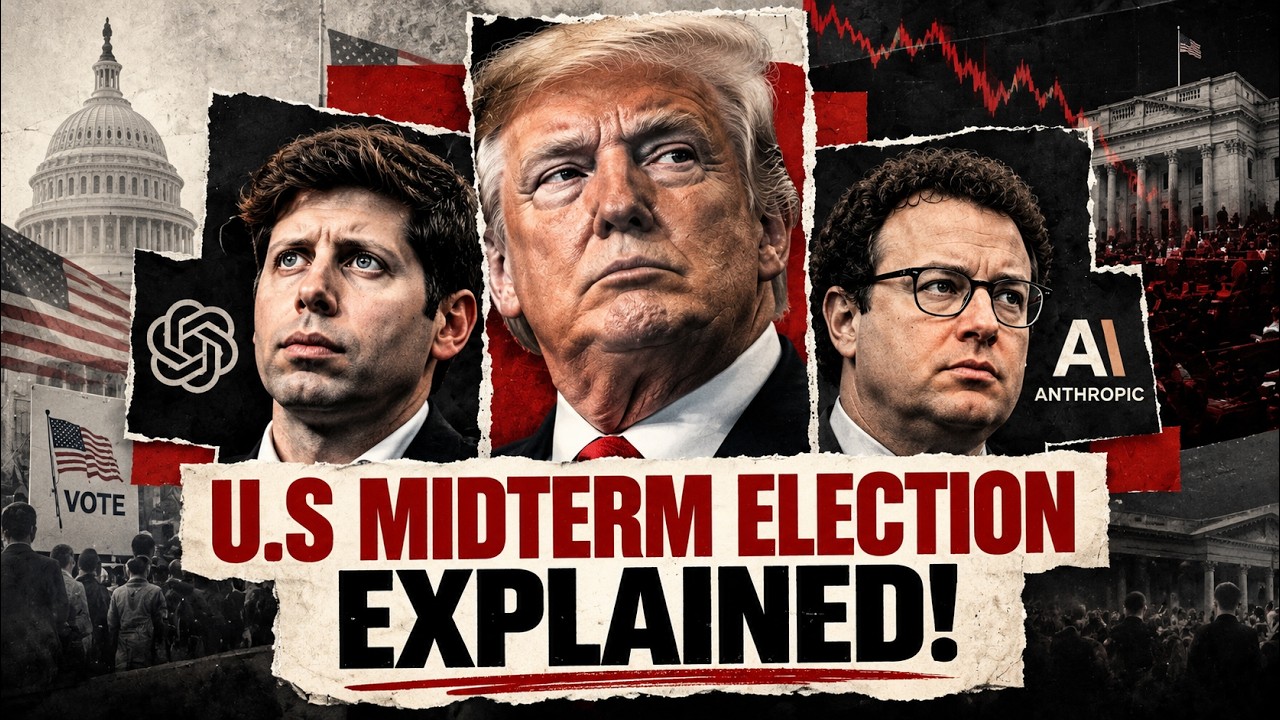
US presidents have lost seats in 20 of the last 22 midterm elections, and the 2026 midterms could flip both chambers: Republicans hold exactly the 218 House seats needed for a majority and a 53-47 Senate, so a four-seat swing either way decides whether Trump can pass any law at all. Meanwhile corporations legally spend unlimited money on these races through super PACs - crypto's Fairshake spent $10 million defeating Katie Porter with ads that never mentioned crypto, then got the Genius Act passed. Now AI is the money: a record $646 million in corporate political spending, with OpenAI-aligned Leading the Future ($100M pledged) pushing 'build now, punish later' and a single national law, Anthropic's Public First ($40M) backing state safety rules and aviation-style pre-launch testing, and Meta ($65M) fighting state-level AI laws. The episode's punchline: the most important AI decision of 2026 may be made in a Texas voting booth by someone who just watched an ad that never mentioned AI - and with 100 million weekly ChatGPT users in India, the outcome is not just America's business.
Key Takeaways
The midterm curse is real and lopsided
In 20 of the last 22 midterm elections, the president's party lost House seats. The president keeps his job but loses the ability to pass laws, budgets and appointments - and faces investigations. Trump himself has said: 'when you win the presidency, you lose the midterm.'
2026 is on a knife's edge
Republicans hold exactly 218 House seats - the precise majority threshold - against 214 Democrats, and a 53-47 Senate with 35 seats up. A four-seat Democratic gain flips either chamber. The episode also notes Trump's approval rating is the lowest of his career, with fuel prices a key driver.
Super PACs make unlimited influence legal
Direct corporate donations to candidates are banned and individuals are capped at $3,500 per election - but a super PAC can take unlimited corporate money and spend it on ads for or against anyone. The episode calls it either the greatest expression of democracy or the darkest thing in American politics.
The Katie Porter playbook
Crypto's Fairshake super PAC spent $10 million to defeat Senate candidate Katie Porter with ads accusing her of taking pharma and oil money - rated mostly false by fact-checkers, and never mentioning crypto. Coinbase's CEO then posted that being anti-crypto is 'a good way to end your career', and the following year the Genius Act passed the Senate.
AI money has arrived: $646 million and three camps
Corporate political spending for 2026 has hit a record $646 million. Leading the Future (OpenAI's Greg Brockman, a16z; $100M pledged) wants one national law and 'build now, punish later'. Public First (Anthropic; $40M) backs state safety rules until Washington acts. Meta ($65M) targets state elections to head off state AI laws.
The philosophical split: app store vs aviation
OpenAI's camp cites Section 230: light-touch rules let the internet flourish, so let AI build freely and punish only actual harms. Anthropic's camp cites thalidomide: the FDA's 'over-caution' spared America a disaster, so powerful models should be safety-tested before release - Dario Amodei wants an aviation-style regulator that can block launches. Sam Altman counters that such fear can be a marketing tactic for incumbent control.
India is a stakeholder, not a spectator
India has 100 million weekly ChatGPT users and is Claude's second-largest market. The IMF estimates AI will affect about 40% of jobs worldwide, with about 26% of Indian jobs highly exposed. Whether AI gets tested like an airplane or launched like an app is decided in US voting booths - and 8 billion people live with the result.
The Conversation Breakdown
Why presidents fear the midterms
⏱ Untimed topicCongress explained for Indian viewers: a 435-seat House allocated by population and elected every two years, and a 100-seat Senate with two senators per state, six-year terms, a third up every two years. Midterms sit halfway between presidential elections - and in 20 of the last 22, the president's party lost House seats. Lose the majority and the president becomes 'a toothless tiger': no laws, stalled budgets, frozen appointments, hostile investigations.
The 2026 math
⏱ Untimed topicRepublicans hold exactly 218 of 435 House seats - the bare majority - against 214 Democrats. In the Senate it's 53-47, with 35 seats contested and the vice president breaking a 50-50 tie. A four-seat swing flips either chamber. Against that: Trump's lowest-ever approval rating, an Iran war pushing fuel prices, tariff-driven shop prices, and seven in ten Americans calling petrol unaffordable.
Super PACs: unlimited money, perfectly legal
⏱ Untimed topicCompanies can't donate to candidates and individuals cap at $3,500 - but any corporation can pour unlimited money into a super PAC that runs ads for or against candidates. The Katie Porter case study: crypto's Fairshake spent $10 million on attack ads (never mentioning crypto, rated mostly false), Porter lost, Coinbase's CEO declared being anti-crypto 'a good way to end your career', and the Genius Act passed the following year.
The AI industry's $646 million election
⏱ Untimed topicCorporate political spending in the 2026 cycle has hit a record $646 million, and AI is the new player. Camp one, Leading the Future: backed by OpenAI president Greg Brockman and a16z, $100 million pledged, supporting candidates of both parties who want one national law and 'build now, punish later' - the Section 230 playbook. Camp two, Public First: Anthropic's $40 million, backing state safety rules and an aviation-style regulator to test powerful models before launch, citing thalidomide as the case for checking first. Camp three: Meta's $65 million against state-level AI laws.
Why an Indian viewer should care
⏱ Untimed topicIndia is ChatGPT's 100-million-weekly-user market and Claude's second-largest. The IMF estimates AI affects 40% of jobs worldwide and about 26% of Indian jobs are highly exposed. The episode's close: for most of history technology came first and rules later - cars before seat belts, planes before air traffic control - but this time the companies building the technology are helping choose the people who will write the rules, and the decisive vote may come from someone in Texas who just watched an ad that never mentioned AI.
Core Frameworks & Ideas
The midterm curse
A structural pattern, not a coincidence: in 20 of the last 22 midterms the president's party lost House seats. Midterms punish incumbents because they turn the president's record into a referendum without the presidency on the ballot - plan around it the way markets plan around known cycles.
Choose the lawmaker, not the law
The super PAC endgame: you don't bribe politicians, you make sure friendly ones win and hostile ones lose. Once an industry learns it can choose its lawmakers, it doesn't stop - crypto proved it with the Genius Act, and AI is applying the same lesson at $646 million.
Build now, punish later vs test first
The two governing philosophies for powerful technology: Section 230's light-touch model (let it flourish, fix harms after) versus the FDA/aviation model (prove safety before release). Thalidomide is the canonical case for testing first; the internet boom is the canonical case for building first.
Actionable Next Steps
- ✓When you read about any 2026 US election ad, ask who paid for it: look up the super PAC behind it before letting it shape your view - the Katie Porter ads never mentioned the industry that funded them.
- ✓Track which AI regulatory camp your own work depends on: if your business builds on frontier models, 'tested like an airplane' vs 'launched like an app' changes your roadmap - name your exposure explicitly.
- ✓Before your next big market or policy bet, write down the base rate first (like 20 of 22 midterms lost) so your forecast starts from history, not hope.
- ✓If AI touches your job, spend one hour this week mapping whether you're in the IMF's exposed 40% - and pick one skill that moves you toward the other 60%.
Notable Quotes
“they say that when you win the presidency, you lose the midterm.”
“you don't need to bribe a politician. You just need to make sure that the politician who supports your business always wins and the one who opposes your business always loses.”
“Cars came before seat belts. Planes came before air traffic control and the internet came before we knew what it was doing to our children.”
The One Thing to Remember
In America you don't need to bribe a politician - unlimited legal super PAC spending lets industries choose their lawmakers, and AI companies have now learned the trick crypto proved works.