


Was the Ambani Wedding a Genius strategy or just a Show of Extravagance? : Marketing Case study
Executive Summary
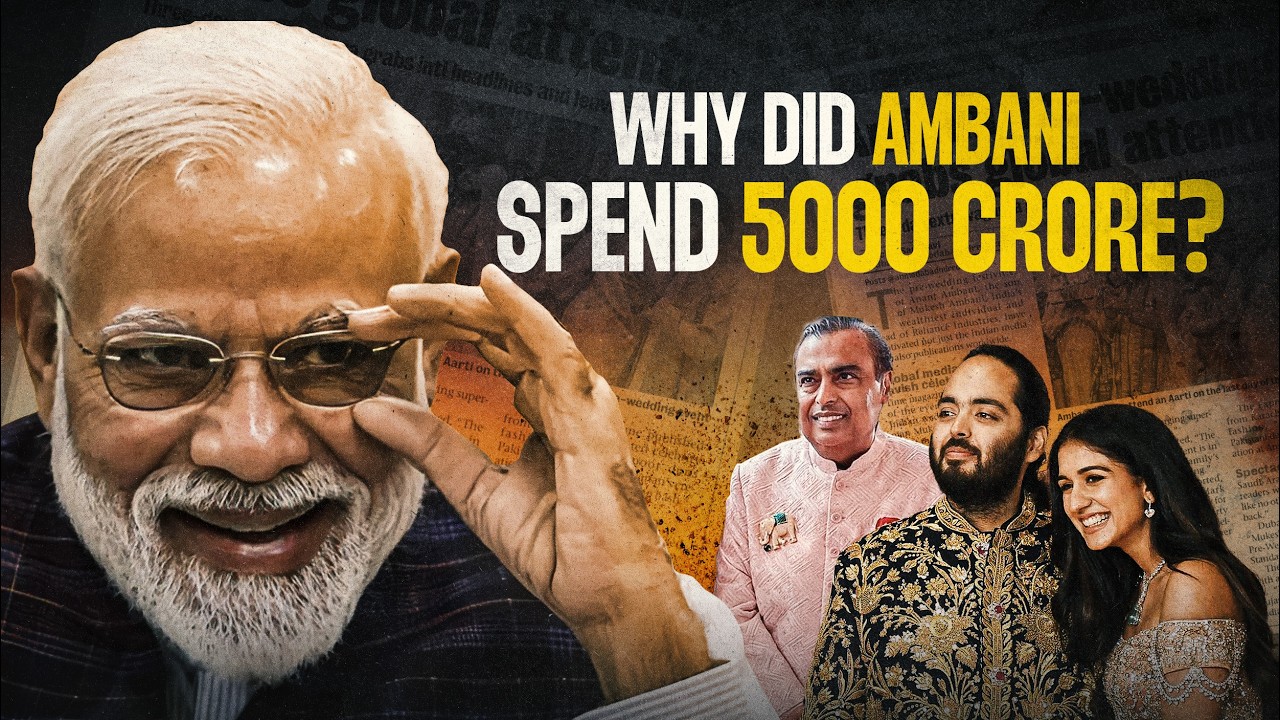
Think School reframes the Ambani wedding - 'perhaps the most expensive wedding in Indian history' - as a soft-power case study rather than a spectacle. The benchmark is Britain: royal weddings are a 'billion dollar playbook.' Meghan and Harry's 2018 wedding drew 160 million viewers; William and Kate's drew a global audience the episode puts at 1.9 billion - and the Royals convert that attention into economics: everything Kate wears becomes a million-dollar sale, British brands ride the coverage, The Crown keeps the mythos on Netflix, and students and tourists pour into the UK, 'contributing both with consumption and taxes.' The episode defines hard power (military, economic and political coercion - China's lending to Pakistan and Africa, the US in Iraq) against soft power (attraction that is 'acceptable, lucrative and aspirational') and holds up South Korea as the masterclass: from the Pyeongchang Winter Olympics to K-pop and BTS, skincare exports exploded from $320 million in 2011 to $3.82 billion in 2023, BTS alone credited with 8,000 jobs, and foreign students rising from 106,000 in 2010 to 375,000 in 2019 - talent arriving while India loses its smartest to brain drain. Applied to the Ambani wedding: global celebrities wearing Indian clothes, eating Indian food and posting about India is 'a big big big boost' to India's image; Vantara put Anant's rescue-and-rehabilitation work on the world stage; and billionaire weddings staged in undiscovered Indian locations could pull foreign wedding tourism the way Italy monetizes it. The closing lessons: hard power spends a billion dollars, soft power earns one; India needs to market itself the way Dubai marketed itself into a tourism sensation; and in a country that 'often hates on the rich,' the episode argues that unless the wealthy harm the environment or the country's reputation, we should 'respect their space and mind our own business' - pulling down our own people only hands foreign media the instrument to degrade India's image.
Key Takeaways
Royal weddings are economic instruments
Meghan-Harry drew 160 million viewers in 2018; the royal machine converts attention into fashion sales, brand lift, Netflix content, education inflows and tourism taxes. Britain runs weddings as a billion-dollar marketing playbook.
Hard power spends, soft power earns
Hard power - China's debt-trap lending, military invasions - is 'violent, forceful and repulsive' and costs billions. Soft power is 'acceptable, lucrative and aspirational' and, done right, returns a profit instead of an expenditure.
South Korea wrote the playbook
From Pyeongchang 2018 to K-pop and BTS: skincare exports grew from $320 million (2011) to $3.82 billion (2023), BTS alone is credited with 8,000 jobs, and foreign students tripled to 375,000 - cultural exports reversing brain drain.
The Ambani wedding as India's soft-power moment
Global celebrities in Indian dress, eating Indian food, amplifying Indian culture to hundreds of millions - plus Vantara's conservation story - is earned global publicity no tourism budget buys.
Wedding tourism is an untapped industry
Italy earns billions hosting foreign weddings; billionaire celebrations in undiscovered Indian locations could trigger the same influx, with hotels, artisans and local economies as beneficiaries.
The image lesson for India
India 'often hates on the rich,' but unless wealth harms the environment or national reputation, pulling down our own achievers only gives foreign media the material to degrade the country's image.
The Conversation Breakdown
The wedding and the British benchmark
⏱ Untimed topicThe most expensive wedding in Indian history meets the royal wedding playbook: 160 million viewers for Meghan-Harry, the Kate Middleton fashion effect, and how Britain monetizes ceremony into exports, education and tourism.
Hard power vs soft power
⏱ Untimed topicDefinitions and examples - China's lending strategy, the US in Iraq versus attraction-based influence - and why soft power is the acceptable, lucrative, aspirational alternative.
The South Korea masterclass
⏱ Untimed topicPyeongchang, K-pop, BTS: skincare exports $320 million to $3.82 billion, 8,000 jobs from one band, foreign students 106,000 to 375,000 - a deliberate national cultural-export strategy.
The Ambani wedding as strategy
⏱ Untimed topicCelebrity endorsement of Indian culture, Vantara's global stage, the foreign-wedding tourism opportunity Italy already monetizes, and what it would take for India to replicate the playbook.
Lessons and the closing argument
⏱ Untimed topicHard power costs a billion, soft power profits a billion; India needs marketing like Dubai's; and the case for letting the wealthy celebrate without turning it into national self-sabotage.
Core Frameworks & Ideas
The soft-power ledger
Hard power: expenditure of billions for coerced outcomes. Soft power: profit of billions through attraction - the episode's core accounting for why culture beats coercion as national strategy.
The royal wedding playbook
Ceremony -> global broadcast -> fashion and brand sales -> content franchises -> education and tourism inflows. A repeatable funnel Britain has run for decades and the Ambani wedding accidentally executed.
Cultural export engine
South Korea's sequence: event hosting (Olympics), cultural products (K-pop, dramas), product exports (skincare 12x in 12 years), then talent inflow - each stage funding the next.
Celebrity as national media
When global celebrities wear, eat and praise your culture, it outperforms any tourism campaign - endorsement economics applied to a country's image.
Actionable Next Steps
- ✓Policymakers and tourism boards: package Indian destinations for the global wedding and celebration market the way Italy does - the demand trigger already exists.
- ✓Brand builders: study the royal/K-pop funnel - one visible cultural moment can carry exports for years if products are ready behind it.
- ✓Founders in fashion, food and hospitality: prepare inventory and distribution for celebrity-driven India moments; attention spikes are worthless without supply.
- ✓Communicators: treat cultural pride as an asset - amplifying homegrown success is cheaper and more credible than bought advertising.
- ✓Everyone: before mocking visible wealth, ask whether it's harming the country or marketing it - the episode argues the Ambani wedding did the latter.
Notable Quotes
“Prince Harry was viewed by 160 million”
“this is the benefit of soft power”
“hard power is often seen as violent”
The One Thing to Remember
The wedding was marketing, not just money: like Britain's royal weddings and Korea's K-pop wave, global eyeballs on Indian culture convert into exports, tourism and talent - soft power that profits instead of costs.