


What's happening to BYJU'S? : Business Case Study
Executive Summary
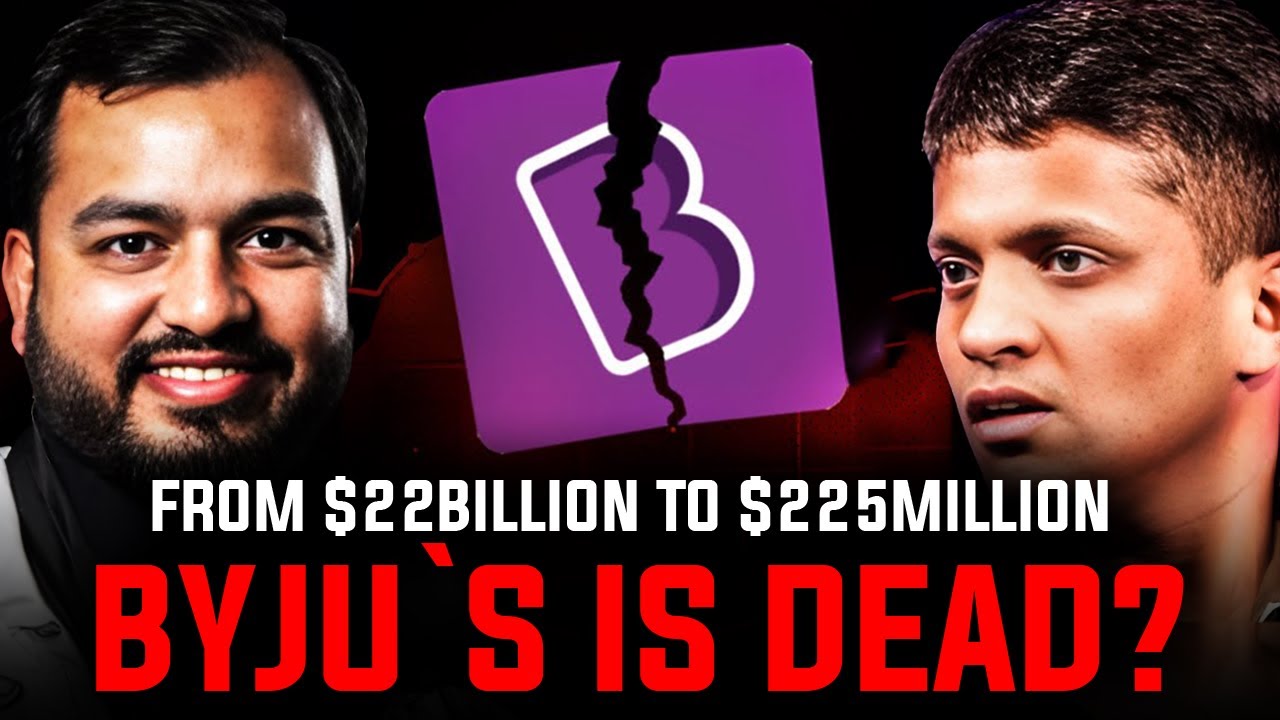
BYJU'S went from a 25-student startup in 2011 to India's most valued startup at $22 billion, then into heavy losses, an auditor exit, a loan default and regulatory probes. The video traces five causes - an outsized marketing budget, loan-funded sales tactics, questioned revenue recognition, a loss-making acquisition spree and a $1.2 billion term loan B - and closes with lessons on marketing, scaling and reputation. Figures and allegations are the video's claims.
Key Takeaways
From 25 students to a $22B valuation, then a reversal
Per the video, BYJU'S grew from a 2011 startup to about 150 million users and a $22 billion valuation by 2022, before losses, delayed financials and probes reversed the story.
Marketing nearly matched revenue
The video says business promotion was 32% of expenses and that in 2021 marketing spend of Rs 2,250.94 crore almost equaled revenue of Rs 2,428.3 crore - a ratio it flags as risky.
Sales tactics eroded trust
Citing Hindu Frontline, restoftheworld.org and Ken, the video describes fear-based selling, Rs 1 lakh weekly targets, and 54 of 110 complainants unaware they were signed up for loans.
Revenue recognition inflated growth
Multi-year course fees were booked in the first year instead of being split, and the video says Deloitte asked for 40% of 2021 revenue to be deferred, forcing large losses onto the books.
Acquisitions added users and losses together
WhiteHat Jr ($300 million), Epic ($500 million) and Aakash ($950 million) were among 19 acquisitions; not all were profitable, so scale came with mounting losses.
Term Loan B turned from cheap money into a trap
The $1.2 billion loan raised near zero rates became costly as US rates rose; after covenant disputes the loan traded near 49 cents on the dollar and BYJU'S defaulted in June 2023 and sued its creditors.
The video's lessons
Marketing is a double-edged sword; great businesses scale without compromising product value; and reputation, per the Buffett quote used, takes 20 years to build and five minutes to ruin.
The Conversation Breakdown
From 25 students to a $22 billion benchmark
⏱ Untimed topicThe founding by Byju Raveendran and Divya in 2011, the 2015 learning app, user growth from 40 million (2019) to about 150 million, revenue from tablets, SD cards, books and fees, and the peak $22 billion valuation, all as the video presents them.
The marketing bill that nearly matched revenue
⏱ Untimed topicAdvertising and promotion as the single largest FY21 cost: IPL and FIFA World Cup sponsorships, Shah Rukh Khan and Lionel Messi as ambassadors, and 2021 marketing spend close to total revenue.
Sales tactics, loans and lost trust
⏱ Untimed topicThe reported fear-based pitches, 15-day free trials feeding follow-up calls, weekly sales targets tied to termination, courses costing up to Rs 1.35 lakh sold via loans, and the first loss default guarantee that made that lending easy.
The accounting questions
⏱ Untimed topicThe accrual principle explained with simple examples, how booking three-year fees up front inflated revenue, Deloitte's request to defer 40% of 2021 revenue, and the 18x jump in losses to Rs 4,588 crore that followed.
The acquisition spree
⏱ Untimed topicWhiteHat Jr, Aakash, Epic and 16 other companies bought during the downturn; the video's point that distribution and scale could have fixed them, but instead users and losses arrived together.
Term Loan B: cheap money to default
⏱ Untimed topicHow a term loan B works (small installments, large bullet payment), the $1.2 billion raise in November 2021, covenants on ratings and timely audited results, the filing delays, rising US rates after the Russia-Ukraine war, the loan price sliding to 49 cents, and the June 2023 default and lawsuit against creditors.
Lessons from the BYJU'S story
⏱ Untimed topicThe video's closing lessons for business leaders: treat marketing as a double-edged sword, scale only with uncompromised value and impact, and protect reputation because it is slow to build and fast to lose.
Core Frameworks & Ideas
First loss default guarantee (FLDG)
A third party guarantees to compensate the lender if the borrower defaults. BYJU'S guaranteed its customers' loans from financing partners, which made lending to low-income buyers easy and left BYJU'S liable for defaults.
Accrual principle of revenue recognition
Revenue is recognized when earned, not when received: a Rs 40,000 two-year course booked in 2021 should be recorded as Rs 20,000 per year. Booking it all up front inflates current-year growth.
Term Loan B mechanics
Small annual installments (about 1% of principal plus interest) followed by a large bullet payment at maturity. Lenders price the risk with high interest, syndication to institutional investors, and stringent covenants.
Marketing-to-revenue ratio as a risk signal
The video's warning sign: when promotion spend approaches total revenue, growth is being bought at a price the model may not sustain, and the risk snowballs as conditions tighten.
Actionable Next Steps
- ✓Before scaling marketing, compare promotion spend to revenue and set a ceiling ratio you review every quarter.
- ✓Audit sales incentives: targets that tie weekly quotas to termination push teams toward misleading claims, as the video's BYJU'S reporting shows.
- ✓Recognize revenue when it is earned, not when cash arrives; split multi-year contracts across the years they actually cover.
- ✓Before taking bullet-payment debt, model the repayment at materially higher interest rates, not just today's rate.
- ✓Track reputation like a balance-sheet item: trust lost with customers, auditors and lenders compounds faster than revenue.
Notable Quotes
“unit economics and the economies of scale both are in its favor.”
“People were buying these courses by taking out a loan.”
“Then on 6th of June 2023, BYJU'S defaulted on the loan repayments and sued its creditors.”
“marketing is a double-edged sword.”
The One Thing to Remember
Speed of scale means little when marketing spend, revenue recognition and bullet-payment debt quietly stack risk underneath; the video's closing point is that uncompromised product value and reputation are what survive.