


Why America's healthcare is Broken? | How Wall Street Made Millions While Patients Paid the Price
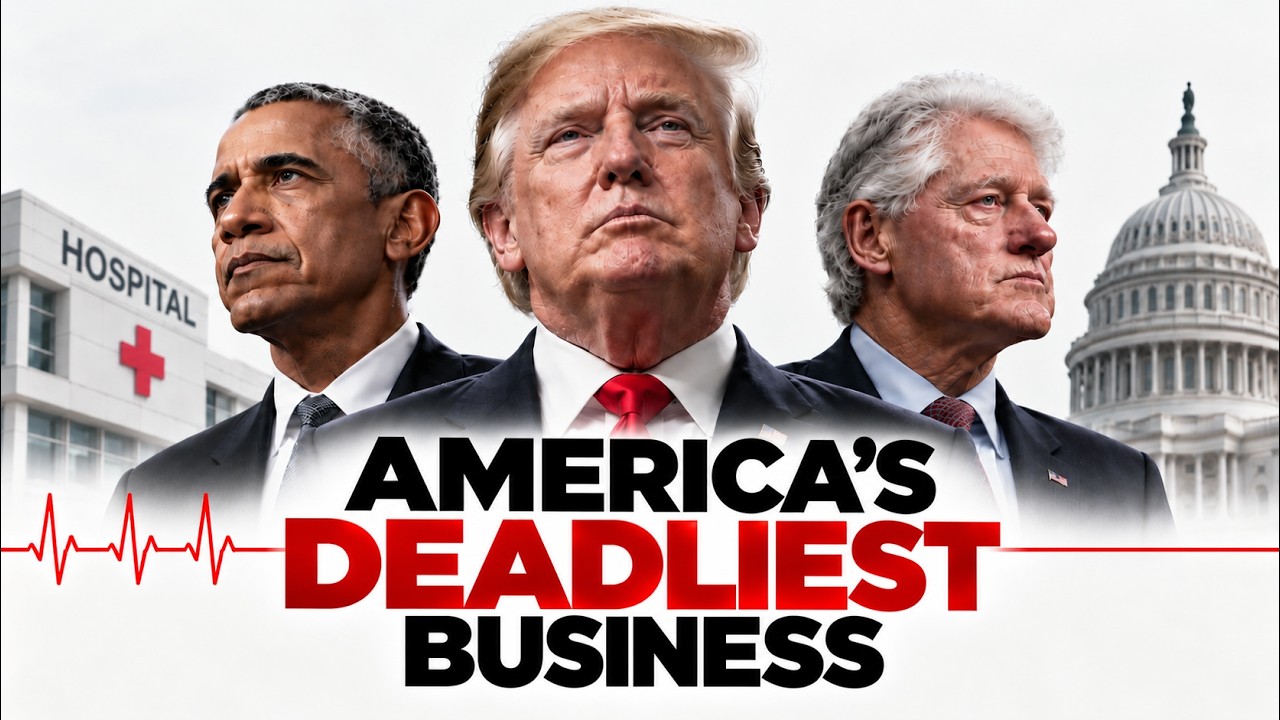
Executive Summary
Think School on private equity in healthcare: after Obamacare made US hospitals recession-proof cash machines, PE firms like 3G Capital (Burger King) and Cerberus (Steward Healthcare) applied the leveraged-buyout playbook - buy with borrowed money booked onto the company, sell assets, pay yourself dividends, exit - and Cerberus's $800 million profit ended in Steward's record 2024 bankruptcy with documented patient harm. The same playbook is now entering India, where PE already holds majority stakes in 11 major chains and the market is perfectly fragmented for roll-ups. The episode's prescriptions: stake caps, price-cap debate, hospital regulators - and get your own health insurance checked.
Key Takeaways
Obamacare accidentally set the table for Wall Street
In 2010, 16% of Americans were uninsured, medical bills were the number one cause of personal bankruptcy, and hospitals carried $57 billion in unpaid bills (2008). Obamacare insured 20 million more people, hospital bills started getting paid reliably - and hospitals flipped from risky businesses into recession-proof cash machines, attracting $1 trillion in private equity after Obama.
The leveraged buyout, explained with burgers
3G Capital bought Burger King in 2010 for $4 billion with only $1.2 billion of its own money - the $2.8 billion loan was booked in Burger King's name, not 3G's. They cut headquarters jobs, sold the corporate jets, franchised 1,335 of 1,387 restaurants so owners bore staff and equipment costs, took margins from 6% to 20% and profits from $17 million to $233 million - then IPO'd at an $8 billion valuation in under two years.
Steward Healthcare: the playbook applied to patients
Cerberus put in $246 million for six nonprofit hospitals, sold the land under them for $1.25 billion, funded a $473 million dividend to its own fund, left the hospitals owing the acquisition debt plus $121 million a year in rent, rolled up to 30-plus hospitals and 2 million patients - and exited in 2020 with $800 million in profit before the system collapsed.
What the collapse looked like
After Cerberus left, Steward lost $364 million in 2021 and $168 million in 2022, fell behind on supplier payments, and cut nurses and basic supplies. A young mother bled to death in childbirth when a device the suppliers had repossessed was missing; dead newborns were placed in cardboard shipping boxes. In January 2021 the company still paid $111 million in dividends - $81 million to its CEO, who bought a $30 million superyacht. In 2024 Steward filed America's largest hospital bankruptcy.
The pattern was not one bad apple
The episode cites a PE firm that bought a hospital, fired everyone and shut it down - the land reportedly eyed for luxury condos - and KKR's $9.9 billion Envision, whose ER doctors' reputation was staying deliberately out of insurance networks so patients got surprise bills. A Harvard study of 51 PE-backed hospitals found patient care sacrificed for profit. In PE-owned hospitals, patient falls rose 27% and bloodstream infections 38%.
India is the perfect next market
PE already holds over 50% stakes in 11 of India's biggest hospital chains, and a parliamentary committee has raised concerns. Two golden opportunities attract firms: only 0.9 hospital beds per 1,000 people against a needed 3 (massive supply gap), and top-10 players owning under 10% of beds - thousands of small hospitals waiting to be bolted together, exactly like KKR did after buying 70% of Kerala's Baby Memorial in 2024.
The episode's prescription - and its honesty
It refuses to call PE inherently evil: patients report excellent experiences at PE-backed Indian hospitals, and capital can fix the bed shortage. Its asks: cap PE stake percentages in hospitals, consider German-style price caps (while airing Dr. Devi Shetty's objection that premium charges for the rich subsidize the poor), and build banking-style regulators so hospitals chasing profit cannot collapse or suffocate patients.
The Conversation Breakdown
The shocking scoreboard
The shocking scoreboard: $5.3 trillion in US healthcare spending, $1 trillion in post-Obama PE investment - and 27% more patient falls, 38% more bloodstream infections, 10% more nursing-home deaths in PE-owned facilities
How 2010 set it up
How 2010 set it up: 16% uninsured, medical bills as the top bankruptcy cause, $70,000-$130,000 heart-attack costs, $57 billion in unpaid hospital bills - and Obamacare turning hospitals into cash machines
Private equity 101
Private equity 101: public versus private equity, the leveraged buyout, and the Burger King case - $4 billion buyout with $1.2 billion down, franchised restaurants, and an $8 billion IPO in two years
The Steward Healthcare story
The Steward Healthcare story: Cerberus's land sale, $473 million dividend, debt and rent loaded onto hospitals, $800 million exit - then staff cuts, a mother's preventable death, and the largest hospital bankruptcy of 2024
Not one bad apple
Not one bad apple: the hospital closed for potential luxury condos, KKR's Envision and deliberate out-of-network surprise billing, and Harvard's 51-hospital study on care sacrificed for profit
Private equity comes to India
Private equity comes to India: majority stakes in 11 top chains, 0.9 beds per thousand people, a fragmented market ripe for roll-ups, and KKR's Baby Memorial chain
What should be done
What should be done: stake caps, the price-cap debate with Dr. Devi Shetty's cross-subsidy argument, banking-style hospital regulators - and why the episode urges every family to review their health insurance
Core Frameworks & Ideas
The leveraged buyout shell game
Buy a company mostly with loans booked onto the company itself, so the acquirer risks little of its own money: 3G risked $1.2 billion of a $4 billion Burger King deal; Cerberus $246 million of an $895 million hospital deal. Sell assets, cut costs, pay yourself dividends from the proceeds, then exit - the entity keeps the debt.
Profits to investors, debt to the institution
The Steward pattern in one line: the profits went to the investors, the debt went to the hospitals. When the cash-generating assets (land) are sold and rent plus acquisition debt stay behind, the institution's only remaining lever is cutting care - nurses, supplies, equipment.
Same playbook, different stakes
The PE method that works for burgers or software can be catastrophic in healthcare or education, where cost-cutting lands on vulnerable people. Evaluate financial engineering by asking what the 'inefficiency' being removed actually is - corporate jets, or emergency-room nurses.
Actionable Next Steps
- ✓Check your own health-insurance policy this week for co-payment clauses and restoration benefits - the two traps the episode flags from a real 8-lakh claim.
- ✓When you hear a company was 'bought', ask whose balance sheet carries the acquisition loan - it changes who survives a downturn.
- ✓Before investing in or choosing a hospital chain, look up who owns it and what happened to staffing levels after the ownership change.
- ✓Track one regulation debate that affects your family (like PE caps in hospitals) and make your view visible to your representative - the episode ends on citizen voice as a lever.
Notable Quotes
“those bastards closed our hospital.”
“health care system kills people.”
“Hospitals don't print money.”
The One Thing to Remember
In the Steward story, the profits went to the investors, the debt went to the hospitals, and the patients paid the price - the leveraged buyout that mints money in burgers can kill people in healthcare.