


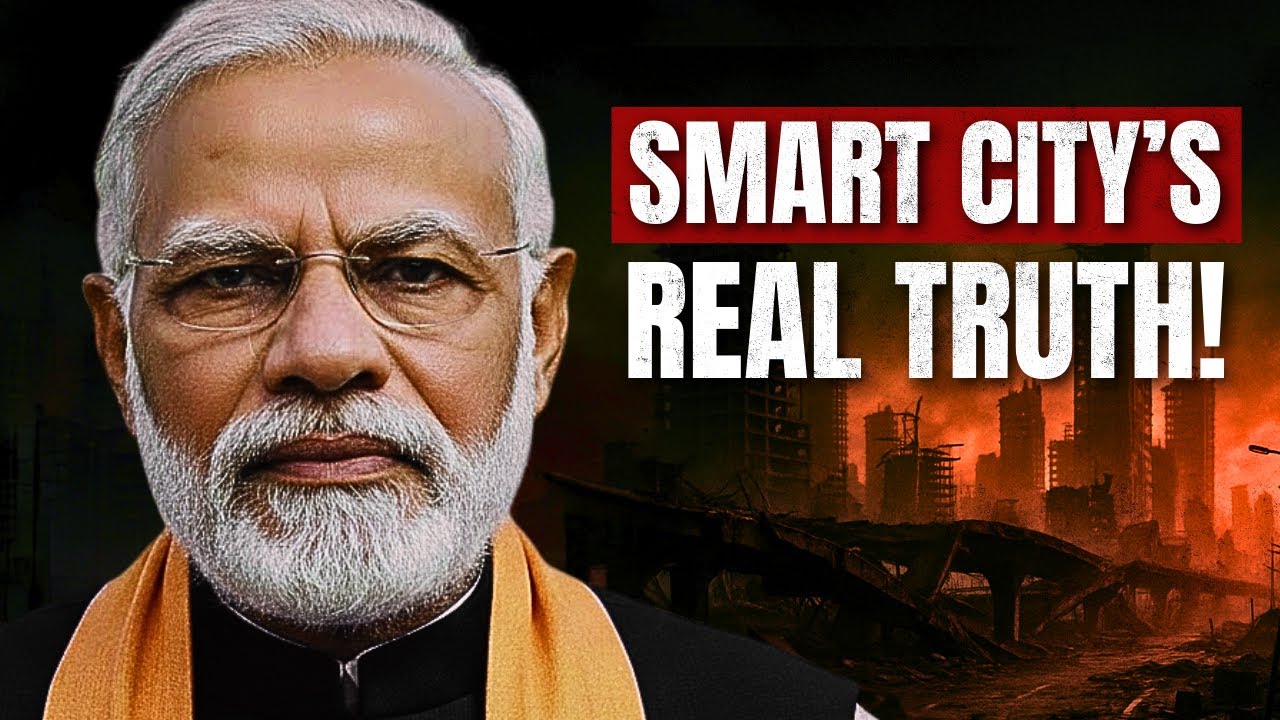
Why Smart Cities are FAILING?
Executive Summary
A Think School policy case study in which the presenter argues that India's Smart Cities Mission fell short of its 2014 promise. He recalls the pledge of 100 smart cities, the claim that 94 percent of projects are complete after about 1.64 lakh crore rupees, and the gap between that and daily life in cities. He then explains the urban-rural imbalance behind the mission, how detailed project reports and special purpose vehicles slowed delivery, why public-private partnerships fell short, citing Patna as an example, and how weak municipal institutions struggled. He closes with three lessons. Sponsor: toothsi by makeO (clear teeth aligners), promoted mid-video and at the end; Think School's Communication course is also plugged. PARTIAL COVERAGE: this note is based on the opening, the sponsor segment, the Mumbai and Bihar section, a middle section on SPVs, public-private partnerships and Patna, the closing and the description, and does not cover every point in the roughly 19 minute video. All figures and views are the presenter's own and are not independently checked. The sponsor's health claims are the advertiser's and are not endorsed here.
Key Takeaways
The promise
The presenter says the 2014 mission promised 100 smart cities with efficient transport, affordable housing and cleaner streets, and that the government says 94 percent of projects are complete.
The gap with reality
He says Mumbai still floods, Bangalore trips still take hours and Delhi's air remains toxic.
The urban-rural imbalance
The presenter says Mumbai's GDP of about 277 billion dollars is roughly double Bihar's 130 billion, driving migration.
Delays and SPVs
He says projects were delayed by late detailed project reports and that special purpose vehicles meant to bypass bureaucracy created new problems.
Public-private partnerships
He says private players did not show up as expected, and cites Patna's plan shrinking from 44 projects and 2,776 crore rupees to 29 projects and 980 crore.
Weak municipal capacity
The presenter says cities received many complex projects at once but lacked manpower, systems and project management, and 46 of the 100 cities were small.
Three lessons
His lessons are to decentralize power to local governments, put basics like water, sewage, roads, lighting and waste first, and for citizens to see past government marketing.
The Conversation Breakdown
The promise
⏱ Untimed topicThe presenter says the 2014 mission promised 100 smart cities with efficient transport, affordable housing and cleaner streets, and that the government says 94 percent of projects are complete.
The gap with reality
⏱ Untimed topicHe says Mumbai still floods, Bangalore trips still take hours and Delhi's air remains toxic.
The urban-rural imbalance
⏱ Untimed topicThe presenter says Mumbai's GDP of about 277 billion dollars is roughly double Bihar's 130 billion, driving migration.
Delays and SPVs
⏱ Untimed topicHe says projects were delayed by late detailed project reports and that special purpose vehicles meant to bypass bureaucracy created new problems.
Public-private partnerships
⏱ Untimed topicHe says private players did not show up as expected, and cites Patna's plan shrinking from 44 projects and 2,776 crore rupees to 29 projects and 980 crore.
Weak municipal capacity
⏱ Untimed topicThe presenter says cities received many complex projects at once but lacked manpower, systems and project management, and 46 of the 100 cities were small.
Three lessons
⏱ Untimed topicHis lessons are to decentralize power to local governments, put basics like water, sewage, roads, lighting and waste first, and for citizens to see past government marketing.
Core Frameworks & Ideas
Decentralize power - the presenter's first lesson
Local governments need real control to deliver in their cities.
Basics before technology - the presenter's second lesson
Cameras and apps do not help if water, sewage, roads and waste fail.
Demand real progress - the presenter's third lesson
Citizens should look beyond publicity to results.
Actionable Next Steps
- ✓Check the official project data and independent audits before judging a public program.
- ✓Ask whether basic services work before accepting claims about smart technology.
- ✓Look at who has the power and capacity to run a project, not only its budget.
- ✓Treat all claims as the presenter's own view and verify them independently.
Notable Quotes
“we practically built monuments of bureaucratic failure and called them smart cities.”
“if we really want to bring change, it has to start with the local governments.”
“The first priority has to be the basics.”
The One Thing to Remember
The presenter argues that the Smart Cities Mission focused on technology and marketing while basic services and local governments were neglected.