


Why War Never Ends | Politics, Profit and Power | Geopolitical case study
Executive Summary
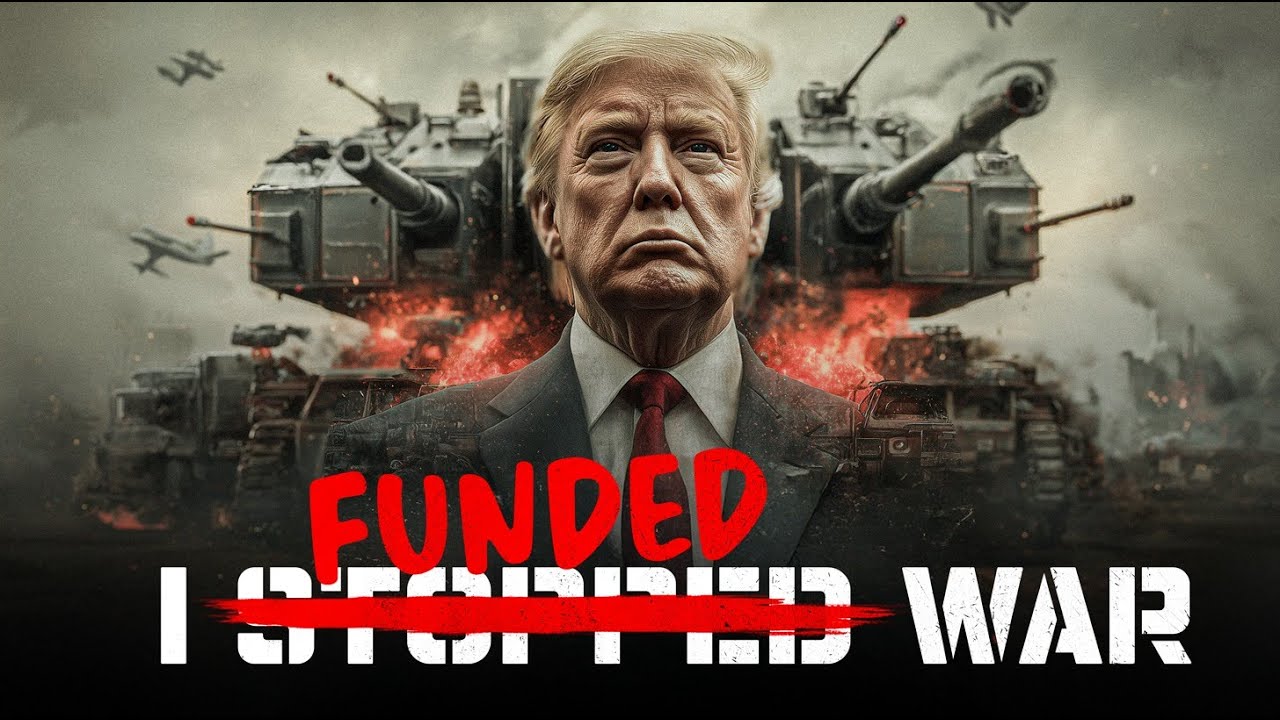
A Think School political and economic case study from October 2025 arguing that war is a profitable business for the American defence industry. Starting from Donald Trump's claim of having stopped seven conflicts, the presenter traces cost-plus contracts in World War II, the postwar military industrial complex, Vietnam, Iraq and Afghanistan, and contractor profits. The caption text ends mid-conclusion, so the final lines are not covered (partial coverage). This is a one-sided opinion piece. The profit, stock, cost and casualty figures and the claims about motives and propaganda are the presenter's statements, not independently verified, and several are contested. This is political commentary, not advice. Captions are automatic with errors. Topics are untimed; metadata follows YouTube. Source: https://youtubetotranscript.com/transcript?v=mLf3KYTkGuA
Key Takeaways
The opening claim
He says Trump brags about stopping seven wars while, behind the scenes, he argues, the war industry prints money, citing Lockheed Martin up almost 900 percent from 2001 to 2020.
Ukraine and stocks
He says that during Ukraine aid the NYSE index fell 7 percent while Lockheed rose 42, Northrop 34 and General Dynamics 22 percent, and calls war America's greatest startup.
World War II and guaranteed profit
He says the US was not eager to fight, ranked 19th in army size, and that cost-plus contracts guaranteed firms their costs plus about 10 percent so they could convert factories, such as Ford building a B-24 an hour.
The postwar dependency
He says defence was about 40 percent of GDP in 1945 with around 70 million Americans dependent on war production, so jobs meant votes, and he cites Eisenhower's warning on the military industrial complex.
The Soviet enemy and manufactured consent
He says the US needed a new enemy, used capitalism against communism, and that propaganda shaped public consent.
Vietnam
He says 530,000 troops were sent, 4 million tons of bombs dropped on North Vietnam, nearly 4 million died, and firms like Bell, Raytheon and Brown and Root earned big contracts.
Iraq and Afghanistan
He says the US armed Saddam Hussein, later hanged him, spent about 61 billion on the Iraq episode he describes, and about 2 trillion dollars over 21 years in Afghanistan, with contractors the main winners.
The Conversation Breakdown
The opening claim
⏱ Untimed topicHe says Trump brags about stopping seven wars while, behind the scenes, he argues, the war industry prints money, citing Lockheed Martin up almost 900 percent from 2001 to 2020.
Ukraine and stocks
⏱ Untimed topicHe says that during Ukraine aid the NYSE index fell 7 percent while Lockheed rose 42, Northrop 34 and General Dynamics 22 percent, and calls war America's greatest startup.
World War II and guaranteed profit
⏱ Untimed topicHe says the US was not eager to fight, ranked 19th in army size, and that cost-plus contracts guaranteed firms their costs plus about 10 percent so they could convert factories, such as Ford building a B-24 an hour.
The postwar dependency
⏱ Untimed topicHe says defence was about 40 percent of GDP in 1945 with around 70 million Americans dependent on war production, so jobs meant votes, and he cites Eisenhower's warning on the military industrial complex.
The Soviet enemy and manufactured consent
⏱ Untimed topicHe says the US needed a new enemy, used capitalism against communism, and that propaganda shaped public consent.
Vietnam
⏱ Untimed topicHe says 530,000 troops were sent, 4 million tons of bombs dropped on North Vietnam, nearly 4 million died, and firms like Bell, Raytheon and Brown and Root earned big contracts.
Iraq and Afghanistan
⏱ Untimed topicHe says the US armed Saddam Hussein, later hanged him, spent about 61 billion on the Iraq episode he describes, and about 2 trillion dollars over 21 years in Afghanistan, with contractors the main winners.
Core Frameworks & Ideas
Cost-plus contract - presenter's explanation
The state pays actual costs plus a fixed profit, so the contractor carries no risk.
Military industrial complex - Eisenhower via the presenter
Defence firms fund politicians, who fund budgets, which fund the firms and retired generals.
Manufactured consent - presenter's claim
Propaganda can shape what a democracy chooses.
Actionable Next Steps
- ✓Check the stock and spending figures against company reports and government data.
- ✓Read Eisenhower's farewell address himself.
- ✓Compare with accounts that explain the same wars from other viewpoints.
- ✓Look up the Afghanistan reconstruction audit report he says he attached.
Notable Quotes
“war is not a foreign policy”
“peace wasn't an option”
“consent can actually be manufactured with propaganda”
The One Thing to Remember
The presenter argues war pays defence contractors, voters and politicians, so peace is a threat to many livelihoods.