Explore curated summaries and key insights in Investing. Get the essence of each conversation in 5 minutes.
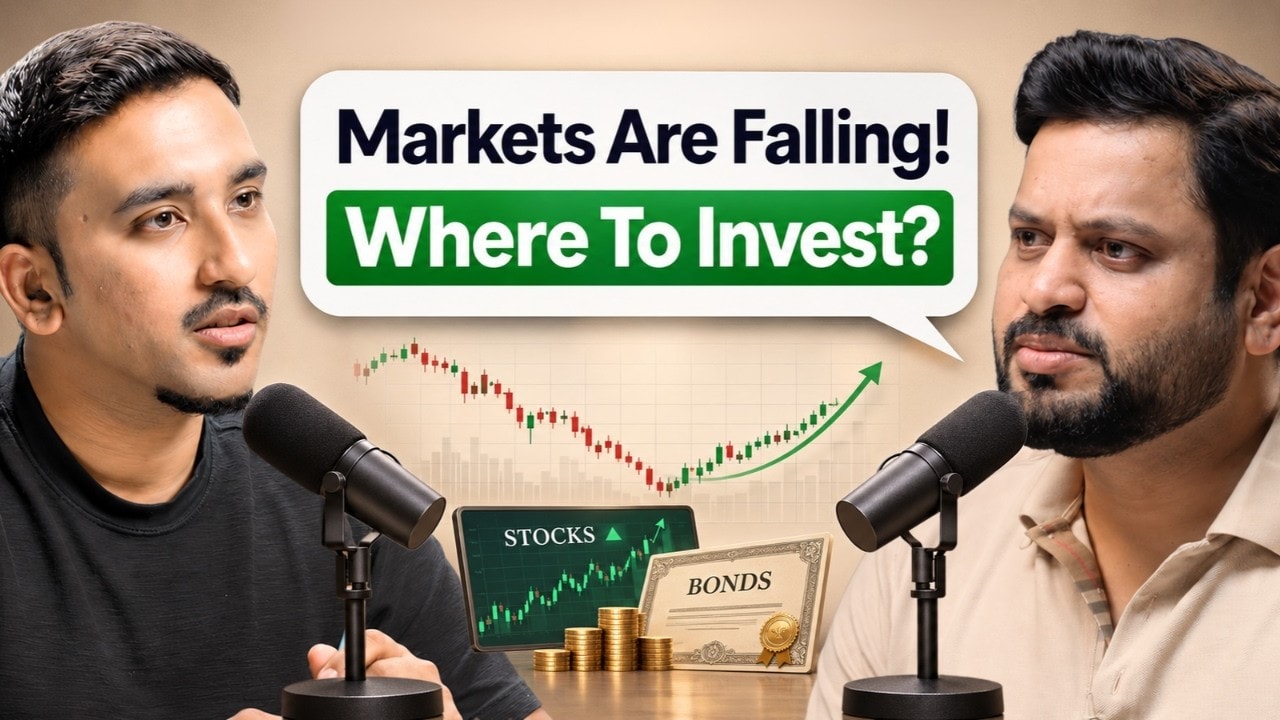
Think School: Indian Business Podcast
Think School's Ganeshprasad with Girish Lakhotiya (Founder, Prachay Capital) on why Indian investors are stuck between a falling equity market and inflation-losing FDs, how bonds and the CAMEL/SGS frameworks work, why 'below AA is junk' is a myth, how Prachay's Bondsmart model retains 15-20% skin in the game, what happens in defaults (ILFS, DHFL recoveries), and when founders should raise via bonds instead of banks. FULL COVERAGE: notes span the entire episode (full audio transcribed, 0:00 to ~49:47 of 49:47). Sponsor: Odoo; the guest's own platform Bondsmart is discussed in the episode. All return figures, market statistics, recovery percentages and regulatory claims are the speakers' account as of November 2026, attributed to them, not independently verified; nothing here is financial or investment advice.
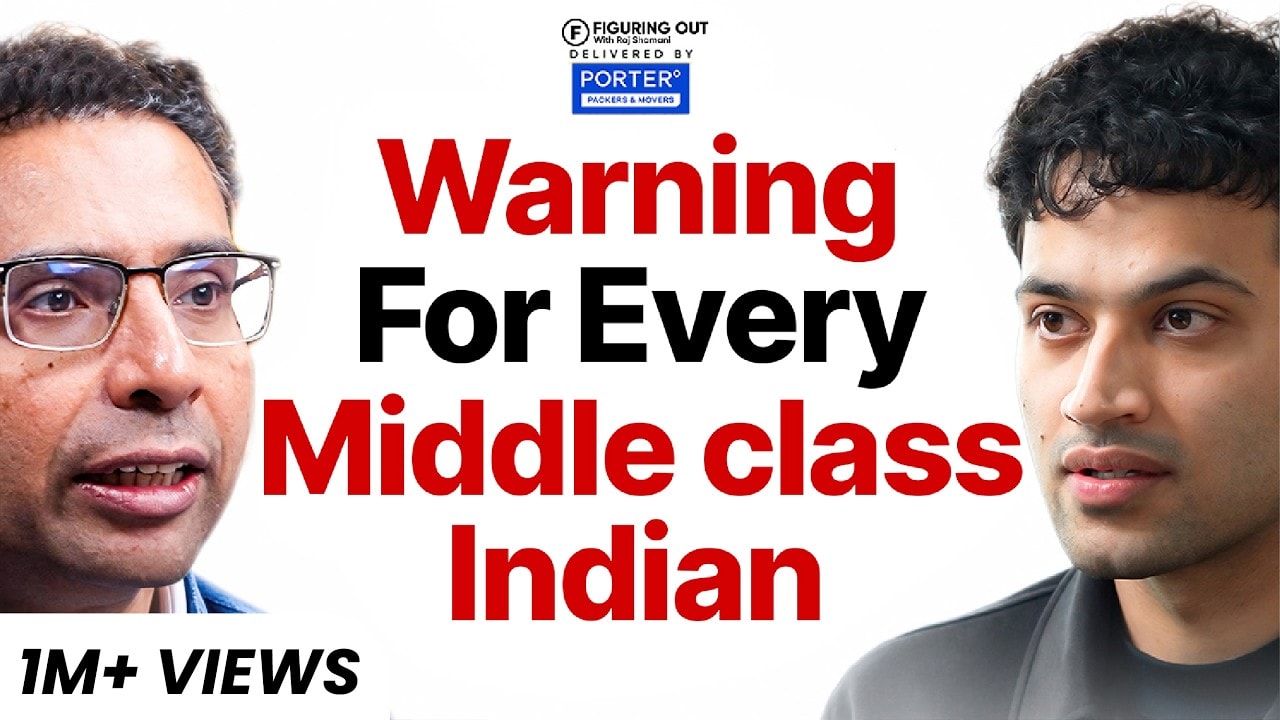
Figuring Out with Raj Shamani
Raj Shamani hosts investor and Marcellus Investment Managers co-founder Saurabh Mukherjea, author of the book "Break Point", for a data-heavy diagnosis of why India's middle-class life construct is cracking - and what could replace it. NOTE: This episode is in Hindi; these notes and the quotes are in English, with quotes translated faithfully and marked. FULL COVERAGE: notes span the entire conversation. Sponsor: Porter (packers and movers), named as title sponsor in the intro. All statistics and claims below are Mukherjea's or his cited sources (Azim Premji University research, Naukri.com data, SEBI data, income-tax filing data, NSSO) as presented in the episode - they are his framing, not independently verified, and nothing here is financial, career or investment advice. Mukherjea defines the Indian middle class as households earning roughly Rs 5 lakh to Rs 1 crore a year - about 5-6 crore tax filers of whom only ~2 crore actually pay income tax - and says this small group shoulders ~70% of the income-tax and ~40% of the GST burden while anchoring employment. His core argument: three pillars of middle-class life have broken. Education no longer guarantees a job (Azim Premji University: only ~7 of 100 graduates find work in their graduation year, 2-3 of them white-collar; an entry-level graduate salary of ~Rs 2.5 lakh now trails a big-city construction worker's Rs 5-6 lakh). Saving has been replaced by leverage (household debt-to-income excluding home loans at 32-33% vs a 15-23% global band; 27% of personal loans funding holidays; roughly 1 in 2 middle-class Indians in debt). And real wages have been flat for about a decade while living costs rise 8-9% a year. Naukri data, he says, shows white-collar job creation - 11% a year until 2020 - has been near zero for three years, with IT at -15%. Layered on top: Jio's free data and COVID fused a generation to social media, producing what he calls the "industrialization of aspiration" - borrowing to fund fantasy lifestyles and mass F&O trading that, per SEBI data he cites, pulled ~Rs 4 lakh crore from ~9 million mostly male traders aged 30-40 over four years, half of it flowing to foreign hedge funds. Raj frames the compulsion with Skinner-box economics (random rewards addict fastest) and Mukherjea adds Althusser's ideological state apparatus: a culture that celebrates exam toppers keeps millions chasing JEE/UPSC at ~2% success rates. He contrasts the UK/US (hollowed-out middle classes, 1985-2015, culminating in Brexit and MAGA, per the Autor-Levy-Murnane polarization thesis he cites) with Japan, which escaped. His three fixes: AI-era gig work at global scale, a mindset shift from jobs to work and early entrepreneurship (India already adds ~1 million entrepreneurs a year, backed by ~$40 billion of angel/VC/PE money), and Buffett's internal scorecard over external markers of success. He sees outsized opportunity in AI-powered "Uber for white-collar work" intermediaries, AI media houses, original R&D and IP (China now produces half the world's new biotech drugs; US firms spend $700B/year on R&D vs India's $20B), and AI-driven financial services managing global money. The blockers, per him: red tape (an FSSAI licence to cook Maggi in an office pantry, a legal spittoon requirement, 60-70 licences for a Mumbai 3-star hotel), industrial land priced like Western Europe (Vietnam is 40% cheaper), and 11-12% working-capital costs versus 3% in the US, China and Vietnam. He closes by predicting India's entrepreneurship wave can still pull off what the US did in 1880-1930 and China in 2004-2026 - if those three bottlenecks break.
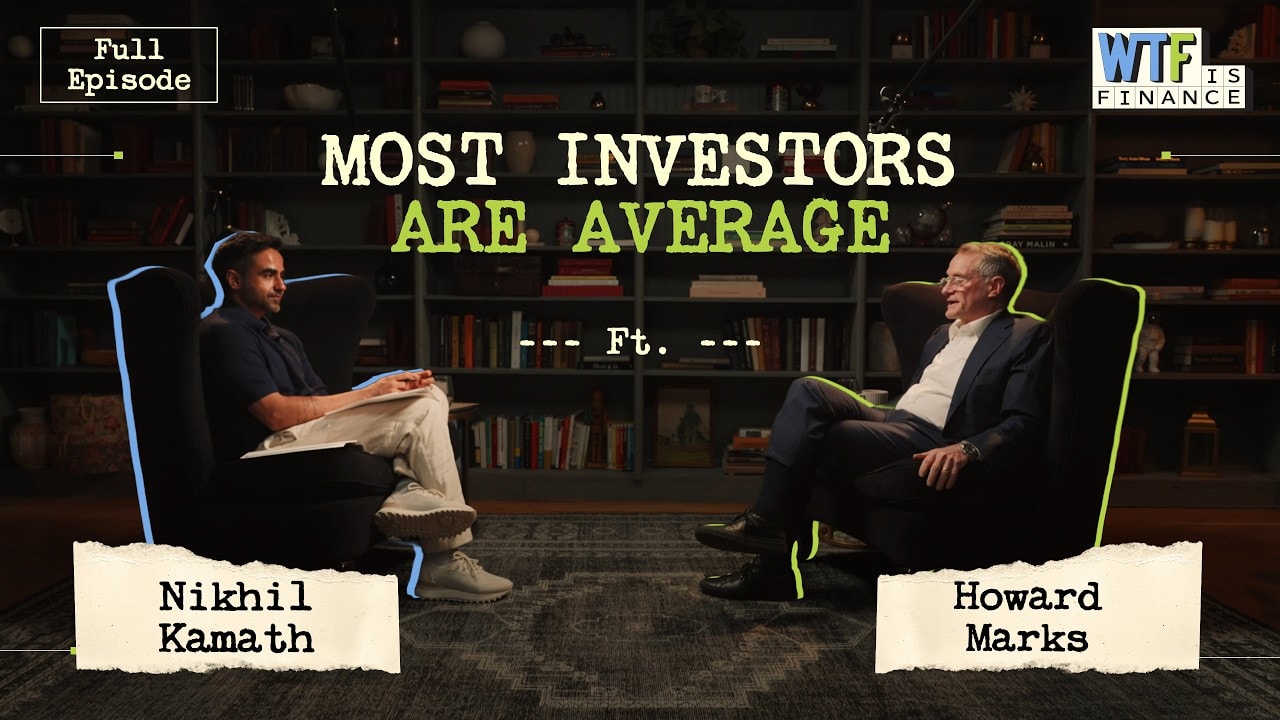
People by WTF
Nikhil Kamath asks Oaktree co-founder Howard Marks how he moved from Queens to Wall Street, why he chose bonds over stocks, and how market cycles and AI change investing. The conversation links careful credit analysis with second-level thinking and a willingness to keep learning. Educational summary, not investment advice.
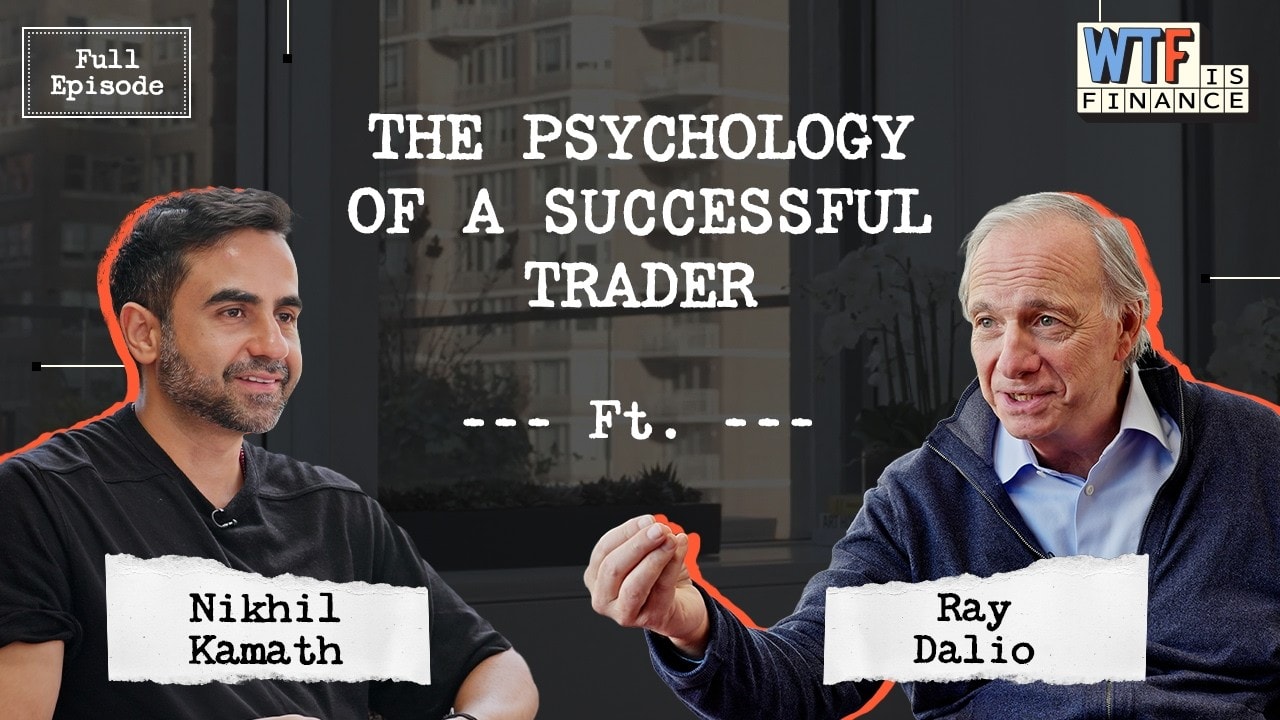
WTF is with Nikhil Kamath
Ray Dalio speaks with Nikhil Kamath about money, wealth and investing. They examine how wealth can rise faster than the money available to realize it, how bubbles form, and what that means for young Indian investors. The conversation also covers gold, Bitcoin, portfolio construction, decision rules and the forces shaping markets.

The Joe Rogan Experience
Investor Peter Thiel joins Joe Rogan to talk about U.S. budget deficits, why he thinks society struggles to fix known problems, the 2010s debate on superintelligence and surveillance, and why he thinks passing the Turing Test matters more than the AGI label. Partial coverage: this note covers the opening portion of the roughly 3h30m episode; the claims are the speakers' own.

