
Host: Ranveer Allahbadia
The Ranveer Show (TRS) - hosted by Ranveer Allahbadia, better known as BeerBiceps - is one of India’s biggest long-form podcasts. Ranveer sits down with global and Indian guests across entrepreneurship, content creation, sports, music, spirituality, history and personal growth: from MrBeast, Jackson Wang and Rio Ferdinand to founders, storytellers and spiritual teachers. Curiosity-driven conversations about what drives remarkable people and what their journeys teach the rest of us.
Read structured takeaways and actionable insights from The Ranveer Show
The Ranveer Show
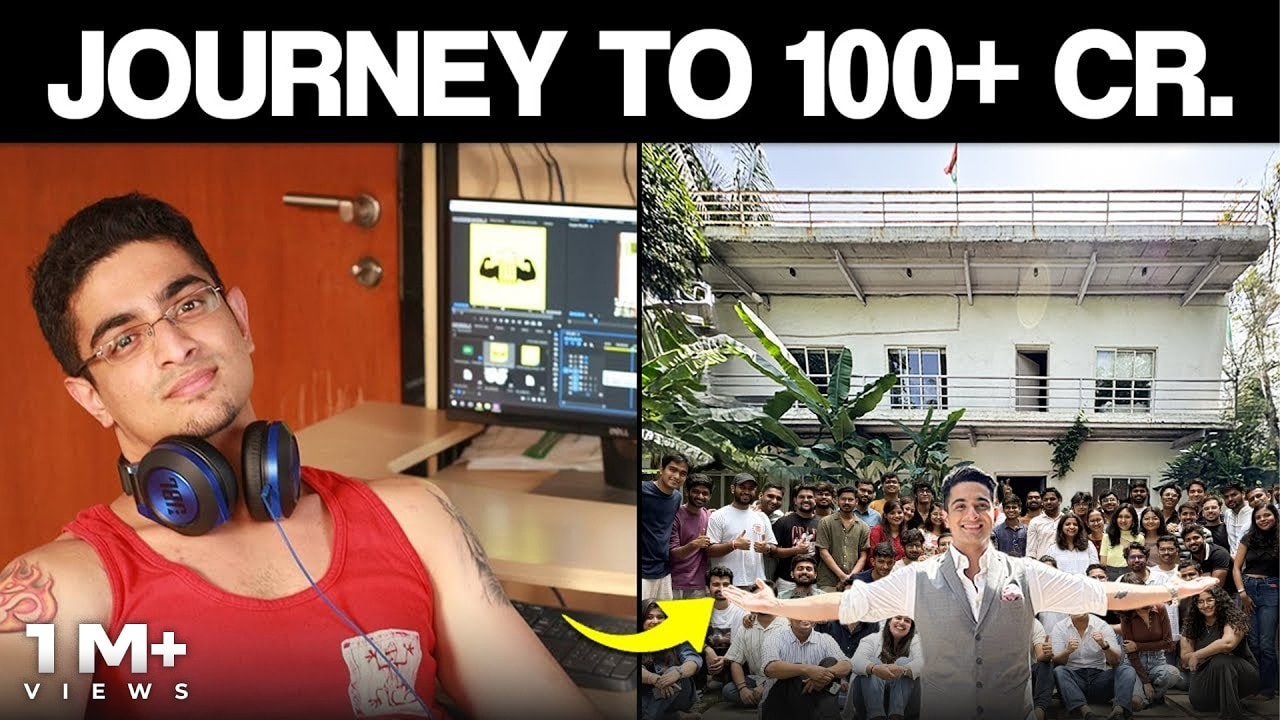
Ranveer Allahbadia marks ten years as a creator with his most personal business episode: the four pillars behind Monk Entertainment, Level Supermind and Skill House - sports-team culture, military-grade systems and ownership, profit-first galla thinking, and martial-arts discipline. He also reflects on the year's controversy and why he treats it as a speed breaker. Views expressed are the speaker's own; this podcast is for informational purposes only and not business advice. Sponsor read in the publisher audio: Odoo (Community Day 2025). Notes based on the publisher's full audio edition. FULL COVERAGE: these notes cover the complete episode from start to finish.
The Ranveer Show
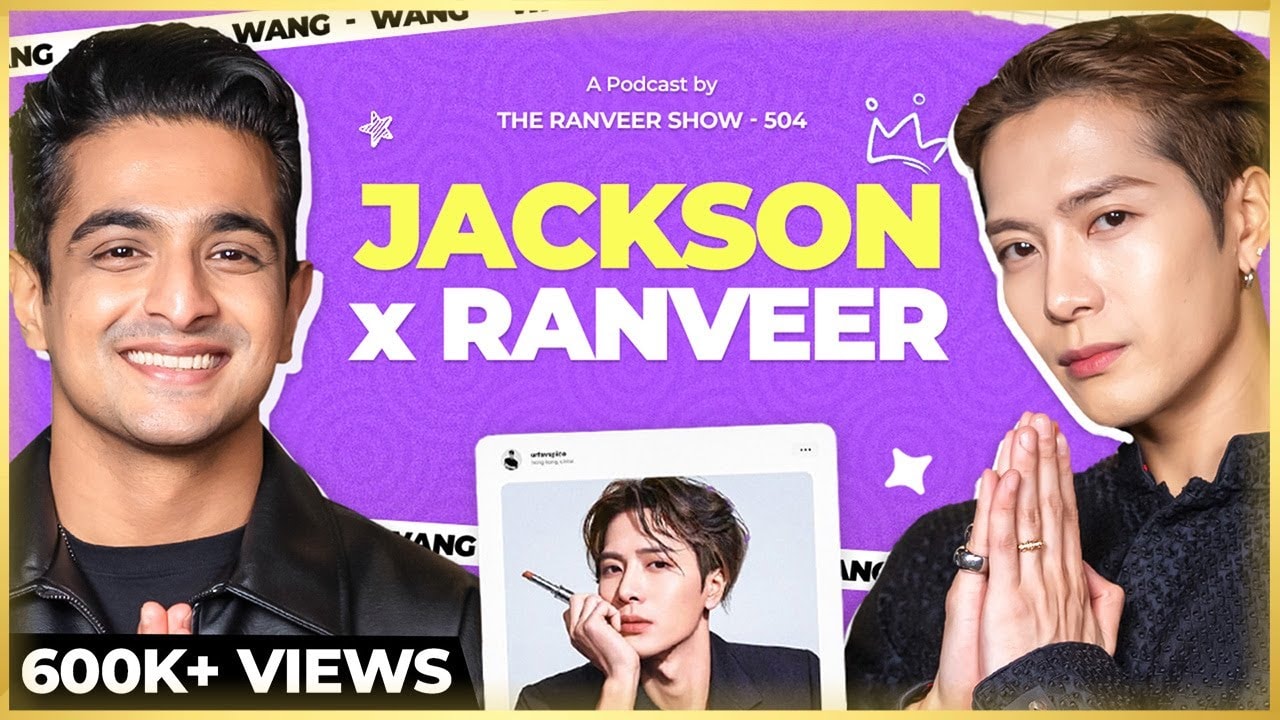
Jackson Wang - GOT7 member, solo artist and Team Wang founder - joins Ranveer Allahbadia in Mumbai on his fourth day in India for a loose, wholesome conversation. FULL COVERAGE: notes span the entire episode. Sponsor: none stated (Jackson's own album Magic Man 2 and his AI companion product Magic Eye come up as his projects, not paid reads; nothing here is medical advice - his diet and skincare routines are his personal habits as described on the show). Jackson explains K-pop in three sentences - Korean pop, deep artist-fan engagement, and dancing, singing and rapping as its three pillars - plus a fourth: every idol truly wants to make their own music. Inside the trainee system: no mercy, only results, easy to get in and easy to get cut, weekly evaluations and level gates - and Jackson spent two and a half years at the lowest grade before a six-month surge in dance and martial-arts tricking carried him to debut at 19. The twist: GOT7 trained for one genre and debuted in another - 'if you're prepped as a knife, you need to cut; why am I hammering?' He reflects on debuting at 19 without finishing high school, missing his youth, taking a year off after a decade of nonstop output, and turning a diary habit into Magic Man 2. On his current chapter: no team beyond himself and one collaborator, checking his own lyric uploads on TikTok and Instagram, and owning the insecurity as the cost of wanting to be great. On discipline after 30: asleep by 8 p.m., up at 4-5, green juice (garlic, ginger, lemon, celery, broccoli, banana, turmeric, blueberries, collagen, parsley, cucumber, coconut water), wearables, and the red-carpet protocol - no dinner the night before, gym, sauna, ice-bowl face dunks. The episode wanders happily: chicken wings as a last meal, the Chinese saying that bitter taste is good medicine, his friendship with RM, why he used to host every gathering, wanting action and crime roles over romantic comedies, his Hrithik Roshan friendship, learning the Indian head nod, Black Mirror theories, using AI as a coach and contract translator, why he built Magic Eye for lonely moments before sleep, speaking five languages by having no pride, starting music on GarageBand at 12, and Ranveer's favorite quote - the past is fiction.
The Ranveer Show
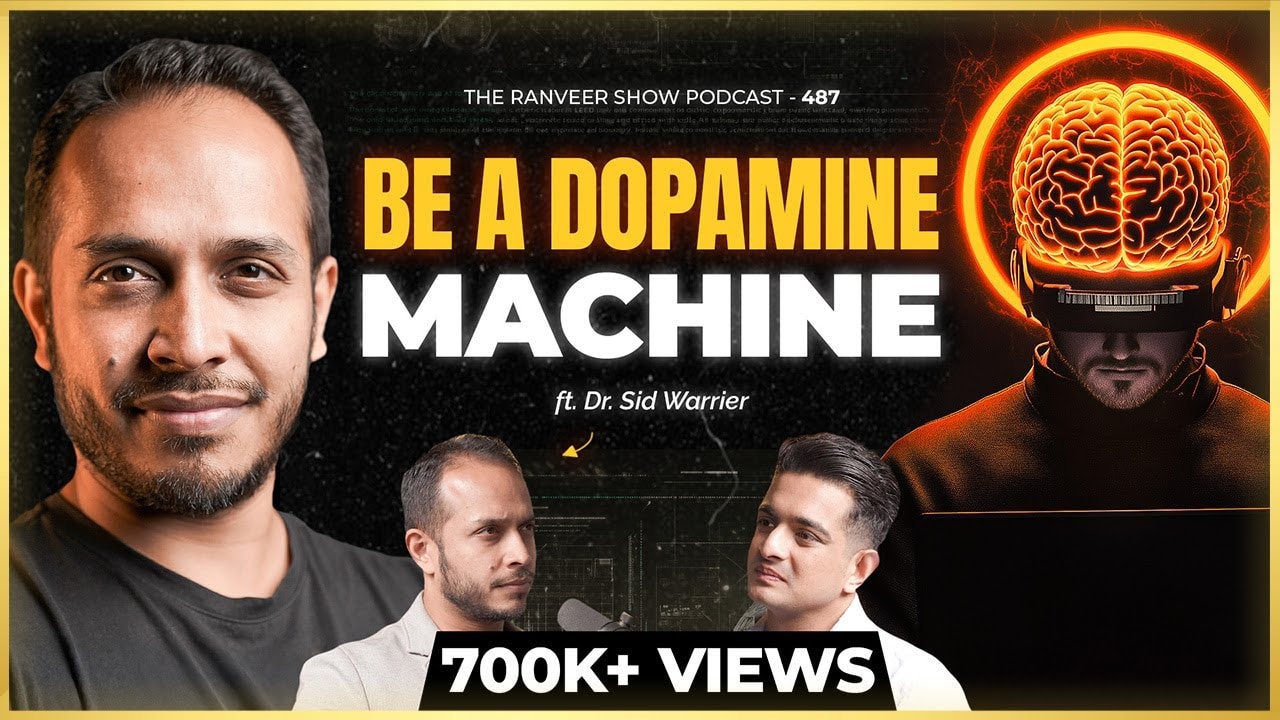
Neurologist and neuroscientist Dr. Sid Warrier returns to The Ranveer Show for a neuroscience special built around one question: how is a high achiever's brain actually different, and can anyone become one? FULL COVERAGE: notes span the entire episode. Sponsor: none stated. Everything here is the guest's explanation of brain science as discussed on the episode; it is educational content, not medical, psychological or career advice - consult a qualified professional for personal health concerns. His answer: yes, anyone can, because all high performance is problem-solving, and the two ingredients are motivation and time. The molecule in the middle is dopamine - not the happiness chemical but the motivation molecule, the glue that directs neuroplasticity. What you are motivated for rises in value in your brain, attention follows value, and dopamine plus serotonin rank everything competing for your time, from cricket to Netflix to your family. His bottom line for professionals: choose a job you enjoy - and if you cannot, reverse-engineer enjoyment through identity, the way he hooked his self-image as a curious puzzle-solver onto medicine. The episode then dismantles the buzzword version of neuroplasticity: your synaptic wiring is uniquely yours, coded by childhood experience (the twins-and-the-dog thought experiment), and it is always running - you cannot make your brain more plastic, you can only choose what it is learning, because a lazy brain has simply learned that laziness works. The prefrontal cortex, the CEO of the brain, holds information long enough to learn from mistakes, but it does not mature until about 25 - so problems faced earlier can sit unresolved for decades until suppression turns into behavior. Therapy, in his one-line definition, is outsourcing your prefrontal cortex: borrowing a trained one until yours can do the job, which is also why you are wise about your friend's relationship and a mess in your own. On healing: there is no appropriate time to get over a breakup - recovery depends on the depth of the wound and the health of the whole system, which is why sleep, family, finances and fitness decide recovery speed. The practical core is his good-strokes-versus-bad-strokes frame: bad strokes are external dopamine spikes (alcohol, hookups, binge-watching, sad music on loop) that run out and leave you lower; good strokes are movement and community. His most quoted rule of thumb: whenever you are feeling low, don't take any decision until you go for a walk - and take the fight with your partner on three rounds around the building before you keep talking. He closes with the physiology of stress: the sympathetic and parasympathetic systems, why scrolling is not rest, how chronic threat posture shows up as neck and back pain with perfectly normal scans, why stretching can release stored emotion, and why suffering and growth are the same road.
The Ranveer Show
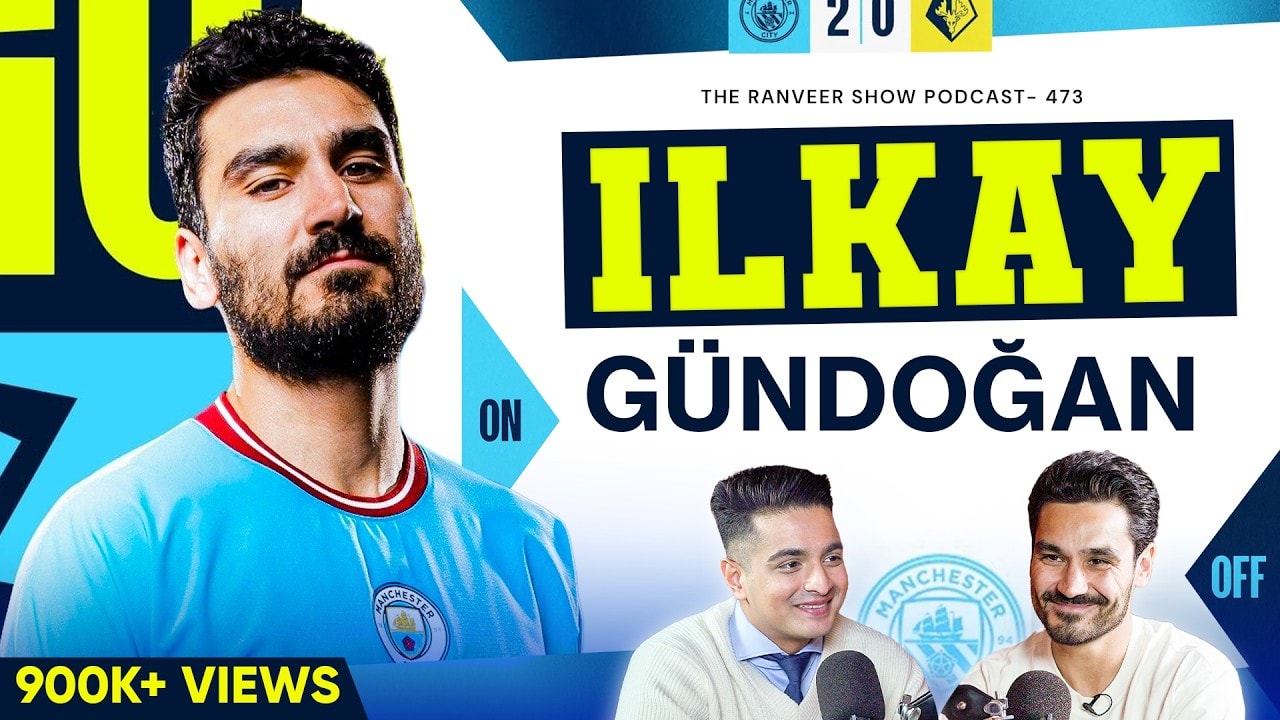
İlkay Gündoğan, Manchester City captain and one of the most decorated midfielders of his generation, sits down with Ranveer Allahbadia for his first Indian podcast - a conversation about mentality far more than match analysis. FULL COVERAGE: notes span the entire episode. Sponsor: none stated. All match details, opinions and personal stories are as shared by the guest in January 2025; nothing here is professional advice. Gündoğan explains what actually powers City's 'one consciousness' football: eight or nine years under one manager, teammates who have known each other just as long, and a coach in Pep Guardiola who 'kind of enjoys' turning difficult periods around and would rather lose with his philosophy than abandon it. He traces Cruyff's line through Pep and Barcelona's identity, and explains why La Masia keeps producing players like Pau Cubarsí, who made decisions like a 25-year-old at 17. The human core of the episode is rarer: a man with nearly every trophy admitting 'I don't have that sensation of pride,' describing happiness that rises and falls with results, the bad moods his family absorbs after defeats, and why even at 33 or 34 the pressure feels no different than it did at 18. He revisits the self-doubt of his first six months at Dortmund - replacing Nuri Şahin, convinced the step was too big - and how Jurgen Klopp managed him like a father, pulling him out of the squad entirely before reintroducing him slowly into a double-winning season. On improving a country's football (with India explicitly in view): it always starts with youth development, the culture has to make kids love the game, and it takes at least a generation. Plus: Jamal Musiala and Florian Wirtz's path from 'very close' to world class through Champions League wins and consistency, Erling Haaland's routines, the night a teammate's toilet break left Barcelona playing with ten men in Porto, match-day meals (pasta the night before, just coffee and banana bread on game day), and why he plays Football Manager instead of EA FC.

The Ranveer Show
Ranveer Allahbadia flies to London and sits down with Manchester United legend Rio Ferdinand for the episode that kicks off TRS's international phase and reveals the show's new logo. FULL COVERAGE: notes span the entire conversation. Sponsor: none stated. All stories and claims are the speakers' own as told on the show. Rio opens up on why he still goes hard after retirement - his kids watch his habits, and a father lying in bed teaches them the wrong life. He traces his drive to a Peckham childhood with hardworking parents and a mother whose empathy held the neighborhood together, and explains why he wants to be remembered for something beyond football: if people only talk to him about United in ten years, he feels he will have failed his next phase. Inside the United dressing room: he and Nemanja Vidic each privately believed they were the best but competed to be the best pair; 95% of his toughest games were in training against Rooney, Tevez, Berbatov, Ronaldo, Nani and Saha; and everything - cards, table tennis, SOCOM and FIFA on team buses - was competition, because you cannot switch competitive energy off and expect it to come back at the same height. He admits he had no empathy as a player, mentally deleting injured teammates, and would change that now. On Sir Alex Ferguson: the great observer who almost never entered the training-ground changing room, let leaders govern standards, delegated every department, and recruited for culture - a management style Rio says the club has missed since he left, arguing great teams need underlying fear and real repercussions (he points to Pep's City and Klopp's Liverpool) and that accepting substandards has cost United. Ranveer shares his own matching lesson: branding his first agency a 'family culture' got taken advantage of until he rewrote it as a sports-team mentality. The conversation turns deep on grief: Rio's wife Rebecca and his mother died in quick succession, his BBC documentary forced him to talk, and his message to his younger self is that it is okay to be vulnerable and okay to cry - he argues schools teach everything except death, the one guaranteed thing. He chose his three children over a managerial career he was starting when Rebecca passed. On Cristiano Ronaldo: a deep, curious conversationalist who calls NASA for recovery margins and uses critics as fuel. On fatherhood: be the parent, not the coach; his kids are not 'Rio Ferdinand's kids', they just happen to have a dad who played football. It closes with India - his love for Delhi's energy, the smiles he saw amid poverty, watching a funeral procession in the street, a promise to bring his podcast to India, and Ranveer's vow that a 4 a.m. landing still earns a full Mumbai food tour.
The Ranveer Show
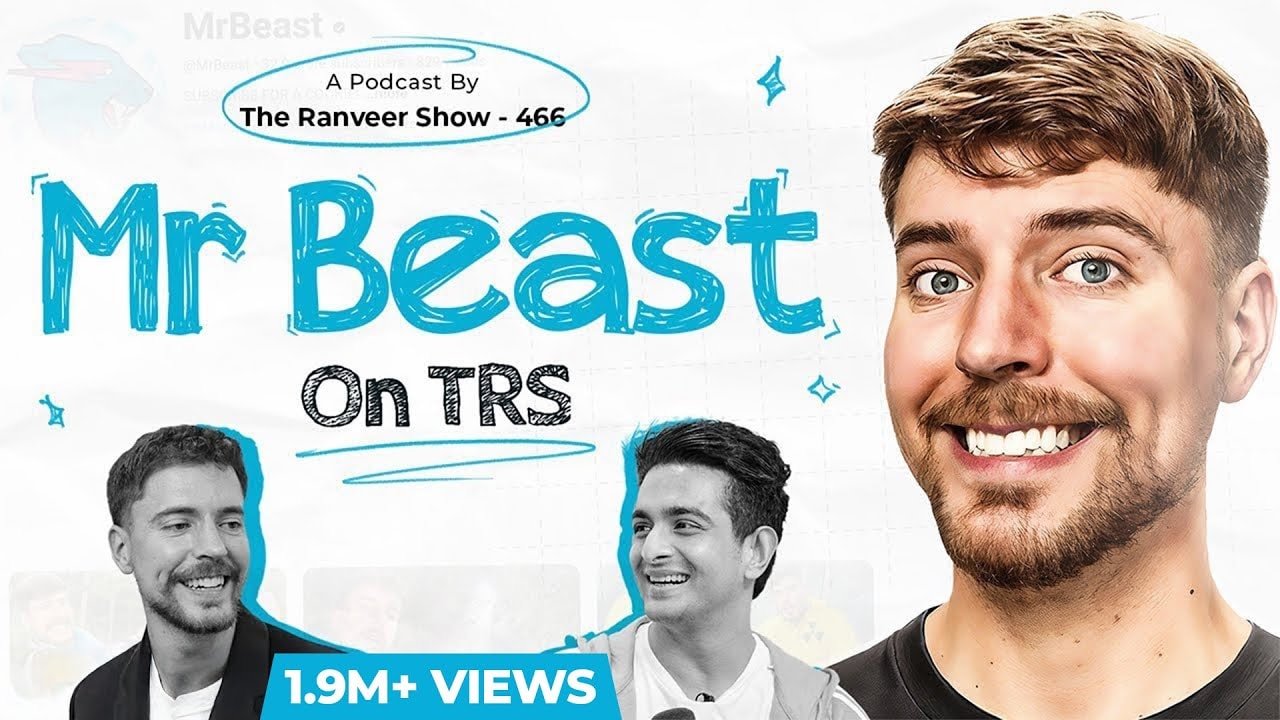
Ranveer Allahbadia sits down with Jimmy Donaldson - MrBeast, the biggest YouTuber on the planet - during his December 2024 India trip, recording partly in a vanity van and partly on the drive to Mumbai airport. FULL COVERAGE: notes span the entire conversation. Sponsor: none stated (Ranveer plugs MrBeast's Beast Games on Prime Video as content, not a paid read). All figures and claims are MrBeast's own as told on the show; nothing here is business or financial advice. MrBeast says roughly 630 million unique viewers watched his main channel in the previous 90 days - by his math, 7-8% of all humans alive - and describes what that scale costs: hundreds of employees, productions like the 100-day bunker video (buried bunker, 50 cameras recording 24/7, medics on standby, millions of dollars), and 7-day survival videos he admits are miserable to film (sand-flea bites that forced a desert-island reshoot, fasting to avoid pooping while buried alive, solitary confinement where 10 hours feel like 30). He traces the hunger back to childhood: his family went bankrupt after the 2008 crisis, his mother worked two jobs, and as a young teen he prayed every hour to become a YouTuber, crying some nights with chest pain because he wanted it so badly. Today his mother - once horrified he skipped homework for YouTube - holds the keys to the master bank account, because, he says, who else in the world can you trust? He explains his idea machine (a team brings raw ideas, he riffles through weekly and spins 'my neighbour's house burned down so I bought him a mansion' into 'last to leave the mansion keeps it'), why one 50-million-view video beats a hundred 500K ones, and why he is not proud of himself yet: at 26 he counts only six efficient working years and plans to work until the day he dies. Ranveer draws him out on self-doubt (a pendulum, but he leans optimistic - 'I just have to have faith in myself'), his girlfriend and dog Alfie as his switch-off ritual, not celebrating wins, and why the goal must never end. They cover India: meeting Bhushan Kumar at T-Series HQ after the old subscriber 'war', wanting Virat Kohli in a video, the CarryMinati parody, MrBeast's prediction that CarryMinati will be India's first 100-million-subscriber creator, and his advice to Indian creators - CPMs will rise, so predict where the world will be in five years, think outside the box, and keep honing your skills. It ends with a plan: MrBeast in the Himalayas, meditating at the ashram Steve Jobs visited.

