

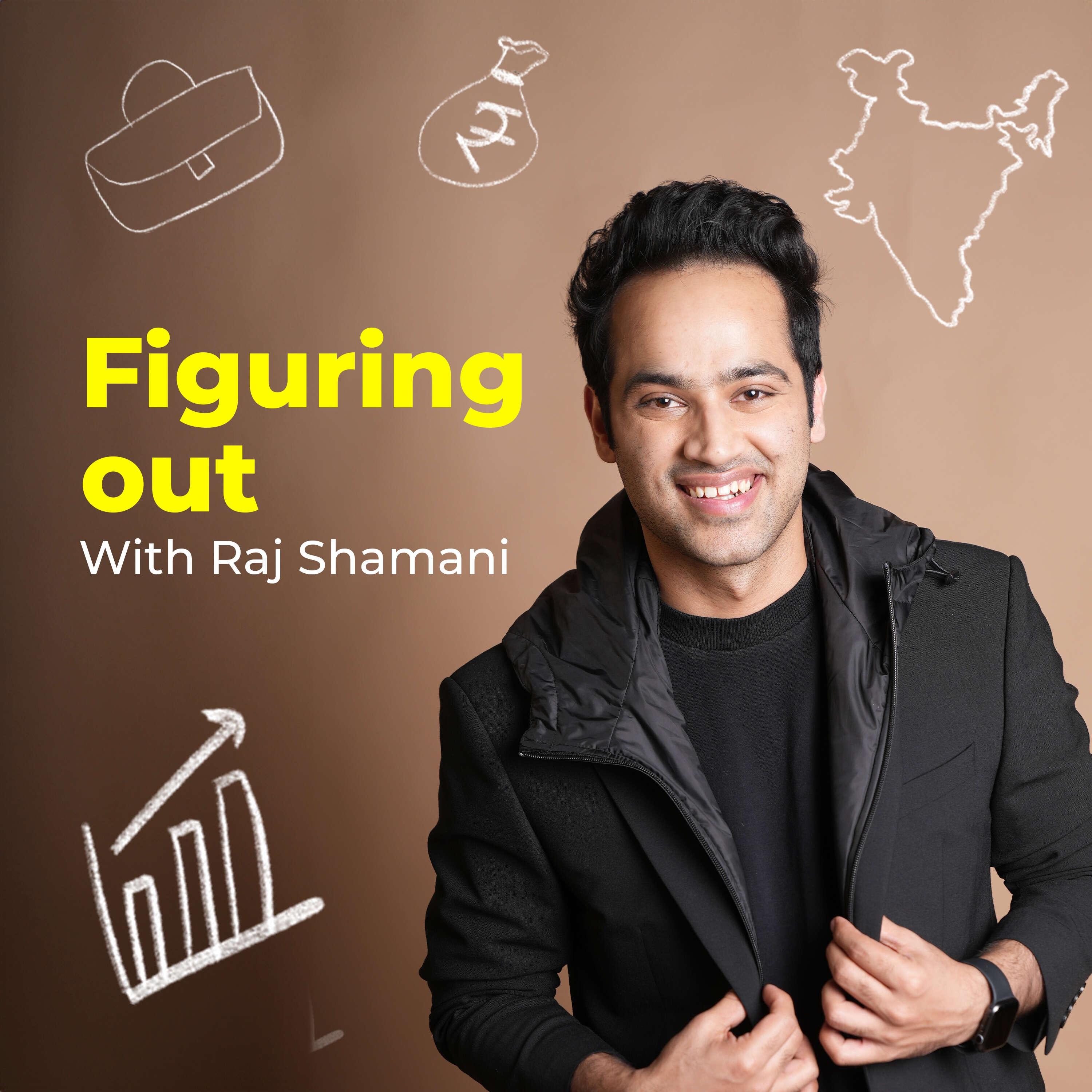
Billionaire Harsh Mariwala On Understanding INDIAN Consumers DEEPLY | Marico Story| FO25 Raj Shamani
with Harsh Mariwala

Executive Summary
Harsh Mariwala, who turned a family trading business into Marico (Parachute, Saffola), lays out his complete playbook for Raj Shamani. It starts with strengths, not trends: have eight to ten people who know you brainstorm your strengths and weaknesses, then follow his 75-25 rule - 75% of effort improving strengths, 25% on weaknesses unless one is fatal. The business itself must earn a 'right to win': a unique, consumer-tested offering in a segment you can actually lead, which is why he avoided the MNC-dominated shampoo 'red ocean' and took leadership in pre- and post-wash hair care instead - and why small segments the giants ignore (like Beardo's beard care) are the real openings. On Indian consumers he is categorical: India is 30 countries, so never read it through one lens - Saffola oats sells pongal flavor in Tamil Nadu and pav bhaji in the west. He explains why he is deliberately reducing Marico's dependence on oils (Parachute went from 70% to about 40% of turnover), why he would only ever build consumer-facing businesses, and why he will not touch crypto or any industry he does not understand. All views are the speakers' own.
Key Takeaways
Start with strengths, not the flavor of the decade
Before joining a family business or picking a career, identify your strengths with a brainstorming circle of eight to ten people who know you well. Strengths convert into passion, passion into enjoyment, enjoyment into success - and entering a hot industry you have no strength in (IT yesterday, digital today) just means competing against people strong in it.
The 75-25 rule for self-improvement
Spend 75% of your development effort improving your strengths and 25% on weaknesses - the odds of gaining from strength work are far higher. The exception: a fatal flaw must be fixed regardless of the ratio.
Earn a right to win before you scale
A me-too product fails because the consumer already has a supplier. The right to win comes from something unique - innovation, a patent, a service promise like Domino's delivery guarantee - validated through repeated consumer iteration on the product, packaging, name, pricing and communication before resources go in.
India is 30 countries, not one market
Each state is its own consumer profile, especially in food. Marico runs regional variants inside one brand - pongal oats in Tamil Nadu, pav bhaji oats in the west, plain masala nationwide - because a single-lens reading of the Indian consumer misses where the opportunity actually is.
Win where the giants won't go
'My consumer is everyone' puts you against MNCs with global R&D and ad budgets - the shampoo red ocean he refused to enter. Marico took leadership in pre- and post-wash hair care instead, and bought Beardo because beard care at 100 crores was too small for big players to bother with. The right to win is easiest in segments the giants ignore.
Low differentiation invites copies - move up the value chain
Oils are hard to differentiate, so others can copy you; that is why Parachute went from 70% to about 40% of Marico's turnover as he pushed into wellness and beauty, where complexity protects the brand. He also notes D2C has demolished the old entry barriers of distribution scale and mass-advertising budgets.
Only play games you understand
Asked which new industry he would enter, his answer is none outside consumer businesses - because enjoyment and understanding are where his odds are best. Fintech, edtech, crypto: untouched, irrespective of potential. Raj's summary, which he endorsed: stop looking for the biggest industry; find where you can be the biggest.
The Conversation Breakdown
The first step out of a family business
⏱ Untimed topicMariwala's process: pick the broad area that matches your strengths, then find the unique thing you will bring - because consumers already have suppliers and reject me-too products. Develop the offering through close, repeated consumer interaction to catch your blind spots, and establish a right to win through innovation, patents or a unique promise before scaling.
Know your strengths: the 8-10 person brainstorm
⏱ Untimed topicMost people never identify their strengths. His method: gather eight to ten people who know you well and brainstorm your strengths and weaknesses. Build your career on the strengths - they become passion and fun - and budget self-improvement at 75% strengths, 25% weaknesses, fatal flaws excepted.
Reading the Indian consumer
⏱ Untimed topicIndia behaves like 30 countries: state-wise food preferences, urban-rural splits, generational segments. His cases: Horlicks' southern skew, coconut oil's south-and-west weighting in Parachute's expansion, and Saffola masala oats running pongal and pav bhaji variants beside an all-India plain masala.
D2C and the fallen entry barriers
⏱ Untimed topicDistribution scale and national advertising budgets used to lock out small brands; D2C e-commerce and digital marketing removed those barriers. New brands now extend across categories the old playbook would have forbidden, powered by tight community relationships.
Why Marico is moving beyond oils
⏱ Untimed topicLimited differentiation in oils makes them copyable, so Marico's oil share fell from 70% to about 40% of turnover as he pushed into premium wellness and beauty. His acquisition lens: segments too small for giants - Beardo's beard-only range - where a challenger can take leadership.
Blue oceans and value creators
⏱ Untimed topicHe skipped the MNC-dominated shampoo 'wash' category and won pre- and post-wash hair care instead - blue-ocean logic. On running the company: every business has a few functions that create most of the value - in FMCG, product development, consumer insight and marketing, and sales; in pharma, patents; in Kaya, doctors - so put your best talent and your own time there.
The book, the journeys and the rapid fire
⏱ Untimed topicHarsh Realities (with Ram Charan's chapter-end learnings) took years of iteration; its name came from his ASCENT entrepreneur community and its cover from a specialist who read the manuscript. He recalls building distribution town by town - sleeping at distributors' homes, sharing train compartments with armed men in UP - and closes rapid-fire: favorite chapter is culture-building, dream boss is a Steve Jobs or Elon Musk, his advisory rate works out to about 1 lakh an hour, and his advice to Raj: keep identifying the right guests, because the story is everything.
Core Frameworks & Ideas
The right-to-win test
Before entering any market, name the unique thing you bring - innovation, patent, or a promise competitors won't match - and confirm it with consumers. No right to win, no entry.
The 75-25 development budget
Allocate 75% of improvement effort to strengths, 25% to weaknesses. Strengths compound into passion and success; only fatal flaws justify flipping the ratio.
The 30-countries lens
Never average India into one consumer. Cut it by state, urban-rural, and generation, define the sharp segment you will serve, and let regional variants live inside one national brand.
Blue ocean over red ocean
Skip categories owned by giants with scale and R&D. Enter adjacent or neglected spaces - pre/post-wash hair care, beard care - where leadership is winnable, then expand from strength.
The value-creator map
In every business, two or three functions create most of the value (FMCG: product, marketing, sales; pharma: patents; clinics: doctors). Identify yours and concentrate the best talent and your own attention there.
Actionable Next Steps
- ✓Gather 5-10 people who know you well and run a one-hour strengths-and-weaknesses brainstorm; write down what surprises you.
- ✓Take your current project and complete this sentence: 'My right to win is ___.' If you cannot, do not scale yet - go back to consumer conversations.
- ✓Define your target consumer in one sharp sentence (income, location, age, habit) - if it says 'everyone', narrow it this week.
- ✓Map your business's two or three real value-creating functions and check whether your best people and your own hours actually sit there.
- ✓Before chasing a trending industry, apply Mariwala's filter: do I understand it, would I enjoy it, and do I have a strength that wins there? If any answer is no, stay out.
Notable Quotes
“You have to create a right to win in a highly competitive environment.”
“75% of your effort should go in improving your strengths.”
“every person in this world has some god-given gifts”
“if you offer a me too product, you will not succeed”
“the right to win will be easier in segments which are not looked at by larger players”
“I'm not going to touch crypto irrespective of the potential.”
“Stop thinking about which is going to be the biggest industry. Start thinking about where can you be the biggest.”
The One Thing to Remember
Stop asking which industry will be biggest - ask where YOU can be the biggest.