

Business Expert: How to Build A Brand in 2026 & Hidden Opportunity | IndiaMART | FO443 Raj Shamani
Executive Summary
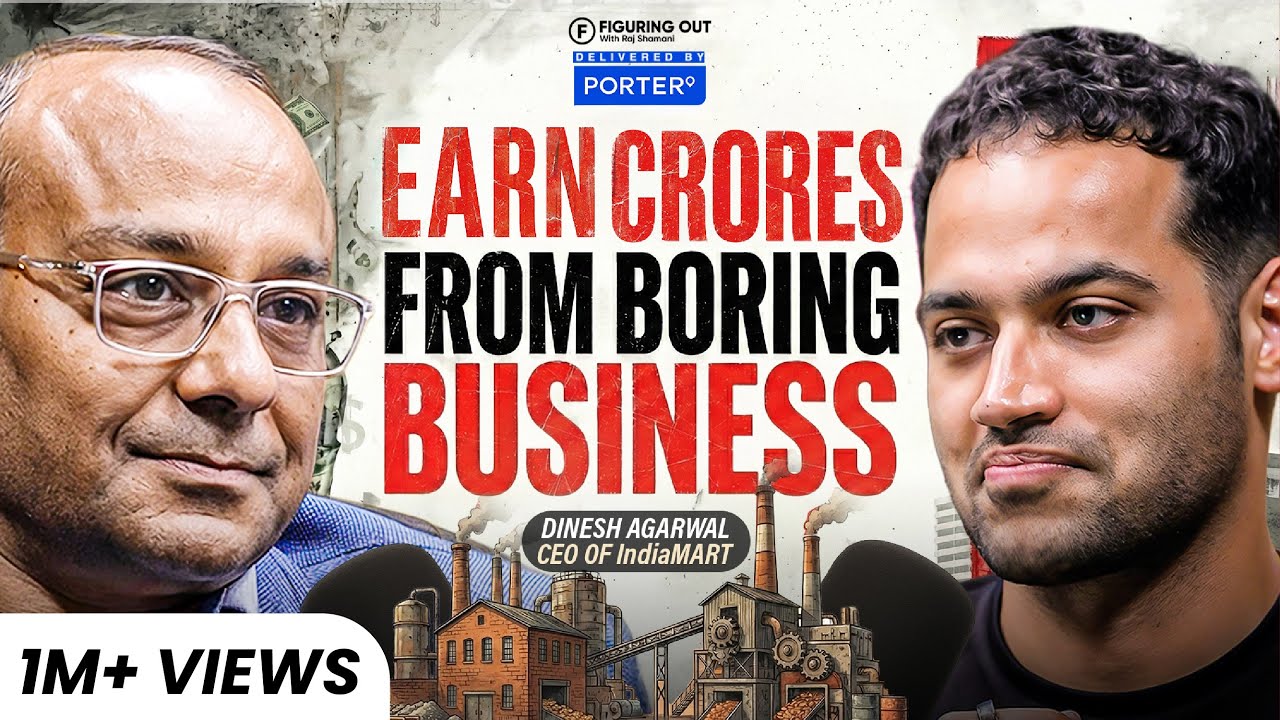
Raj Shamani talks with an IndiaMART business expert (Figuring Out, FO443) about where India's hidden business opportunities actually sit. The guest's opening frame: India is not one common consumer base - every 8-10 crore people are completely different, so a founder must first decide which population to serve. He points to the unglamorous ecosystems that quietly boomed, like e-rickshaws spawning demand for batteries, replacement parts and mobile accessories, and to commodity realities - iron quoted per kilo, fabric per meter - where the product stays the same no matter how it is sold, leaving wide scope for brand-building in completely unbranded categories like CCTV cameras and furniture. He highlights solar and energy storage as sectors with real work left to do, notes that demand in some categories doubles year on year while supply lags, and explains why even culturally specific products like rakhi are mandatory purchases regardless of price. He also shares seller-level observations from IndiaMART's data, including that the sellers with the lowest English proficiency are often the ones whose goods reach everywhere. All market observations are the guest's own. The episode is sponsored by IndiaMART.
Key Takeaways
India is many markets, not one
The guest's core frame: India has no single common consumer base - each 8-10 crore segment behaves completely differently, and scope exists everywhere once you pick your segment.
Booms hide in unglamorous ecosystems
He cites the e-rickshaw wave, which quietly created thriving demand for batteries, replacement parts and accessories - opportunities most founders overlook.
Unbranded categories are wide open
He argues categories like CCTV cameras and furniture remain almost completely unbranded in India, leaving room for ten to twenty brand-led businesses in each.
Solar and energy storage have work left
He flags energy storage - batteries - as a field where a great deal remains to be built, alongside India's rooftop solar push.
Commodity goods can still become brands
His fabric example: the same cloth sells between 80 and 120 rupees a meter however you market it - differentiation, not the commodity, creates the brand.
Demand spikes outrun supply
He describes categories where demand doubles year on year - like the sudden pajama surge - and supply struggles to catch up, creating entry windows.
English is not a barrier to trade
From IndiaMART's seller data, he notes that sellers with the lowest English proficiency still ship everywhere - comparing them to Gujarati traders who reached America and Africa without it.
The Conversation Breakdown
India is many markets, not one
⏱ Untimed topicThe guest's core frame: India has no single common consumer base - each 8-10 crore segment behaves completely differently, and scope exists everywhere once you pick your segment.
Booms hide in unglamorous ecosystems
⏱ Untimed topicHe cites the e-rickshaw wave, which quietly created thriving demand for batteries, replacement parts and accessories - opportunities most founders overlook.
Unbranded categories are wide open
⏱ Untimed topicHe argues categories like CCTV cameras and furniture remain almost completely unbranded in India, leaving room for ten to twenty brand-led businesses in each.
Solar and energy storage have work left
⏱ Untimed topicHe flags energy storage - batteries - as a field where a great deal remains to be built, alongside India's rooftop solar push.
Commodity goods can still become brands
⏱ Untimed topicHis fabric example: the same cloth sells between 80 and 120 rupees a meter however you market it - differentiation, not the commodity, creates the brand.
Demand spikes outrun supply
⏱ Untimed topicHe describes categories where demand doubles year on year - like the sudden pajama surge - and supply struggles to catch up, creating entry windows.
English is not a barrier to trade
⏱ Untimed topicFrom IndiaMART's seller data, he notes that sellers with the lowest English proficiency still ship everywhere - comparing them to Gujarati traders who reached America and Africa without it.
Core Frameworks & Ideas
Segment-of-8-10-crore thinking
The guest's demand frame: treat India as many distinct populations of 8-10 crore each and design the business for one chosen segment rather than an imagined average Indian.
Ecosystem over headline
His pattern of looking past the visible boom - e-rickshaws - to the supply chain it feeds, such as batteries, parts and accessories.
Unbranded-category brand play
His opportunity filter: find categories that are completely unbranded or commodity-priced, where the product is identical and branding alone creates the margin.
Actionable Next Steps
- ✓Write down which specific 8-10 crore population segment your business or idea serves, in one sentence, before your next planning session.
- ✓Pick one visible boom in your industry and list three unglamorous supply-chain needs behind it, the way e-rickshaws created battery and parts demand.
- ✓Scan your category for commodity-priced, unbranded products and note one where consistent branding could command a premium.
- ✓Check one everyday cultural product you buy without price comparison - like the rakhi example - and note what that purchasing behavior says about demand durability.
Notable Quotes
“India is not one single common population. Every 8-10 crore people are completely different (translated from Hindi)”
“A lot of work remains to be done in energy storage (translated from Hindi)”
“Sell it however you want - the fabric stays the same (translated from Hindi)”
The One Thing to Remember
The IndiaMART expert's rule: India is not one market - every 8-10 crore people are completely different, so decide exactly which population your business serves.