

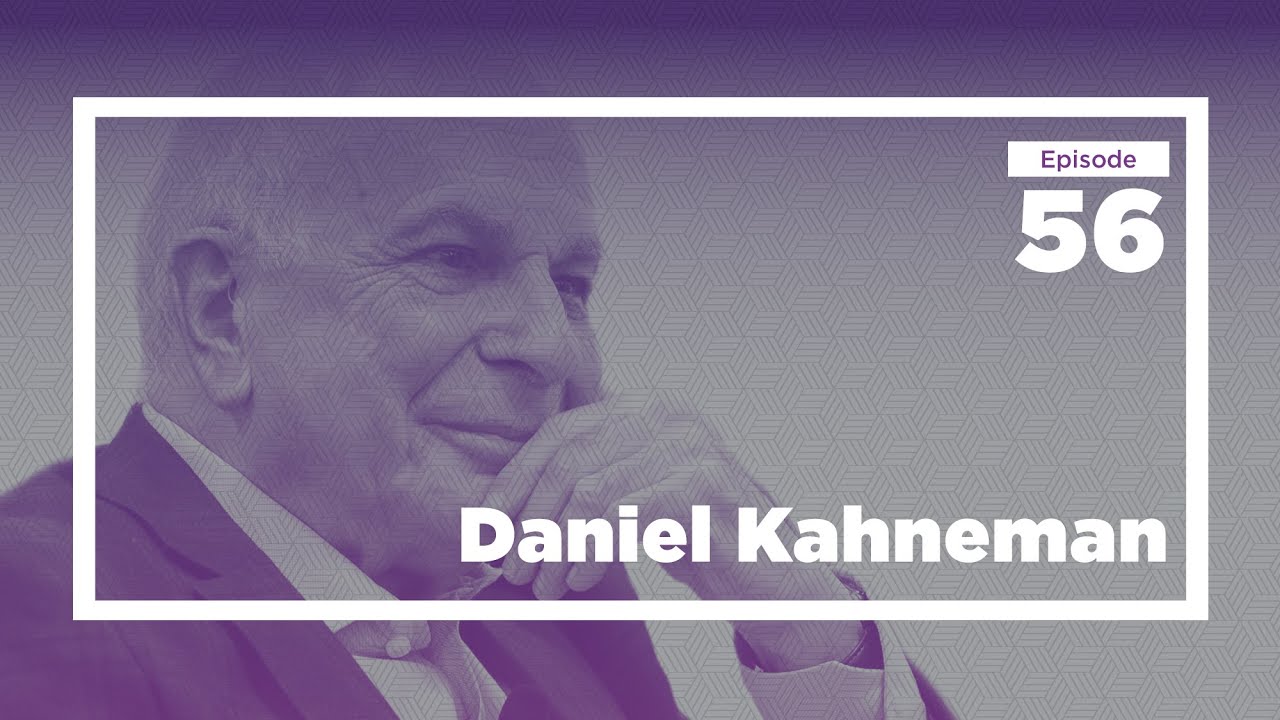
Daniel Kahneman on Cutting Through the Noise
Executive Summary
Kahneman describes noise as unwanted variability in judgment, distinct from systematic bias. He argues for independent assessments and separating a decision into dimensions before forming an overall intuition. He also distinguishes experience from memory and warns about sunk costs in innovative research. The notes focus on these supported parts of the official 2018 transcript. Topic sections are untimed, not video chapters; historical examples are his account.
Key Takeaways
Noise is not the same problem as bias
Kahneman calls noise randomness within an individual or among people expected to be interchangeable in an organization. He contrasts it with systematic error. The distinction means that a discussion of shared bias may miss variability in supposedly comparable judgments; this is his explanation, not a diagnosis of any reader’s organization.
Measure disagreement before assuming judgments are consistent
He recounts an insurance-company exercise in which professionals assessed the same realistic cases and disagreed far more than executives expected. The reported percentages are his historical account, not independently reproduced findings here. The methodological idea is to compare like-for-like assessments rather than infer agreement because everyone thinks their own judgment is clear.
A crowd can share the same mistake
Kahneman explains that combining independent assessments can reduce random error while leaving common bias. If people share an error, more agreement can make them more confident without making the conclusion sound. He gives historical hiring and underwriting examples; these are not current company practices or a promise that a fixed panel size removes error.
Divide the decision before forming the overall impression
He recommends planning the process, looking at dimensions separately and delaying intuition until information is at hand. The point is staged judgment, not merely taking longer or becoming stuck in analysis. He acknowledges disagreement from Gary Klein and the existence of trained intuitive expertise, so this is not a claim that every intuition is worthless.
A remembered experience differs from a lived moment
Kahneman says endings can color memories of goal pursuit and that memories stay after the experience ends. He distinguishes momentary happiness from satisfaction with one’s life. These are his views about evaluation and memory, not instructions to ignore pain or a guaranteed way to improve well-being.
Forecasting depends on measured performance and different perspectives
He praises Tetlock’s forecasting work, describing information gathering, numeracy, curiosity and considering a problem from multiple angles. The comparisons with analysts and selection results are his account. The useful distinction is between reputation or confidence and recorded forecasts, not a guarantee that past forecasting success transfers to every domain.
Prior effort alone is not evidence for continuing research
Kahneman calls sunk cost an enemy of innovative research and favors recognizing when a line is not working. He distinguishes sunk cost from increasing attachment to something that actually earns trust. This is a stopping-and-learning perspective, not advice to quit any difficult project or to ignore future benefits.
The Conversation Breakdown
Memory and experience
⏱ Untimed topicKahneman distinguishes the moment of an experience from the memories that remain, discussing endings and satisfaction.
Bias and noise
⏱ Untimed topicThe discussion separates systematic error from unwanted variability among comparable judgments.
Independent assessments
⏱ Untimed topicPooling judgments can address randomness under suitable conditions without removing shared bias.
Delaying intuition
⏱ Untimed topicKahneman proposes separate dimensions and staged decisions, while acknowledging trained intuitive expertise.
Forecasting and evidence
⏱ Untimed topicHe describes curiosity, multiple perspectives and measured forecasting results as parts of Tetlock’s work.
Sunk costs in research
⏱ Untimed topicHe argues for recognizing an unsuccessful line of research rather than persisting only because of prior effort.
Core Frameworks & Ideas
Noise versus bias
Random variability and systematic error are different targets for a decision process.
Delay intuition
Collect information and assess dimensions separately before the overall judgment.
Independent judgments
Preserve independence before pooling assessments; agreement alone does not rule out bias.
Actionable Next Steps
- ✓For a low-stakes decision, list the criteria before deciding the overall answer.
- ✓Collect independent written assessments before a group discussion.
- ✓Separate evidence for future benefit from the effort already spent.
- ✓Record a forecast and its horizon so it can be compared with the outcome.
Notable Quotes
“My advice is divide and conquer. That is, there is one thing that we know that improves the quality of judgment, I think. And this is to delay intuition.”
“They actually want to maximize their satisfaction with themselves and with their lives.”
“I think sunk cost is really the enemy when you’re doing research, innovative research.”
The One Thing to Remember
Delay intuition until the relevant evidence and separate assessments are available.