


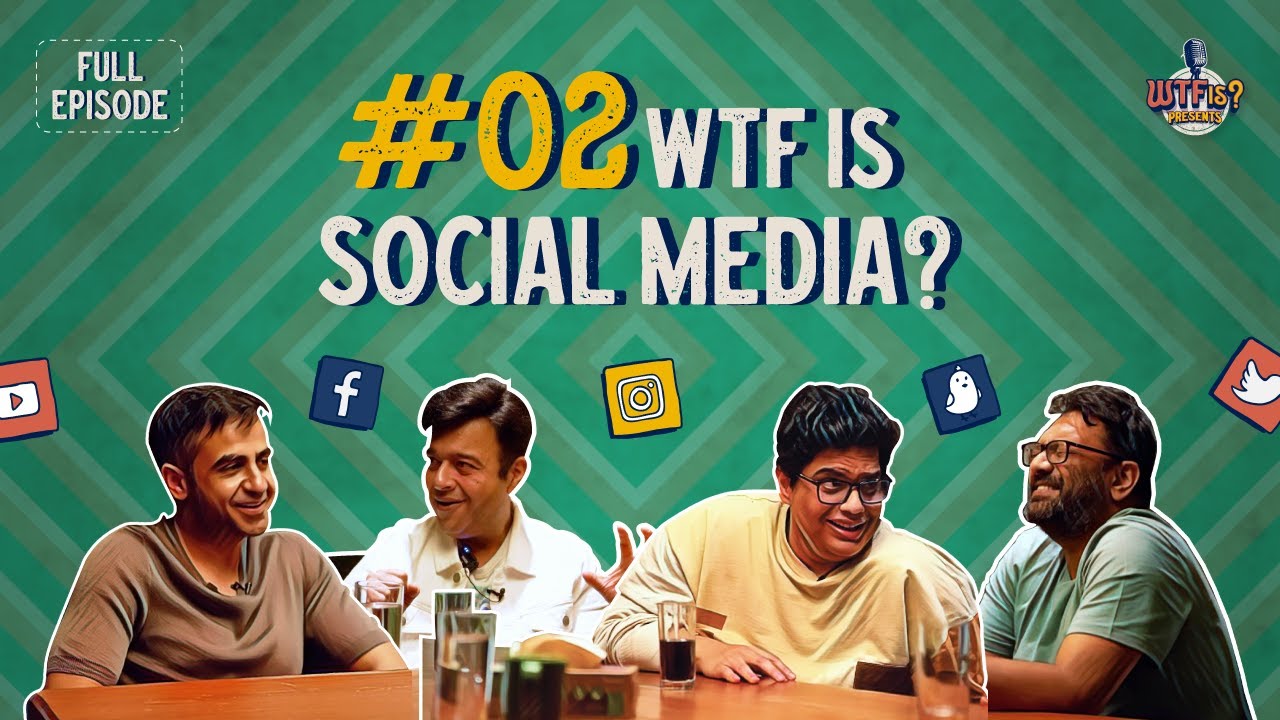
Ep. #2: Secrets of Social Media Success, Mental Health & Distribution Hacks - 3 OGs Reveal All
Executive Summary
Three operators who build and feed social platforms explain the machine: attention is the product, envy is the fuel, and topicality is the growth hack. The numbers are concrete - $10 per user per ten minutes, sub-$2 Indian CPMs, TikTok's $70-million-a-month India burn, 240 million MAUs at the ban. The counters: Dailyhunt's no-sign-in, content-graph, anti-echo-chamber design; Koo's plan to pay users 20-30% of revenue. And the bill: mental health, kids' safety, and why the men running these platforms monitor rather than ban.
Key Takeaways
Attention has a price per minute
Umang's model: ten daily minutes of one user, one ad per foot of scroll, roughly ten dollars - scale to a billion users and the incentive model writes itself: more users, more time, more ad revenue. The dopamine hit that keeps you returning is the same hit that pays the platform, which is why every feature optimizes engagement over wellbeing.
Topicality beats everything
Tanmay's creator playbook from 2009 Twitter to AIB: whatever the country is talking about today - a Test match, a wedding, a final - will outperform anything evergreen. AIB kept memes ready for both PV Sindhu medal outcomes to cut posting latency to zero. Every popular sentiment then creates a market for the contrarian take, because people share relatable memes precisely to feel different.
The algorithm looks back at you
Umang on TikTok: when you look into it, it looks straight back - billions of untagged clips machine-labeled by AI, married to your implied preferences minute by minute, so no two feeds are alike. The numbers behind the machine: $60-70 million burned monthly in India, 240 million MAUs at the ban, and a content graph so effective that Douyin now drives 7% of all Chinese commerce.
A content graph instead of a social graph
Dailyhunt and Josh run on deliberate counter-design: never force sign-in, never ask for personal data, personalize on content adjacency rather than who your friends are, and - after the demonetization thought experiment - deliberately show diverse perspectives to fight confirmation bias. The admission that makes it credible: social platforms are inherently incentivized the other way.
Creators: India pays dimes, distribution is the moat
CPMs are sub-$2 in India versus $10-20 in the US; Instagram pays creators zero directly, so brand deals carry the economy. YouTube's mid-roll rules reshaped video lengths overnight, and its search-driven discovery fails local-language creators. Aprameya's response on Koo: share 20-30% of revenue with users themselves - his bet is India goes nuts the day a platform shows you what it earned off you.
The bill arrives as mental health
The panel is blunt: Instagram ranks worst for how it makes people feel (Umang's driver found it 'not aspirational but unattainable'), Twitter's mentions tab engineers negativity, and envy fuels both the hate comment and the clout farm. On kids, the consensus is monitoring over bans - linked accounts, watch history, and treating online perils as a new chapter in the good-touch-bad-touch talk.
Vertical, connected, and YouTube-bullish
Where the next decade goes: Tanmay bets on verticalized, purpose-specific platforms (the days of one-platform-serves-all are gone); Umang picks connected TVs as India's sleeper opportunity (only 200 million TVs for 1.4 billion people, and a TV-plus-fridge is the first aspirational purchase); everyone agrees print dies in ten years and that YouTube - with Learn and Podcasts - is quietly the strongest asset in the stack.
The Conversation Breakdown
The dopamine machine
The dopamine machine: likes as acknowledgement, the retweet-button inflection, the $10-per-user math, and a memory hack involving a thousand learned names
From Orkut walls to Facebook's handshake
From Orkut walls to Facebook's handshake: how real identity won, the seven-friend magic number, and the aliases we all had
Umang's war stories
Umang's war stories: the WhatsApp-to-Facebook ad inference, Cambridge Analytica, the driver who found Instagram unreal, and Dailyhunt's four counter-principles
Creator economics laid bare
Creator economics laid bare: CPM gaps, mid-roll incentives, MrBeast's millions, Koo's pay-the-user plan, and why YouTube flows to every other platform
TikTok anatomy
TikTok anatomy: the burn rate, the ban, China's 2.5 hours a day, Saudi's 98% penetration, and short video as micro-Bollywood
Discord, Twitch and the serendipity of platforms
Discord, Twitch and the serendipity of platforms: Tanmay's half-million-member server he chose to shut, and Koo's Twitter-crisis windfall
The personal turn
The personal turn: Umang's 'most shallow human' confession, Nikhil's tattoo math, imposter complexes, kids' safety, and what Bill Gates bets on next
Core Frameworks & Ideas
The engagement ladder
Rank any content idea by rungs: topicality (today's event) first, then contrarian takes on the popular sentiment, then high positive sentiment (babies, dogs), then nostalgia. The paradox powering all of it: people share relatable things to signal they are different.
Content graph versus social graph
Two personalization philosophies: social graphs (who you follow) create echo chambers and confirmation bias; content graphs (what you actually watch, machine-tagged) can diversify on purpose - show fitness lovers dance, show both sides of an issue. The design choice determines whether the platform informs or polarizes.
The multi-dimensional network problem
A marketplace startup has two sides to subsidize; a social network has four - users, advertisers, creators, government - and all must be happy simultaneously, so growth cannot be bought with simple math. Network effects arrive serendipitously (a Twitter crisis, a TikTok ban); after takeoff, loyalty programs and creator monetization add the math.
Actionable Next Steps
- ✓Creators: pre-make your content for both outcomes of the next big event your audience cares about - posting latency is the real competition.
- ✓Audit your own feed this week: count how much is a social graph echo versus genuine discovery, and deliberately follow one strong source you disagree with.
- ✓If you have kids on devices, set up linked accounts and review watch history together - the panel's consensus is visibility and conversation over bans.
- ✓Building anything consumer? Write down which of the four stakeholders (users, advertisers, creators, regulators) your incentive model currently starves.
Notable Quotes
“when you're looking into Tik Tok Tik tok's looking straight back into you”
“people share relatable memes to be different”
“the world doesn't know how to treat nice people”
The One Thing to Remember
Envy is the fuel of social media - the same loop that makes a follower feel inadequate makes a hater comment and a creator post; every platform decision, from the retweet button to the For You feed, is an attempt to refine that fuel.